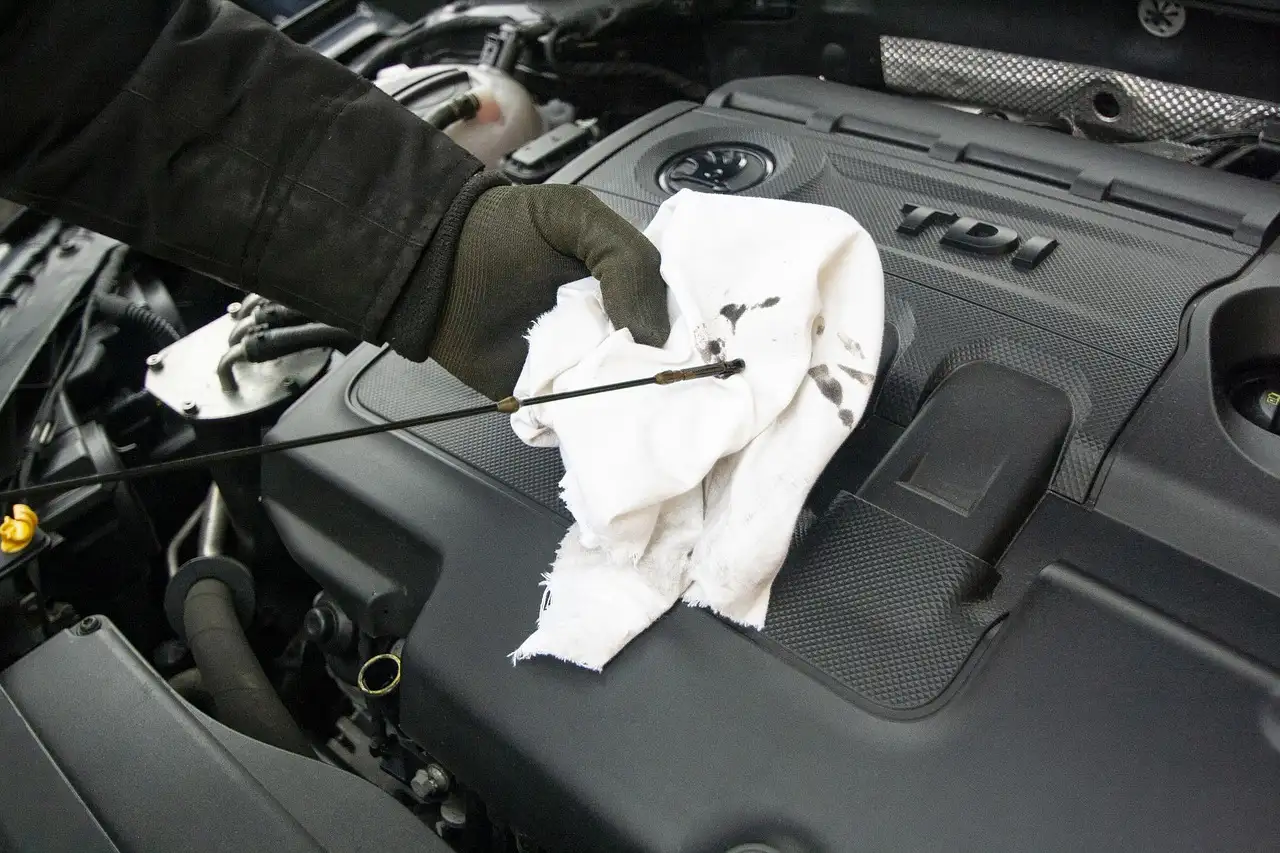
Why Oil Changes Are Important for Your Car
Oil changes help protect the engine by replacing oil before it breaks down, so bearings, camshafts, and timing parts can keep a stable lubricating film; follow the owner’s interval, or shorten it to about 5,000 miles or 6 months for severe driving. Skip the service too long, and sludge, oil starvation, overheating, and repair costs can follow. This guide explains why oil matters, how mileage and time both set the interval, and which warning signs mean you are overdue.
This guide is part of our Oil change: when, why, and how to do it right series.
Why do cars need oil changes?
Cars need oil changes because engine oil does more than lubricate. It also cools hot parts, carries away contaminants, and helps protect against wear, corrosion, and rust. Over time, heat and pressure break the oil down, and the dirt it carries keeps building, so the fluid cannot do those jobs as well.
What engine oil does inside the engine
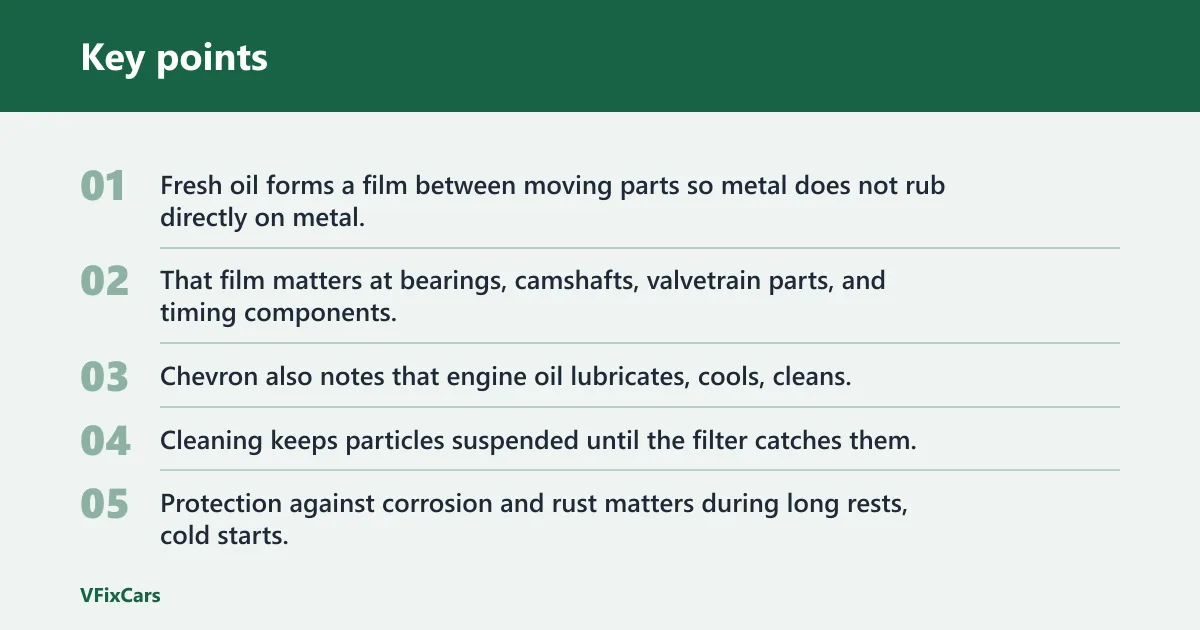
Fresh oil forms a film between moving parts so metal does not rub directly on metal. That film matters at bearings, camshafts, valvetrain parts, and timing components, where friction rises fast if lubricity drops. Chevron also notes that engine oil lubricates, cools, cleans, and protects moving parts from wear and tear.
That is the protection system. Lubrication stops metal-to-metal contact. Cooling limits heat stress. Cleaning keeps particles suspended until the filter catches them. Protection against corrosion and rust matters during long rests, cold starts, and damp storage.
How oil breaks down over time
Oil does not fail only by miles. Consumer Reports notes that oil degrades from heat and pressure and collects harmful particles. That means a car driven only a few thousand miles can still need service if the oil has aged for months, especially with lots of short trips or seasonal storage.
Say your car sees 2,000 miles in six months, mostly five-minute errands. The mileage may look low, but moisture and fuel dilution can still age the oil enough that time, not distance, becomes the limiting factor.
Why clean oil prevents wear
Fresh oil cuts friction and helps stop metal-on-metal contact. That matters because once the oil film thins, wear rises fast. Loss of lubricity means higher friction, more heat, and a greater chance of internal damage before any warning light appears.
What happens if you skip oil changes
Skipping oil changes lets oil lose viscosity control, collect debris, and form sludge. The result can be friction, heat, blocked oil flow, and engine damage. The risk is real: neglected oil can cause lower fuel efficiency, overheating, and clogged passages that keep oil from reaching all parts of the engine.
Metal contact and rising friction
Once oil degrades, the film between parts gets weaker. Bearings and other fast-moving components can then move from fluid lubrication toward boundary contact, where friction climbs and wear accelerates. That is how a small service delay can become a repair problem.
Sludge formation and blocked oil passages
Old oil can thicken into sludge, a sticky deposit that clogs oil passages. Chevron warns that sludge buildup can block oil flow and prevent oil from reaching all parts of the engine. If that happens, the damage can become serious or even irreparable.
Picture a 4-cylinder commuter car that goes six months without an oil change because the odometer barely moved. The oil may look dark and thick on the dipstick, and the next cold start can bring ticking or rough running as oil flow slows through narrow passages.
Heat, wear, and possible engine damage
Degraded oil also carries heat away less effectively. That raises operating temperatures and can push already stressed parts closer to failure. Over time, the combination of wear, sludge, and heat can damage cam lobes, bearings, seals, and timing hardware.
That repair bill is why routine oil changes are cheap insurance, not optional upkeep. A service visit usually costs far less than a major engine repair, which can run into thousands of dollars once internal parts are damaged.
How often should you change oil?
The correct interval comes from three things: mileage, time, and driving severity. Car and Driver says many vehicles driven normally can go 7,500 to 10,000 miles between oil changes, but many vehicles also need oil changes at least once a year. Short-trip use, storage, and severe duty shorten that window. (Caranddriver)
Mileage and time both matter
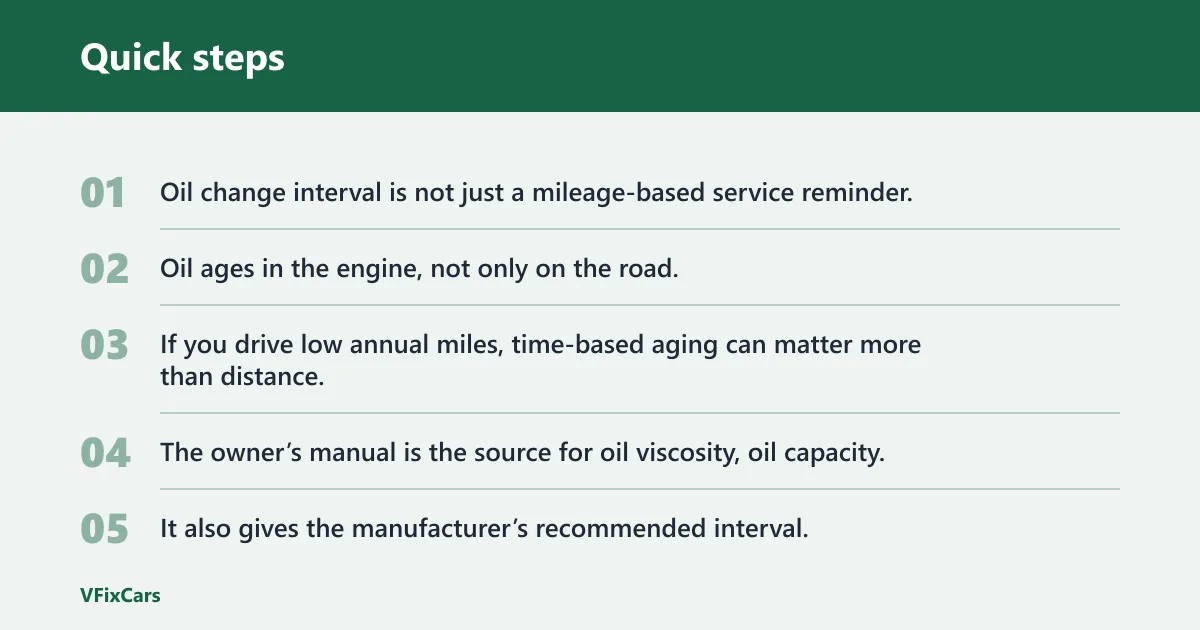
Oil change interval is not just a mileage-based service reminder. Oil ages in the engine, not only on the road. If you drive low annual miles, time-based aging can matter more than distance, which is why many schedules include both months and miles.
Why the owner’s manual comes first
The owner’s manual is the source for oil viscosity, oil capacity, and whether the engine calls for conventional or synthetic oil. It also gives the manufacturer’s recommended interval. That guidance matters more than a generic sticker because different engines, oil specs, and operating temperatures change the service need.
How service minders fit into the decision
The same source notes that built-in service minders track miles and driving severity. Some systems are better than a fixed mileage rule because they account for use patterns that stress oil faster. They may also signal low oil level, which means you should check the dipstick instead of assuming only the reminder is involved.
If the dashboard minder says service is due, treat it as a prompt to consult the manual and inspect the oil level. Do not reset it first and ask questions later.
What oil change neglect leads
| Warning sign | Likely oil-related cause | Urgency | Recommended next step |
|---|---|---|---|
| Oil level below the dipstick mark | Leak, consumption, or long interval without top-off | High | Top off with the correct oil and inspect for leaks soon |
| Very dark, gritty, or thick oil | Oil oxidation, debris buildup, or overdue service | High | Schedule an oil and filter change now |
| Oil pressure warning light | Low oil level, blocked pickup, or severe internal oil flow problem | Immediate | Shut the engine off and do not keep driving |
| Ticking, knocking, or new valvetrain noise | Oil starvation, weak oil pressure, or worn components | Immediate | Stop driving and get a diagnosis before more damage occurs |
| Overheating | Degraded oil, reduced cooling support, or clogged passages | Immediate | Let the engine cool and have the system checked |
Which driving habits shorten oil life?
Driving severity can shorten oil life even when mileage is low. Short trips, stop-and-go traffic, heavy loads, severe weather, city use, and long storage are commonly reported to age oil faster. Those conditions increase moisture, heat cycling, and contamination, which is why a fixed mileage rule misses part of the picture.
Short trips and stop-and-go traffic
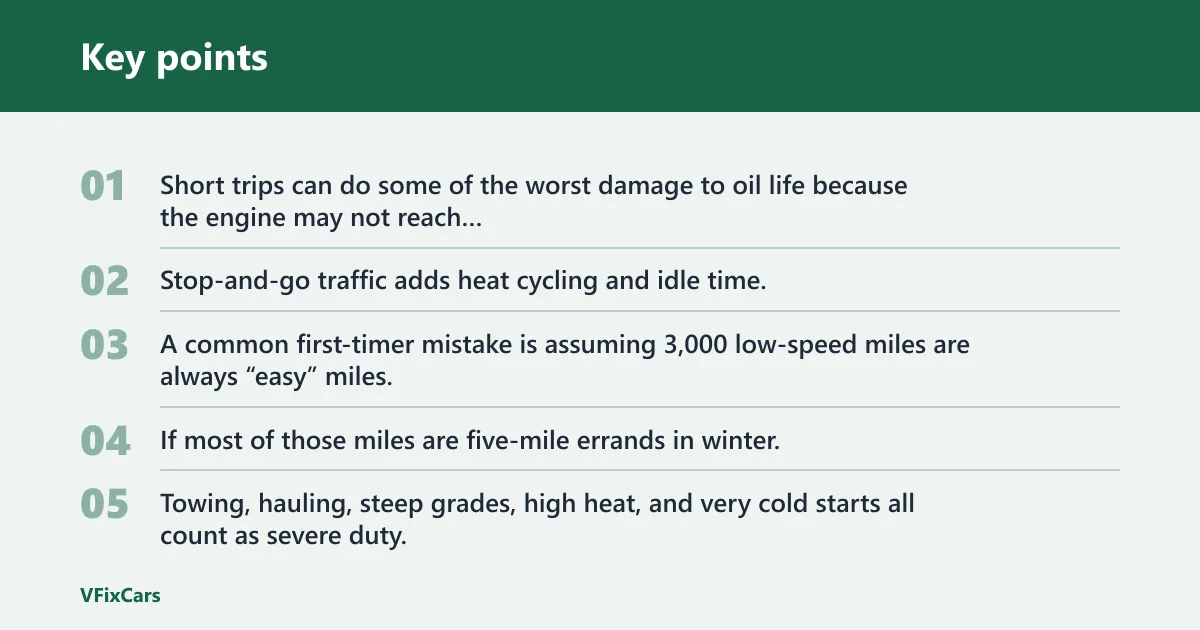
Short trips can do some of the worst damage to oil life because the engine may not reach full operating temperature long enough to boil off moisture and fuel dilution. Stop-and-go traffic adds heat cycling and idle time, which puts more stress on the oil for each mile driven.
A common first-timer mistake is assuming 3,000 low-speed miles are always “easy” miles. If most of those miles are five-mile errands in winter, the oil often works harder than 7,000 highway miles.
Heavy loads and severe weather
Towing, hauling, steep grades, high heat, and very cold starts all count as severe duty. They raise thermal load and can thin or thicken oil in ways that reduce protection. That is why many manuals call for shorter intervals under severe conditions.
Highway, city use, and storage
Steady highway driving is usually easier on oil than repeated cold starts and traffic jams. City use tends to be harsher because the engine spends more time warming up and cooling down. Storage also matters, because time still allows oil to age even when the odometer barely moves.
| Driving pattern | Interval risk | What to do |
|---|---|---|
| Short trips | High | Use the severe-service schedule and check oil level more often |
| Stop-and-go | High | Expect oil to age faster than mileage suggests |
| Highway driving | Moderate to lower | Follow the manual; service minder may extend the interval within limits |
| Storage or infrequent use | High by time | Change oil by months even if mileage is low |
How do you know oil is overdue?
Overdue oil usually shows up as low level, dirty appearance, warning lights, new engine noise, or overheating. Some signs mean you can schedule service soon. Others mean you should stop driving right away because oil flow may already be compromised.
Low oil level and dirty oil
Check the oil level at least once a month or every other gas fill-up, as Consumer Reports recommends. Some newer cars can need oil top-offs between changes, so low level is not rare. Dark oil alone does not always mean immediate danger, but a low level combined with dirty oil suggests service should not wait. (Consumerreports)
Oil pressure warning lights
An oil pressure warning light is not a reminder light. It can mean the engine is not getting enough oil pressure to protect internal parts. Shut the engine off and do not continue driving until the cause is known.
Knocking, ticking, or overheating
Knocking or ticking can point to oil starvation, low pressure, or wear that has already started. Overheating can point to degraded oil that no longer helps remove heat. Either sign deserves immediate attention because the damage window can be short.
Does synthetic oil change the answer?
Synthetic oil can last longer than conventional oil, but it does not remove the need for service. The correct answer still starts with the owner’s manual, because viscosity grade, engine design, and service schedule matter more than the word synthetic on the bottle. Oil still ages by time, heat, and contamination.
How synthetic and conventional oil differ
Synthetic oil usually resists breakdown better under heat and severe use, so some engines can go longer between changes. Even so, the oil filter still collects debris, and the oil still carries contamination over time. Longer life does not mean unlimited life.
Why interval advice still starts with the manual
Some engines require specific synthetic formulations, while others accept conventional oil within a certain grade and interval. The manual also lists oil capacity, which matters when you check or top off. That information should guide both oil choice and timing.
When synthetic oil still needs earlier service
Short trips, towing, heavy loads, and cold weather can shorten synthetic oil life too. If the service minder calls for maintenance earlier than the calendar suggests, follow the vehicle system and the manual rather than assuming the oil can stay in longer.
Frequently asked questions
Why is an oil change good for your car?
An oil change is good for your car because it replaces oil before the fluid loses its ability to lubricate, cool, clean, and protect. Fresh oil reduces friction, helps control heat, and lowers the risk of sludge, wear, and oil starvation that can damage internal parts.
How often should oil be changed if I drive short trips?
If you drive mostly short trips, oil usually needs attention sooner than a normal mileage schedule suggests. Short trips count as severe duty because the engine may not fully warm up. Follow the manual’s severe-service interval, and check the oil level monthly or every other gas fill-up.
Can old oil damage the engine?
Yes. Old oil can lose lubricity, carry more contaminants, and thicken into sludge. That raises friction and heat, and it can block oil passages so parts stop getting the oil they need. Damage can start quietly before any warning light appears.
Does an oil change improve fuel economy?
An oil change can help fuel economy if old oil was causing extra friction, but the effect is usually modest. Chevron notes that neglected oil can lower fuel efficiency. The bigger value is protection from wear, heat, and contamination, not a dramatic mpg gain.
What signs mean my oil is overdue?
Low oil level, dirty or thick oil, oil pressure warnings, new ticking or knocking, and overheating all point to overdue service or a more serious oil problem. If the warning is only dirty oil, book service soon. If the pressure light, knocking, or overheating appears, stop driving.