Oil change vs adding oil: what’s the difference?
Add oil only when the dipstick is low; change the oil when it’s overdue, dirty, diluted, or the oil-pressure light stays on after topping up. Low oil can damage an engine fast. This guide shows how to tell which fix you need, what each warning means, and when you need both.
Oil change vs adding oil: the core difference
The difference is straightforward. Adding oil brings the level back up. An oil change removes the old oil and replaces it. Engine oil coats moving parts, but heat and time break it down, and it picks up sludge and debris as it ages.
Top-off is a short-term fix. Oil change is maintenance. If the level is low, you add oil. If the oil is worn out, contaminated, or past the manufacturer service interval, you change it.
What adding oil does
Adding oil keeps the level within the safe range when the dipstick shows low. It is a quick fix, and it helps when the engine has used a small amount through normal burn-off or a minor leak.
What an oil change does
Changing oil drains the engine and refills it with fresh engine oil. It usually includes a new filter, and the filter matters because it traps dirt and impurities that topping up leaves behind.
Why one does not replace the other
Fresh oil mixed into old oil does not remove contamination. It does not clear sludge, restore depleted additives, or replace a clogged filter. If the oil is dirty or past its service interval, adding more oil changes only the level, not the condition.
📊 The article says regular oil changes are needed every twelve months or 5000 miles. Source: Adding Oil VS Changing Oil: What Should You Do?.
Quick comparison: purpose, timing, filter, and risk
The trade-off is plain: adding oil is faster and narrower in scope, while an oil change takes longer but resets oil condition and filter life. If the only problem is a low level, top-off may be enough for now. If the oil itself is worn out, top-off is the wrong fix.
| Decision factor | Oil change | Adding oil | Winner |
|---|---|---|---|
| Purpose | Removes harmful contaminants and replaces old oil | Restores oil level only | Oil change |
| When you do it | At the manufacturer service interval or when oil is dirty, diluted, or overdue | When the dipstick is low and the oil still looks serviceable | tie |
| Oil filter | Usually replaced or cleaned | Not refreshed | Oil change |
| Speed | Usually 30 minutes to an hour or more | Takes only a few minutes | Adding oil |
| Risk if done wrong | Incorrect oil spec or poor service timing can still cause problems | Overfilling can cause engine damage; topping off can hide a leak | Oil change |
Purpose
An oil change is the only one of the two that renews oil condition. It clears out old oil and its contaminants, which is why it is the right answer when the oil is worn out.
Adding oil has a narrower job. It fixes low level, and that is all.
When you do it
Use a top-off when the dipstick is below the low mark and the oil still appears usable. Use a full oil change when the service interval is due or the oil looks dirty, gritty, foamy, or milky.
Manufacturer intervals vary by vehicle, oil type, turbo use, and driving pattern. A common maintenance rule still used in many schedules is every twelve months or 5000 miles, but the owner’s manual should decide the exact timing.
What happens to the oil filter
The filter matters because it captures dirt and impurities that move through the oil. A top-off leaves the old filter in place, so any clogging or trapped contamination remains there.
An oil change usually replaces the filter, so the oil and the filtering system both get renewed.
What can go wrong
Adding too much oil can damage the engine. Overfilled oil can foam, aerate, and get whipped into places it should not go. Too little oil is also dangerous because moving parts lose lubrication and can overheat.
A common first-timer mistake is to keep pouring in oil because the dipstick still reads low after one top-off. That can push the engine past the full mark before the oil drains back to the pan.
How do you know whether your car needs oil or an oil change?
Check the dipstick on level ground, then judge both level and condition. If the level is low but the oil is still clean enough and within its service interval, add oil. If the oil looks dirty, contaminated, or overdue for service, schedule an oil change even if the level is not empty.
Check the dipstick on level ground
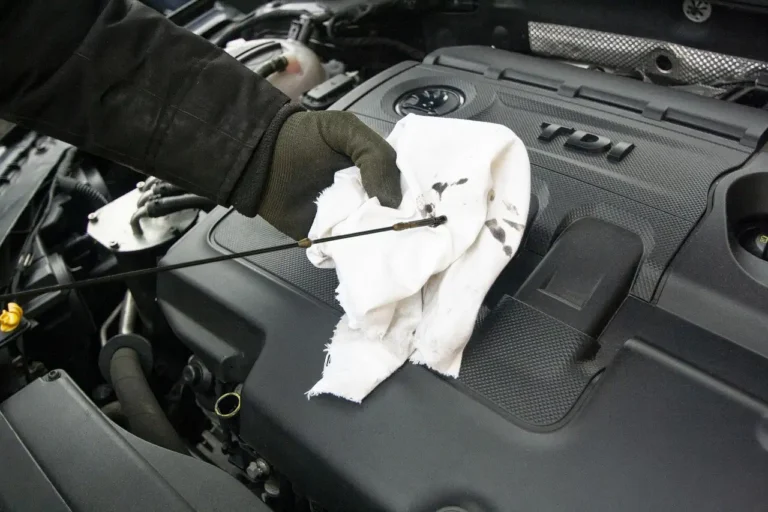
Park on level ground and shut the engine off long enough for oil to drain back to the pan before checking the dipstick. Pull the dipstick, wipe it clean, reinsert it fully, then pull it again to read the marks. The oil should sit between the low and full marks.
Read the oil condition as well as the level
Color alone is not enough. Dark oil can still be serviceable in some engines, while foamy, milky, or gritty oil is a warning sign. Consistency matters because sludge, coolant contamination, or fuel dilution can show up before the level drops much.
Know the difference between low level and overdue service
Low level means the engine needs oil added now. Overdue service means the oil itself has aged out or become contaminated. Those are separate problems, and the fix is not always the same.
When should you add oil only?
Add oil only when the dipstick is below the low mark and the oil still looks reasonably clean and normal in texture. It is the right short-term move when you need to restore level before a planned service, or when the engine has used a small amount between oil changes.
Dipstick is below the low mark
If the dipstick reads low, you need to add oil before more driving. Do not wait for the engine to start making noise. Oil level is separate from oil quality, and low level can become engine damage quickly.
Oil pressure warning is off but the level is low
If the warning light is off and the engine sounds normal, a low dipstick reading usually calls for a top-off first. That said, the warning light is not the only signal that matters, and you should not ignore changes in noise, smell, or smoke.
You are correcting a small loss before a full service
Use top-off as a temporary correction when you are close to the scheduled service date and the oil still looks healthy enough. It buys time. It does not reset the maintenance clock.
When does low oil mean you need service, not just a top-off?
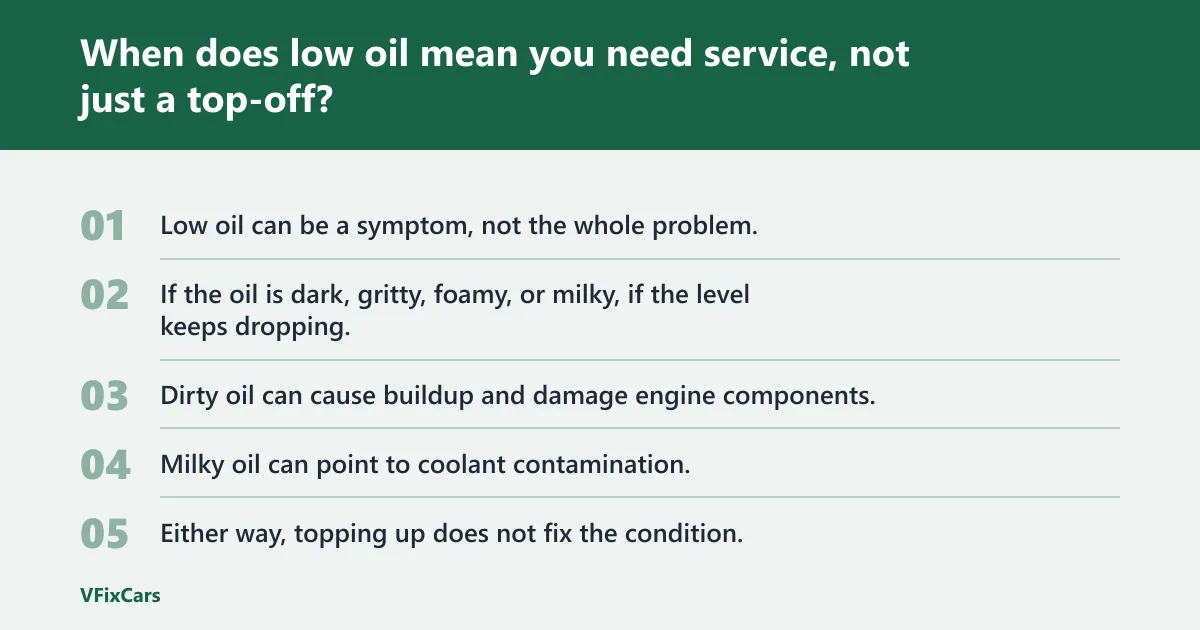
Low oil can be a symptom, not the whole problem. If the oil is dark, gritty, foamy, or milky, if the level keeps dropping, or if you see leaks, smoke, or a low oil pressure warning, you need service and diagnosis, not just more oil.
Oil is dark, gritty, foamy, or milky
Dirty oil can cause buildup and damage engine components. Foamy oil may mean aeration. Milky oil can point to coolant contamination. Either way, topping up does not fix the condition.
Oil level keeps dropping after you add it
A repeated drop points to consumption or a leak. Burn-off can happen in some engines, especially turbocharged ones, but a steady loss should not be treated as normal until the cause is known.
You see leaks, smoke, or a low oil pressure warning
A visible leak means oil is leaving the engine somewhere it should not. Blue smoke can point to oil burning in the combustion chamber. A low oil pressure warning is usually more urgent than a low level reading.
The service interval is overdue
If time or mileage is past the manufacturer interval, service is due even if the dipstick still shows some oil. Oil degrades with heat and time, so level alone does not tell you whether the oil still protects the engine.
Choose adding oil if… / Choose an oil change if…
Choose adding oil if the level is low and the oil still looks serviceable. Choose an oil change if the oil is worn out, contaminated, or overdue. In some cases, you need both: top off now, then schedule service soon.
Choose adding oil if…
- The dipstick is below the low mark, but above-empty oil is still present.
- The oil looks normal enough, with no foamy, milky, or gritty texture.
- You are between scheduled services and just need to restore the level.
Choose an oil change if…
- The oil is dirty, sludgy, diluted, or contaminated.
- The service interval is overdue by time or mileage.
- The filter is due, because topping up does not refresh it.
When you may need both
If the level is low and the oil is also aged, add oil only as a short-term correction if needed, then book a change soon. That is common after long trips, heavy turbo use, or high oil consumption in older engines.
How to top off oil safely
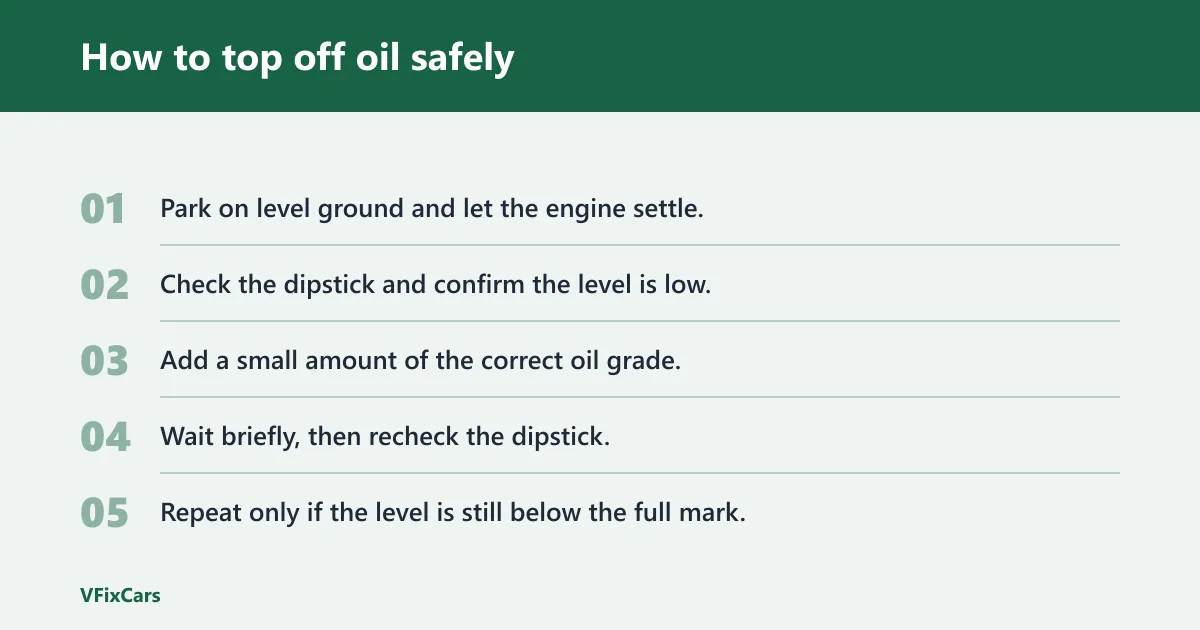
Use the correct viscosity and specification from the owner’s manual. Add oil in small amounts, recheck the dipstick, and stop before the full mark is exceeded. If the level was very low, work in quart-sized or smaller increments so you do not overshoot.
- Park on level ground and let the engine settle.
- Check the dipstick and confirm the level is low.
- Add a small amount of the correct oil grade.
- Wait briefly, then recheck the dipstick.
- Repeat only if the level is still below the full mark.
- Stop as soon as the level reaches the safe range.
- Look under the car and around the engine for fresh leaks.
Use the correct oil grade
Match the viscosity and specification in the owner’s manual. If you must mix oil grades in an emergency, the safest move is to use an oil that meets the same specification, then return to the correct fill at the next service.
Add small amounts, then recheck the dipstick
Do not dump in several quarts at once unless the engine was severely low and you know the capacity. Add a little, wait for drainage, then read the stick again. That is the only reliable way to avoid overfilling.
Stop before the full mark is exceeded
Too much oil can cause damage. A full mark is the goal, not a target to exceed. If you go past it, drain the excess before driving far.
Watch for leaks after topping off
Check for fresh drips, oily smell, or smoke after the engine has run. If the level drops again quickly, treat that as a leak or burn-off issue, not a reason to keep adding oil without diagnosis.
What the should include: dipstick flowchart and decision checklist
Use this as a one-page decision tree. It separates level problems from oil-condition problems, which is the part many quick guides blur together.
Dipstick flowchart
- Step 1: Check level. Is the oil below the low mark?
- Step 2: Inspect color and consistency. Is it dark, gritty, foamy, or milky?
- Step 3: Decide. Low level plus normal oil means add oil. Bad oil or overdue service means schedule an oil change.
- Step 4: Recheck after adding oil. Confirm the level sits below or at the full mark, not above it.
Separate box for leaks and burn-off
Leak or burn-off scenario: If the level drops again after top-off, inspect for wet spots under the car, oil around the valve cover or drain plug, blue exhaust smoke, and oily smell. Small burn-off can happen in turbocharged engines and older engines, but repeated loss needs diagnosis.
Immediate service warning signs
- Oil-pressure warning light stays on after topping up.
- Oil looks milky, foamy, or contaminated.
- The engine is knocking, ticking, or sounding dry.
- The level keeps falling after repeated top-offs.
Frequently asked questions
What is the difference between adding oil and an oil change?
Adding oil restores the level. An oil change drains the old oil and replaces it with fresh oil, usually with a new filter. The first fixes a shortage. The second resets oil condition, removes contaminants, and restores the maintenance cycle when service is due.
Can I just add oil instead of changing it?
You can add oil instead of changing it only when the level is low and the oil is otherwise still serviceable. If the oil is dirty, diluted, or overdue by time or mileage, top-off is not enough. It solves the level problem, not the oil-aging problem.
How do I know if my car needs oil or an oil change?
Check the dipstick first, on level ground. If the level is low, add oil. Then judge the oil’s condition and your service interval. If the oil is dark, gritty, foamy, or milky, or if the interval is overdue, schedule an oil change.
Does adding oil replace changing the oil filter?
No. Topping up does not clean or replace the filter. The filter captures dirt and impurities, and it clogs over time. If the filter is due, or if the oil is contaminated, only an oil change addresses that part of the maintenance.
What happens if I overfill engine oil?
Overfilled oil can cause engine damage. Too much oil may foam, aerate, or create excess internal pressure, which can hurt seals and reduce proper lubrication. If you go past the full mark, remove the excess before driving normally.
How long can I drive after adding oil?
If the level is corrected and the oil-pressure warning is off, you can usually drive to complete a short trip or reach a service appointment. If the warning light stays on, or if the engine sounds abnormal, stop driving and inspect the car immediately.
Should I add the same oil grade as what’s already in the engine?
Yes, use the grade and specification listed in the owner’s manual whenever possible. If you are in an emergency, a compatible oil that meets the same spec is safer than running low. Do not treat a different grade as a permanent substitute.