What Happens If You Don’t Rotate Your Tires on Time
If you skip tire rotations every 5,000 to 8,000 miles, the tires can wear unevenly, lose grip sooner, and miss warranty requirements tied to service records. That often means higher road noise, longer braking distances, and replacing good tires early. This guide explains the wear pattern, warning signs, warranty risk, and when uneven wear is no longer fixable.
What tire rotation actually changes
Tire rotation means moving each tire to a different position on the vehicle so wear is spread more evenly. The pattern and interval depend on the vehicle maker’s guidance in the owner’s manual. The goal is simple: slow front-to-rear wear differences and extend tire tread life.
Regular rotation also helps expose tread-depth changes, pressure loss, and early balance issues before they turn into a bigger repair decision. Toyota notes that regular rotation helps check tire pressure, tread depth, and balancing.
Why the owner’s manual comes first
The owner’s manual lists the correct schedule and the correct tire rotation pattern for your vehicle. That matters because drivetrain layout changes how tires wear, and some vehicles need a specific front/rear crossover pattern while others do not. The manual’s schedule is the one to follow, because it matches your drivetrain, tire size, and rotation pattern.
Why the pattern depends on drivetrain
Vehicle drivetrain changes the wear load on each tire. Front-wheel-drive vehicles often wear front tires faster than rear tires. Rear-wheel-drive vehicles may show the opposite wear pattern. AWD and 4WD vehicles can still wear unevenly, so they are not exempt from rotation.
What happens if you skip rotations?
If you skip rotations, the tires do not wear at the same rate, so one axle can lose tread faster than the other. That can shorten tire life, change ride quality, and affect handling. Over time, the mismatch can become large enough that rotation may no longer correct the problem.
Skipping rotations also raises the chance that front tires or drive tires reach the wear bars early while the other tires still have usable tread. That is how a full set can age out unevenly and force replacement sooner than expected.
Front-to-rear tread wear starts to separate
Front and rear tread depths begin to split apart. On many vehicles, the front axle wears more quickly because it handles more steering, more braking load, and more weight transfer. Cornering can also increase wear on the outer tread area.
Drive wheels usually lose tread faster
Drive wheels often wear faster than non-drive wheels because they handle acceleration force. In a front-wheel-drive car, that usually means the front tires. In a rear-wheel-drive vehicle, the rear tires may carry the faster wear. AWD and 4WD can distribute wear differently, but not always evenly.
Handling and ride quality can change
Uneven tire wear can affect how the vehicle handles and rides. The steering may feel less precise, the ride may feel rougher, and the car may follow road grooves more than before. Those changes do not always mean a suspension fault, but they do mean the tires need inspection.
Which tires wear faster on your vehicle?
Which tires wear faster depends on drivetrain, driving style, load, and whether the vehicle sees mostly braking, cornering, or acceleration wear. Front-heavy vehicles often wear the front tires first. High-torque trucks and performance models can wear one axle quickly enough that a skipped rotation shows up early.
Front-wheel-drive wear pattern
Front-wheel-drive vehicles commonly wear the front tires first. The front axle handles steering and most braking load, and weight shifts forward during braking. That extra load often makes the front shoulders and outer tread areas wear faster than the rear tires.
Rear-wheel-drive wear pattern
Rear-wheel-drive vehicles may wear the rear tires faster, especially under hard acceleration. The rear axle can lose tread more quickly than the front, so a rotation plan that assumes front tires always wear first can miss the real pattern on these vehicles.
AWD and 4WD wear pattern
AWD and 4WD tires can still wear unevenly. Even if traction is shared, the tires may not see identical loads, and small diameter differences can matter more on these systems. That is why the owner’s manual schedule matters even when all four tires are driven.
Signs your tires are wearing unevenly
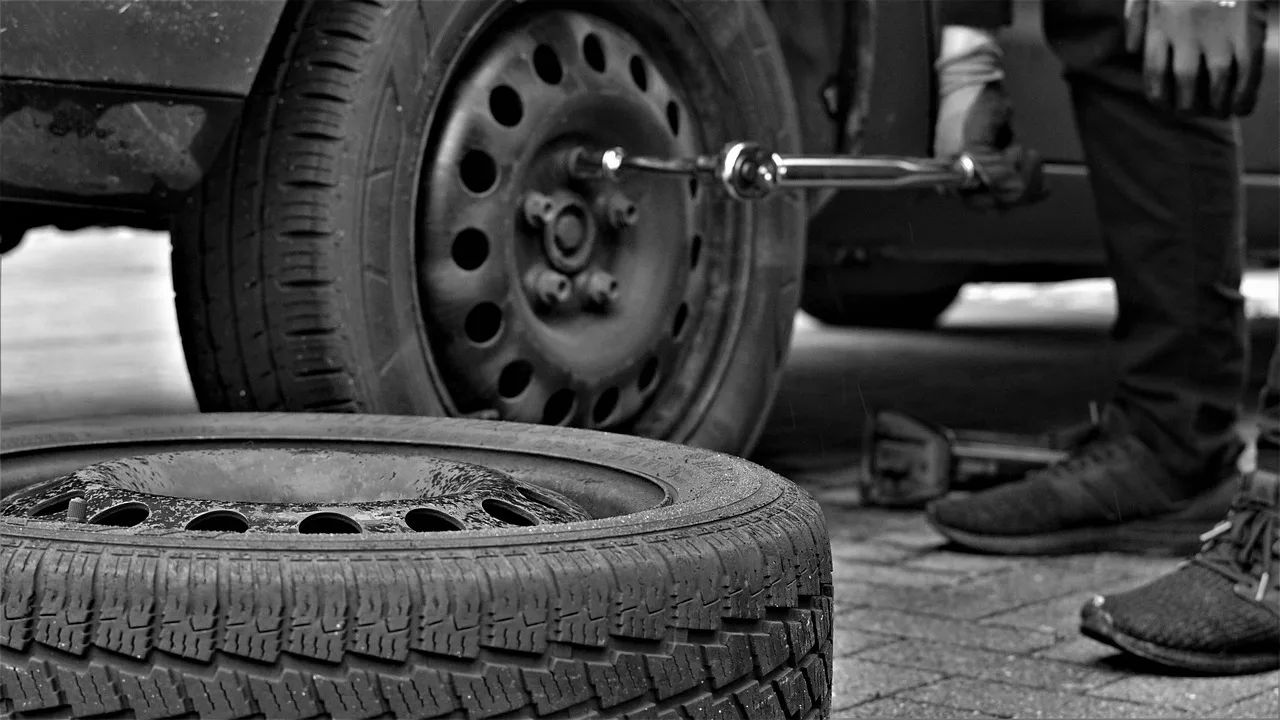
Uneven tire wear often shows up as a change in noise, vibration, or tread shape. Steering wheel vibration can be a symptom of uneven wear, and excessive tire noise is another common clue. A quick tread-depth comparison can tell you more than the sidewall ever will.
Steering wheel vibration
Uneven wear can affect wheel assembly balance and cause vibration. If the steering wheel shakes at highway speed, the cause may be balance, but tread wear can contribute too. Vibration from wear often gets worse as speed rises and may change after a tire swap or rotation.
Excessive tire noise
Uneven wear can create a hum, growl, or road roar that changes with speed. Cupping and feathering often make noise more obvious. If the sound tracks with wheel speed, inspect tread first before assuming the issue is a bearing or transmission problem.
Edge wear, cupping, and feathering
Edge wear often points to underinflation, aggressive cornering, or chronic rotation neglect. Cupping can point to suspension or balance issues. Feathering usually means the tread blocks are wearing unevenly across the tire, which often needs both tire and chassis inspection.
Simple tread-depth comparison
Measure tread depth at the inner edge, center, and outer edge of each tire. Compare front to rear and left to right. A clear difference between axles is a rotation issue; a big difference across one tire’s inner and outer edges points more toward alignment or suspension trouble.
For example, your front tires might show noticeably less tread on one edge than the other, while the rears are closer to even across the tread. That pattern suggests the fronts have been working harder for a long time, and rotation alone will not make the worn edge recover.
Uneven wear vs. balance, alignment, and suspension problems
Skipping rotation can create uneven tread, but it is not the only cause. Balance problems, alignment faults, and worn suspension parts can create similar symptoms. The key is to separate what the tire is telling you from what the chassis is doing.
What balance problems usually feel like
Wheel balance problems usually show up as a vibration that rises with speed and may be felt in the steering wheel, seat, or floor. Balance issues can coexist with uneven wear, but balance alone does not usually create a one-sided tread-depth pattern.
What alignment problems usually look like
Alignment problems often show up as inside-edge or outside-edge wear, a pull to one side, or a steering wheel that sits off-center. Regular rotation cannot correct a bad alignment. It can only move the wear around until the alignment fault is fixed.
When suspension faults are the real cause
Worn shocks, struts, bushings, or ball joints can cause cupping, bounce, and irregular tread wear. If the tires wear in a patchy pattern even after rotation, the suspension should be checked. Otherwise, the new set may wear out the same way.
Mileage guide: inspect, rotate, or replace
There is no single interval that fits every vehicle, but a commonly suggested service window is roughly 5,000 to 8,000 miles when the owner’s manual does not specify something different. Use the manual first, then adjust based on tread depth, wear pattern, and vehicle type.
| Mileage since last rotation | What to do | What to look for |
|---|---|---|
| 0–5,000 miles | Inspect only if symptoms appear | Vibration, new noise, uneven shoulder wear, pressure loss |
| 5,000–8,000 miles | Rotate if the owner’s manual calls for it | Front-to-rear tread gap, wear on drive wheels, torque-lug history |
| 8,000–12,000 miles | Inspect before deciding | Meaningful tread-depth mismatch, cupping, feathering, vibration |
| Over 12,000 miles without rotation | Inspect carefully; replacement may be needed | Wear bars near one axle, noise, pull, or uneven depth that rotation cannot fix |
How long tires last if you do not rotate them depends on the vehicle and driving pattern, but the useful life usually drops when wear concentrates on one axle. If the tread difference is large enough that one tire pair is near replacement while the other pair is not, rotation is no longer enough.
Low-mileage vehicles
If you have driven less than the recommended interval, inspect for abnormal wear before assuming rotation is due. A new vibration or noise can still point to balance or alignment, even when mileage is low.
Mid-interval vehicles
At a typical rotation point, check tread depth across all four tires. If the front-to-rear difference is starting to widen but the tread is still healthy, rotate now and record the mileage for warranty proof.
High-mileage or heavily worn tires
If one axle is close to the wear bars, rotating may only move the problem. Once uneven wear becomes severe, the practical next step is often replacement, not another service interval.
Can skipping rotation affect tire warranty?
Yes. Skipping or prolonging tire rotation may void your tire’s mileage warranty. Tire warranty claims often depend on whether you followed the manufacturer schedule and kept proof. Without records, it becomes harder to support a claim even if the tires wore out early.
Why records matter
Warranty claims often need service history, date or mileage logs, and some proof that rotations were done on schedule. The manufacturer’s rotation pattern also matters, because using the wrong pattern can weaken the claim even when the work was done.
What proof to keep
Keep repair orders, inspection sheets, mileage notes, and tire purchase records. A simple log that shows each rotation date and odometer reading can help. If a tire shop performed the work, ask for a printed record that lists all four tire positions.
When a claim becomes harder to support
If the tires were rotated late, rotated irregularly, or never documented, the claim is harder to support. That is especially true when one axle is much more worn than the other and the service schedule cannot be verified.
Symptom-to-cause inspection checklist
Use this checklist before paying for balancing, alignment, or replacement. It separates wear-related clues from chassis-related clues, and it helps you decide whether you should inspect, rotate, balance, align, or replace.
- Check tread depth at all four tires. Compare inner, center, and outer edges on each tire.
- Compare front to rear. A large axle difference points toward skipped rotation or drivetrain load.
- Look for cupping or feathering. Patchy wear can point to balance, suspension, or inflation problems.
- Watch for steering wheel vibration. If it appears at speed, inspect balance and tread wear together.
- Listen for excessive tire noise. Growl or hum that changes with speed can come from uneven wear.
- Check for pull or off-center steering. That leans more toward alignment than simple rotation neglect.
- Review service records. Missing rotation proof can matter for warranty claims.
- Decide the next step. Rotate if wear is mild, balance if vibration points to the assembly, align if the vehicle pulls or wears an edge, and replace if the tread is too uneven to recover.
Suppose an AWD crossover has 7/32 on the rear tires and 4/32 on the front, plus a low-speed hum. Rotation may help spread future wear, but the hum could still come from cupping or balance. If the front inside shoulders are also worn hard, an alignment check becomes the smarter next step.
What happens if you don’t rotate your tires regularly is more than a shorter tire life. The wear pattern changes, the symptoms change, and the fix changes too. Mild uneven wear may still be recoverable with rotation, but severe tread mismatch, cord exposure, or cupping usually means replacement.
Frequently asked questions
What happens if you don’t rotate your tires regularly?
Regularly skipping rotation lets one axle wear faster than the other, which shortens tire life and can change handling and ride quality. Over time, the front and rear tread depths separate enough that the vehicle may become louder, less stable, and more expensive to maintain.
What happens if you don’t rotate your tires on time?
If you do not rotate on time, the wear gap can grow from mild to hard to recover. That can increase road noise, vibration, and the chance that one pair of tires reaches replacement sooner. It can also weaken a mileage warranty claim if service timing is documented.
What can happen if you don’t rotate your tires?
You can get uneven tread, faster wear on drive wheels, and a rougher or noisier ride. In some cases, the wear pattern starts to affect wheel balance and steering feel. If the tread difference becomes severe, rotation will not restore the lost rubber.
How long do tires last if you don’t rotate them?
There is no exact mileage that fits every vehicle, but unrotated tires usually lose useful life faster because the wear is concentrated. A front-heavy or high-torque vehicle can wear one axle much sooner than the other, which often forces earlier replacement of the whole set.
Do you really need to rotate your tires?
Yes, if you want even wear and better odds of reaching the tread life the tires were designed to deliver. The owner’s manual should set the interval and pattern. Rotation does not fix alignment or suspension faults, but it helps keep wear distribution under control.
What happens if I don’t rotate my tires for a year?
After about a year, the tread difference may be large enough that the tires no longer wear evenly enough for a simple correction. You may notice noise, vibration, or handling changes. If one axle is close to the wear bars, replacement may be the practical next step instead of rotation.