What Is the Best Tire Rotation Pattern for FWD?
For most front-wheel drive cars with non-directional tires, use the forward cross pattern: front tires move straight to the rear, and rear tires cross to the front; directional tires stay on the same side, and staggered setups usually do not rotate. Using the wrong pattern can speed uneven wear, pull the car off line, and waste tire life. This guide shows the right rotation pattern by tire type and when wear means you should inspect suspension, alignment, or tire damage instead.
Why front tires wear faster on FWD cars
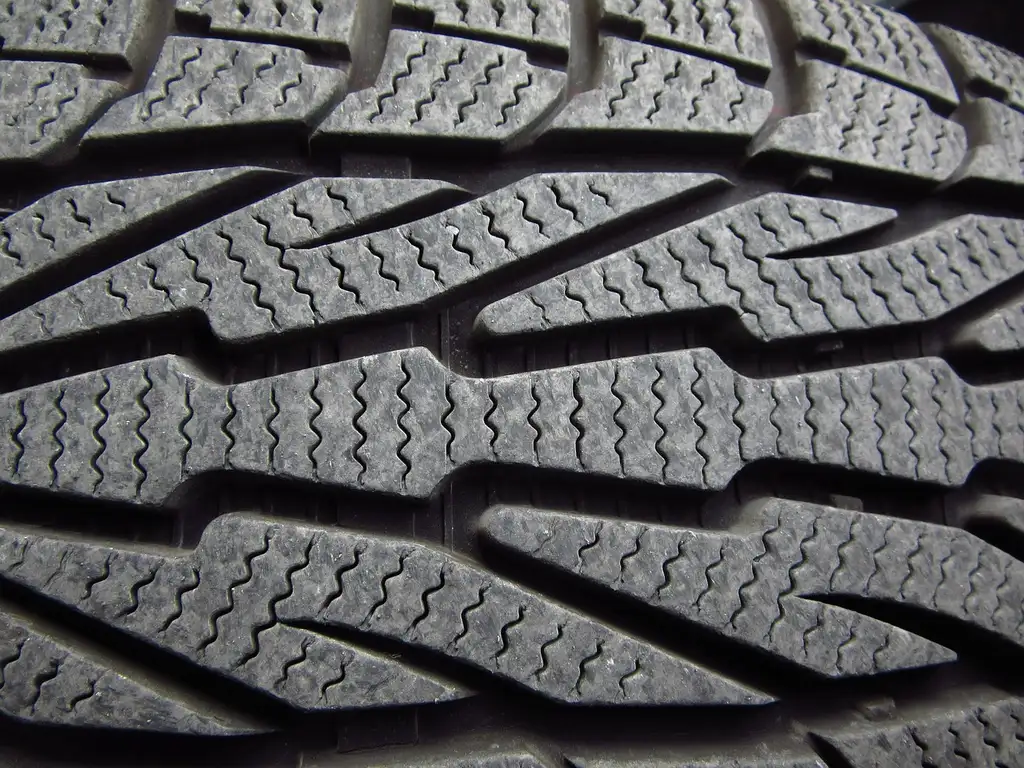
Front-wheel drive cars often wear the front tires faster because the front axle handles both steering and driving. That extra load scrubs tread in turns, and drive torque adds more wear under acceleration. If you leave the fronts in place too long, the wear gap can grow quickly.
Rotation evens out that wear by moving the more loaded tires to the rear and bringing the rear tires forward. That helps extend usable tread life and keeps the car more predictable when the tires are close to matching depth.
Forward cross is the default for same-size, non-directional tires
For same-size, non-directional tires on a front-wheel drive vehicle, the forward cross is the default pattern. Bridgestone calls it the most common pattern for front-wheel-drive vehicles. In this pattern, the front tires move straight back on the same side, and the rear tires move forward while crossing to the opposite side.
TireGrades says FWD vehicles have two acceptable rotation patterns, and that the forward cross is the more preferable method. Drivers Advice also identifies forward cross as the default FWD pattern for same-size, non-directional tires. That gives you a clear starting point when the manual does not specify something different.
Where the X-pattern fits, and when to skip it
The X-pattern can work for some FWD setups, and TireGrades lists it as an acceptable alternative. It crosses both the front and rear tires. Still, when forward cross is allowed, it is usually the first choice because it matches the usual wear pattern on FWD cars more closely.
Skip generic diagrams when the tire type or vehicle fitment limits your choices. Directional tires, staggered sizing, and some vehicle-specific instructions change the answer. The owner’s manual overrides any generic pattern chart from a tire guide or shop poster.
What pattern should you use?
Use the pattern that matches the tire construction and wheel fitment first, then confirm it in the owner’s manual. If the tires are same-size and non-directional, forward cross is usually the right answer. If the tires point one way or the front and rear sizes differ, the pattern may narrow or disappear.
Same-size, non-directional tires
Use forward cross unless the owner’s manual says otherwise. Front tires go straight back to the same side. Rear tires move forward and cross to the opposite side. That is the clearest default for most FWD drivers.
Directional tires
Directional tires should normally rotate front to back on the same side only. The sidewall arrow determines the allowed rolling direction, so crossing sides can defeat the tread design. If the tires are directional, do not use a generic cross pattern unless the manual specifically allows it.
Staggered wheel fitment
Staggered fitment means the front and rear tires are different sizes or widths. That can limit rotation to side-to-side only on the same axle, or make rotation impossible. On some vehicles, there is no safe rotation pattern across axles at all.
FWD tire rotation decision table
| tire setup | allowed pattern | not allowed | post-rotation check | when to inspect for alignment/suspension issues |
|---|---|---|---|---|
| same-size, non-directional | forward cross; X-pattern may be acceptable if the manual allows it | rotation pattern that conflicts with the manual | verify lug nut torque, tire pressure, and TPMS status | if wear is cupped, feathered, or only one shoulder is worn |
| directional | same-side front-to-back rotation only, if allowed by the manual | crossing sides | confirm wheel position, arrow direction, pressure, and TPMS | if the same edge wears fast on both front tires or the car pulls |
| staggered | side-to-side only on the same axle, or no rotation if fitment prevents it | cross-axle rotation that does not fit the wheels or tires | check the manual before moving anything | if one axle wears much faster, or the vehicle has uneven camber wear |
| 5-tire with full-size matching spare | 5-tire rotation that includes the spare, if the manual supports it | using a compact temporary spare as part of the set | reset TPMS if required and note the spare’s position | if the spare is older, different in tread depth, or shows sidewall aging |
| no-rotation edge case | no rotation until the manual or tire fitment allows one | forcing a generic pattern onto a restricted setup | inspect tire pressures, torque, and wear differences instead | if tread depth is already uneven or the car vibrates |
How to rotate tires on a front-wheel drive car

Start with a safe lift, then move each wheel to the position allowed by the tire type and the owner’s manual. For most same-size, non-directional FWD setups, that means front tires straight back and rear tires crossing to the front. Finish by checking torque, tire pressure, and TPMS.
Set the vehicle safely on jack stands and chock the wheels
Park on a flat surface, set the parking brake, and chock the wheels that stay on the ground. Use the jack points listed in the owner’s manual, then support the vehicle with jack stands before removing any wheel. Never rely on a jack alone.
Move each wheel to the correct position
- Mark each tire’s starting position if you want to track wear.
- Remove the wheels and place them where the pattern calls for.
- Install the wheels by hand first so the studs or bolts start cleanly.
- Tighten the fasteners in a star pattern before lowering the car.
- Lower the car fully, then torque the lug nuts to the manual’s specification.
A common first-timer mistake is crossing a directional tire because the tread diagram looks simple. The arrow on the sidewall decides the allowed direction, not the generic pattern chart.
Check pressure, torque, and TPMS after installation
After the wheels are on, verify tire pressure and set it to the placard specification. Then torque the lug nuts to the manual’s value. Do not guess at torque or tighten until it feels good; overtightening can distort studs, rotors, or wheels.
Some vehicles need a TPMS reset or relearn after rotation. That procedure is vehicle-specific, so check the manual before you leave the driveway. If the light stays on after the relearn, inspect the system instead of assuming it will clear itself.
Can you use a full-size spare?
Yes, if the spare is a full-size matching tire and the manual supports a 5-tire rotation. The same source says a full-size matching spare can be included in a 5-tire rotation. That can extend service life because the spare does real work instead of sitting unused.
5-tire rotation setup
In a 5-tire plan, the spare becomes part of the rotation cycle. That means you track its position like the other four tires and move it according to the manual’s pattern. The benefit is more even wear across five tires instead of four.
Why a compact spare is excluded
A compact temporary spare should not be treated as part of the normal set. It is not built for long-term use, and its size can change handling, speedometer accuracy, and ABS or TPMS behavior. Leave it out of the rotation plan unless the vehicle manual specifically says otherwise.
When a spare changes the rotation plan
Say your SUV carries a matching full-size spare and the four road tires are all the same size. A 5-tire rotation may make sense. Suppose the spare is a compact donut instead. Then it stays out of the pattern, and the rotation plan stays at four tires.
How often should you rotate FWD tires?
Use the owner’s manual first. Many manufacturers set their own interval and may tie it to tire type, driving style, or warranty terms. As a general guide, the common service range is about 5,000 to 8,000 miles, and wikiHow also gives 6 months or 5,000–8,000 miles. (Wikihow)
Common service intervals and why they vary
The same source says a 5,000 mile schedule is usually often enough for warranty requirements. That does not replace the manual. If the manual specifies a shorter or different interval, follow that instead. Some tires, vehicles, and driving conditions wear faster than the general range.
What driving habits shorten the interval
Frequent short trips, hard cornering, heavy loads, and aggressive acceleration can all speed front tire wear on FWD cars. If the front tires are wearing faster than expected, rotate sooner rather than waiting for a round number on the odometer.
What should you inspect after rotation?
Rotation should even out wear, not hide a fault. If the tread still wears in a pattern after you move the tires, inspect the car for alignment, steering, or suspension issues. Rotation alone will not fix camber, toe, or worn components.
Uneven wear patterns that point to alignment issues
Watch for feathering, one-sided shoulder wear, or a tire that wears much faster on one edge than the other. Those signs usually point to alignment rather than rotation frequency. If the wear repeats after a correct rotation, the car needs inspection.
Signs of suspension or steering wear
Look for cupping, vibration, a pull on the highway, or clunks over bumps. Worn struts, ball joints, tie rods, or bushings can create tire wear that rotation cannot cure. If any of those symptoms show up, checking the suspension is more useful than repeating the same rotation.
When a shop inspection makes more sense than another rotation
If the tread depth difference is large, if the vehicle drifts, or if the tires show irregular wear on just one axle, schedule an inspection. A good rotation plan helps preserve tire life, but a damaged or misaligned car will keep eating tires no matter how often you swap them.
Frequently asked questions
What is the proper tire rotation pattern?
For most same-size, non-directional front-wheel drive tires, the proper pattern is forward cross. Front tires move straight back to the same side, and rear tires move forward while crossing to the opposite side. If the tires are directional, staggered, or covered by a special manual note, use that rule instead.
What pattern should I rotate my tires?
Use the pattern that fits the tire type and the vehicle’s manual. Same-size, non-directional tires usually use forward cross on FWD cars. Directional tires usually stay on the same side. Staggered fitments may limit you to side-to-side on the same axle or block rotation entirely.
How do you rotate tires on a front-wheel drive car?
Chock the wheels, raise the car at the manual’s jack points, and support it on jack stands. Then move the wheels to their correct positions, tighten the fasteners in a star pattern, lower the car, torque the lug nuts to spec, and check tire pressure and TPMS.
How often should you rotate front-wheel drive tires?
Check the owner’s manual first. If the fronts wear faster than expected because of your driving pattern, rotate sooner rather than later.
Is forward cross or X-pattern better for FWD?
Forward cross is usually the better choice for FWD when same-size, non-directional tires allow it. The same source lists the X-pattern as an acceptable alternative, but also says forward cross is more preferable. If the manual prefers a different pattern, follow the manual.
What if my tires are directional?
Directional tires normally rotate front to back on the same side only. The sidewall arrow shows the allowed direction of travel. Crossing sides can defeat the tread design and is usually not allowed. If the manual gives a more specific rule, use that instead of a generic diagram.