Bad Fuel Injector Symptoms: How Do You Know?
A bad fuel injector usually causes rough idle, a misfire, fuel smell or black smoke, or a dead cylinder; if one cylinder is weak and the plug is wet, suspect the injector first. Left alone, it can wash cylinders with fuel, foul spark plugs, and waste money on coils, plugs, or pumps that were never the real fault. This guide shows the symptom patterns for clogged, leaking, and electrically failed injectors, plus the quick checks that separate them from lookalike problems.
Fuel injector basics
A fuel injector is an electronically controlled valve that sprays fuel into the intake manifold or engine cylinders. That spray pattern affects the air-fuel mixture, which changes power delivery, idle quality, and emissions. When the injector cannot meter fuel correctly, the engine may run lean, rich, or on fewer cylinders than it should.
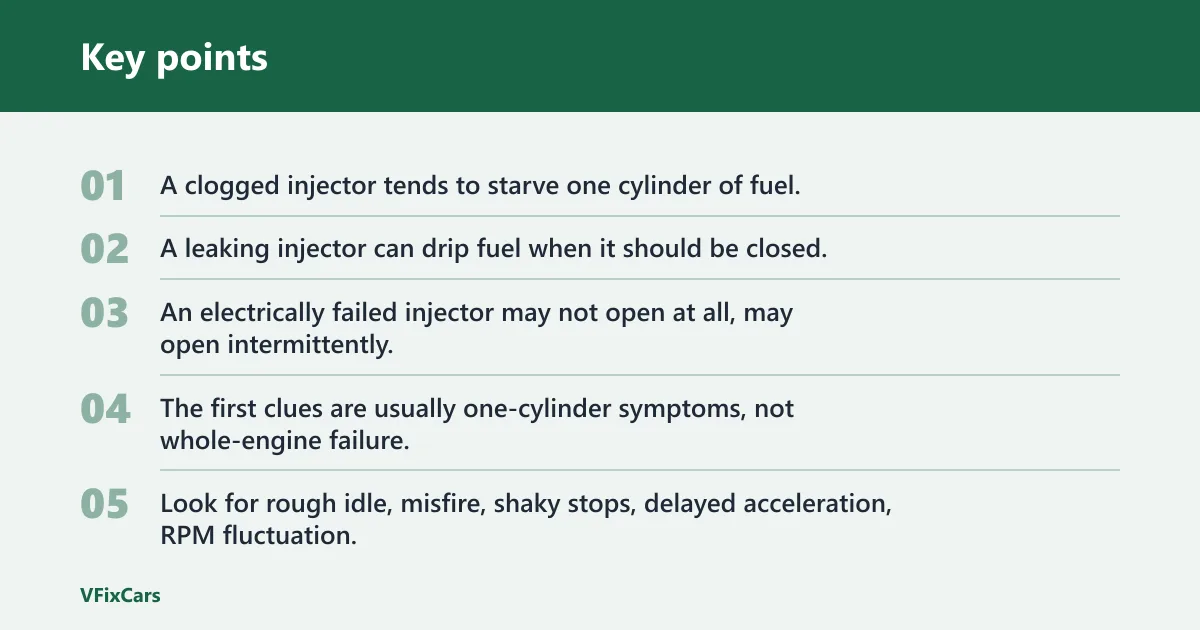
The failure mode matters. A clogged injector tends to starve one cylinder of fuel. A leaking injector can drip fuel when it should be closed. An electrically failed injector may not open at all, may open intermittently, or may stay stuck long enough to throw the mixture off in a single cylinder.
What a bad injector tends to do first
The first clues are usually one-cylinder symptoms, not whole-engine failure. Look for rough idle, misfire, shaky stops, delayed acceleration, RPM fluctuation, fuel odor, smoke, or a check engine light that appears with those symptoms. Those patterns matter more than any one code by itself.
Fuel delivery problems often show up at idle and light throttle before they become obvious at highway speed. That is why a weak injector can feel like a stumble at red lights, a brief hesitation pulling away, or a single-cylinder miss under load.
Clogged, leaking, and electrical failure
A clogged injector often points to lean running in one cylinder. A leaking injector often points to a rich condition, fuel smell, wet plugs, or smoke. An electrical fault can look like either one, depending on whether the injector never opens, opens late, or cuts out intermittently.
That difference helps you avoid the wrong repair. A rough idle with one dead cylinder does not mean the fuel pump is weak. A fuel odor does not always mean the tank or line is leaking. And a misfire code does not automatically mean the coil pack failed.
What are the first signs of a bad fuel injector?
The first signs are usually rough idle, a misfire, unstable RPM, and a change in fuel economy before the engine quits completely. You may also notice delayed acceleration, a fuel smell, or a check engine light that appears with a lean or misfire complaint. The pattern matters more than any single symptom.
Rough idle and shaky stops
Rough idle often shows up as shaking, sputtering, or stalling while the engine is idling. It may be worst at red lights, in traffic, or right after startup. A clogged injector can starve one cylinder enough to make idle unstable, while a leaking injector can foul the mixture and make the engine hunt for a steady speed.
Misfire and delayed acceleration
A misfire can feel like vibration or delayed acceleration. The engine may stumble when you tip into the throttle, then catch up a moment later. If one injector is not supplying fuel evenly, the affected cylinder does not contribute its share of power, and the vehicle can feel flat or jerky.
Poor MPG and unstable RPM
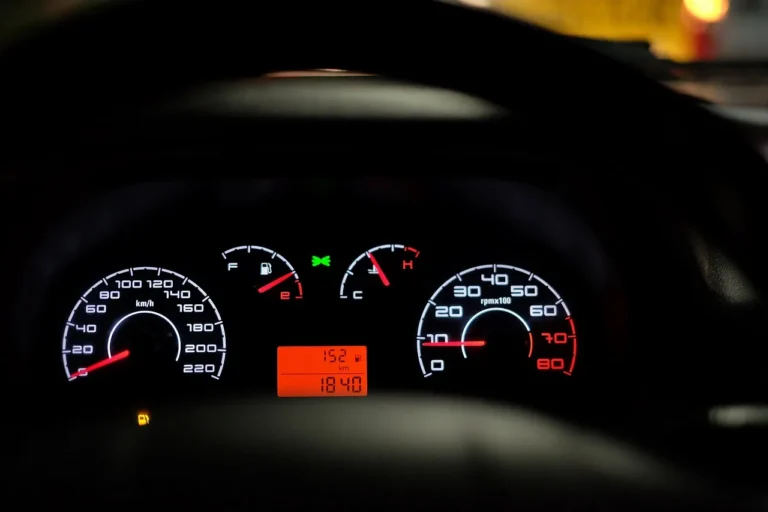
Bad gas mileage may point to dirty, clogged, or leaky injectors. You may also see the tachometer needle wander or jump under the same load, which points to an incorrect fuel-air mix. A clogged injector can make the computer add more fuel overall; a leaking injector can waste fuel directly.
Say your sedan idles smoothly in park, then starts shaking at a stoplight with the air conditioning on. If the tachometer dips and recovers at the same time, that pattern fits uneven fuel delivery better than a simple “needs a tune-up” guess.
Injector symptom triage table
Use this table as a quick sorting tool. Start with the symptom that shows up most clearly, then compare it with the likely injector fault and the nearest lookalike. The next check column tells you what to confirm before replacing parts.
| Symptom | Likely injector failure mode | Common lookalike fault | Urgency | Next check |
|---|---|---|---|---|
| Rough idle | Clogged or uneven injector flow | Vacuum leak or dirty throttle body | Moderate | Check for one-cylinder misfire and listen for RPM instability at idle |
| Misfire under load | Clogged or intermittently failing injector | Spark plug or ignition coil | Moderate to high | Compare the misfire pattern across cylinders and inspect plug condition |
| Fuel smell inside vehicle | Leaking injector | Fuel line, rail, or tank vent leak | High | Look for wet injector body, wet rail area, or pooled fuel below the car |
| Poor MPG | Dirty, clogged, or leaky injector | Oxygen sensor or short-trip driving | Low to moderate | Check for rich running clues such as soot, fuel odor, or black exhaust |
| Hard start | Weak injector, stuck injector, or poor spray pattern | Low fuel pressure or weak battery | Moderate | Note whether cranking is long only after sitting or on every start |
| No-start | Injector not opening or cylinder flooding | Fuel pump or crank sensor fault | High | Check for spark, fuel pressure, and wet plugs before parts replacement |
| Black smoke | Leaking or stuck-open injector | Rich sensor input or fuel pressure regulator issue | High | Inspect for fuel odor and a plug that is wet or carbon-fouled |
| Blinking CEL with shaking | Serious misfire from injector fault | Ignition coil or compression problem | High | Stop hard driving and confirm the misfire cylinder before continuing |
How to read the table
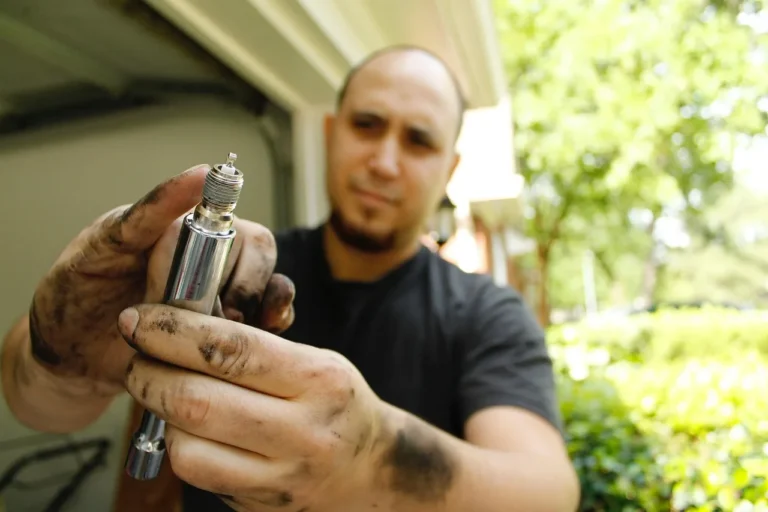
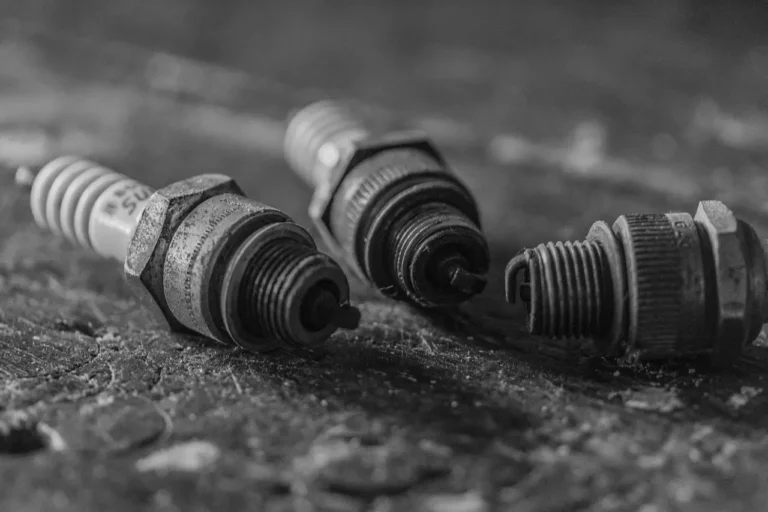
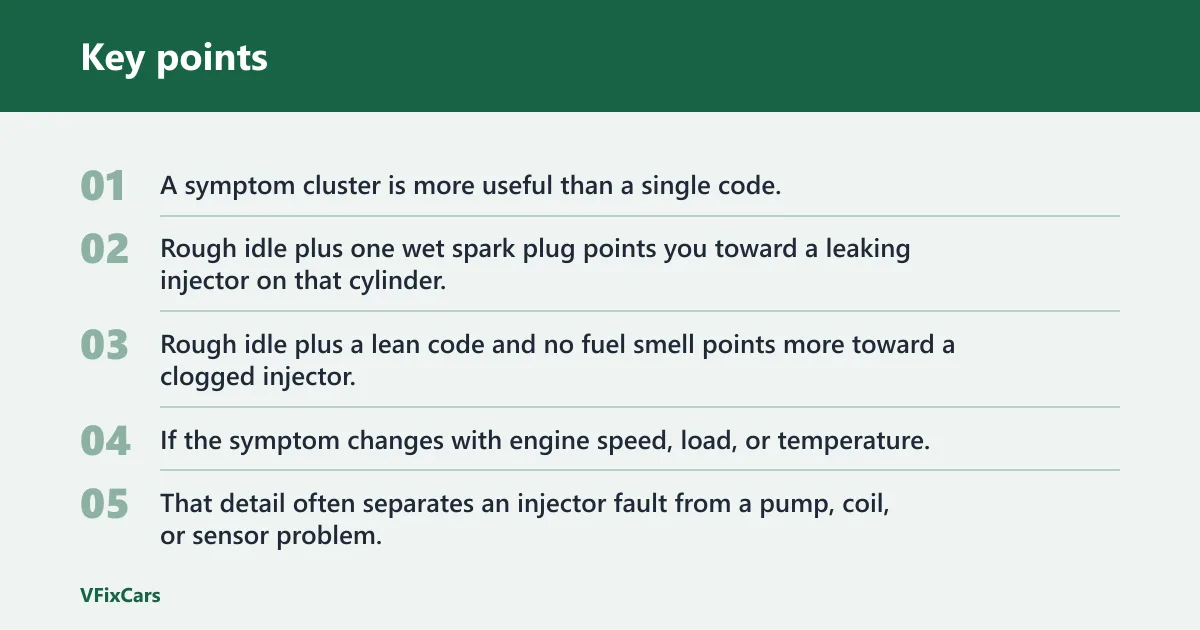
A symptom cluster is more useful than a single code. Rough idle plus one wet spark plug points you toward a leaking injector on that cylinder. Rough idle plus a lean code and no fuel smell points more toward a clogged injector, vacuum leak, or air metering issue than a leak.
If the symptom changes with engine speed, load, or temperature, note that pattern before you buy parts. That detail often separates an injector fault from a pump, coil, or sensor problem.
Can a bad fuel injector cause rough idle and misfires?
Yes. Uneven fuel delivery can cause rough idle, shaking, sputtering, stalling, misfire, and delayed acceleration. When one cylinder gets too little fuel, or fuel at the wrong time, the engine loses balance at idle and under light throttle. The result can be vibration, a stumble, or a temporary loss of power.
What a misfire feels like while driving
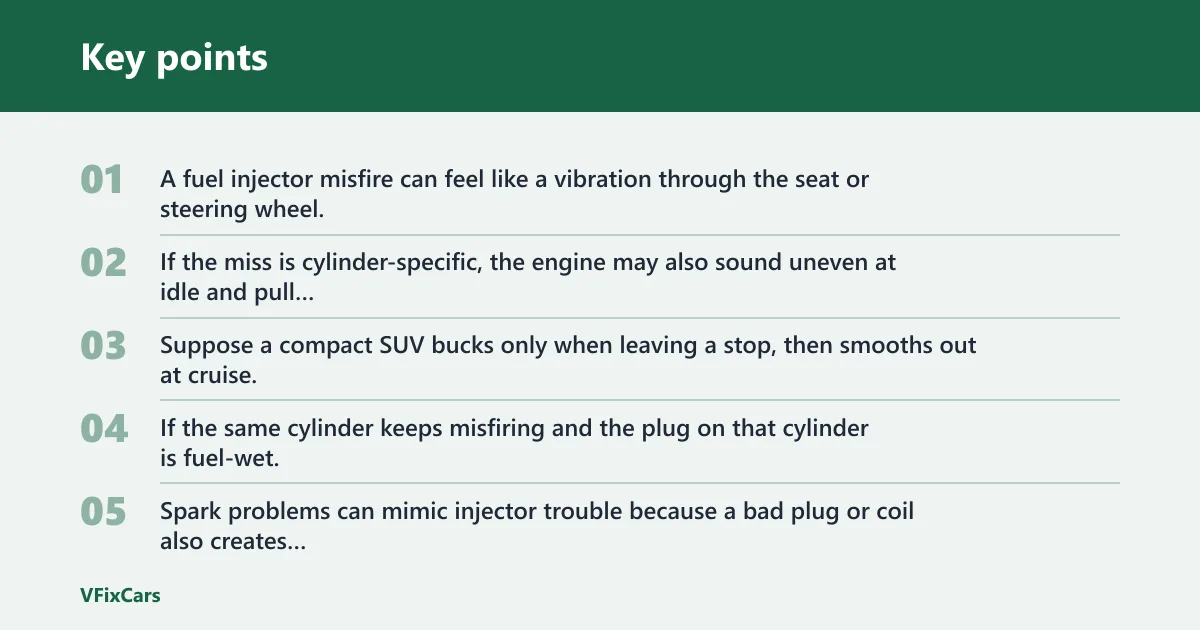
A fuel injector misfire can feel like a vibration through the seat or steering wheel, a brief dead spot when you press the accelerator, or a hesitation that clears after the engine catches up. If the miss is cylinder-specific, the engine may also sound uneven at idle and pull weakly from a stop.
Suppose a compact SUV bucks only when leaving a stop, then smooths out at cruise. If the same cylinder keeps misfiring and the plug on that cylinder is fuel-wet, the injector deserves attention before the coil or transmission is blamed.
Common lookalike faults
Spark problems can mimic injector trouble because a bad plug or coil also creates misfire and vibration. Vacuum leaks can cause lean idle and unstable RPM. Low compression can mimic a dead injector by weakening one cylinder. The key difference is pattern: injector faults often stay tied to one cylinder’s fuel delivery, while spark and vacuum issues may shift with load or affect broader running conditions.
Does a bad fuel injector make the check engine light come on?
Yes, injector trouble can turn on the check engine light, and it may be steady or blinking. A steady light often comes with drivability complaints that are present but not immediately severe. A blinking light usually often indicates a serious misfire risk that can damage the catalyst if you keep driving hard.
Why codes do not prove the part is bad
Misfire codes and lean codes point to a problem area, not a single failed part. A code can be set by a clogged injector, but also by a vacuum leak, weak coil, low fuel pressure, wiring fault, or sensor input that distorts fueling. Scan data is a clue, not a verdict.
What to confirm next
Before replacing an injector, confirm which cylinder is affected, whether the plug is dry or fuel-wet, and whether the symptom follows the cylinder or the coil. If available, check fuel pressure, injector connector power and ground, and whether the engine has a vacuum leak that could explain a lean condition.
Do not swap parts at random because the light is on. A blinking CEL with a misfire deserves faster action than a steady light with mild roughness, but it still needs the symptom pattern to point to the real fault.
Fuel smell and leak signs
Yes, a leaking injector can smell like fuel in the cabin, and it can also leave wet fuel on the injector exterior or pool beneath the vehicle. Fuel leaks are a fire hazard, so this symptom deserves immediate attention rather than a wait-and-see approach.
Fuel odor inside the cabin
A fuel smell near the cabin can point to a leaking injector, but it can also come from a rail seal, line, cap, or vapor system problem. The injector clue gets stronger if the smell is strongest near the engine, appears after shutdown, or comes with rich running, smoke, or a wet spark plug.
Wet injector body or pooling below
Inspect the injector area for shiny wetness on the body, around the O-ring, or on nearby fuel rail surfaces. Pooling beneath the vehicle is more urgent, because fuel leaks are a fire hazard. If fuel is visible, do not keep driving to “see if it clears up.”
A common first-timer mistake is assuming every fuel smell comes from the tank. A leaking injector near the intake can smell strongest right after a hot shutdown, especially if fuel drips onto a warm engine bay surface.
Can a bad injector cause hard starting or no-start?
Yes. A bad injector can cause extended crank, hard starting, or no-start if fuel does not reach the cylinder, or if one injector leaks enough to flood a cylinder. These are more severe symptoms because the engine cannot get the air-fuel balance it needs to fire cleanly.
Extended crank versus no-start
Extended crank means the engine turns over longer than normal before starting. No-start means it never catches. A weak injector may only show up as long cranking after the car sits. A stuck-open injector can flood one cylinder and create a much worse starting problem, especially after a hot soak.
Flooding and fuel starvation
Fuel starvation happens when the injector is clogged or not opening. Flooding happens when it leaks or sticks open. One case leaves the cylinder too dry to ignite; the other leaves it too wet to ignite. Both can create a dead-cylinder feel during startup.
When to stop driving
If hard starting comes with fuel odor, smoke, or a blinking check engine light, stop driving hard and diagnose the leak or misfire first. If the engine will not start and you smell raw fuel, treat it as a possible flooding or leak problem, not just a battery issue.
Fuel injector symptoms versus other faults
Injector symptoms overlap with fuel pump, spark, vacuum, and sensor issues, so the next check should match the symptom pattern. A bad injector usually acts on one cylinder or on fuel delivery quality. A pump, spark, or air leak often changes the whole engine’s behavior in a broader way.
Fuel pump lookalikes
A weak fuel pump tends to affect multiple cylinders at once, especially under load or at higher speed. You may see long crank, lack of power, or stalling across the whole engine rather than one-cylinder roughness. If one plug is wet and the others look normal, the injector is a stronger suspect than the pump.
Spark and ignition lookalikes
Bad coils and worn plugs can mimic injector misfire with shaking and delayed acceleration. The difference is that spark faults often follow the ignition component, not the injector. A coil swap that moves the misfire points away from the injector; a misfire that stays with one cylinder after coil checks points back toward fuel delivery.
Vacuum leak and sensor lookalikes
A vacuum leak can cause rough idle, unstable RPM, and lean codes, but it usually changes when unmetered air enters the engine rather than when a specific injector fails. Sensor faults can skew mixture on several cylinders, yet they usually do not create a wet plug on one cylinder the way a leaking injector can.
- Confirm the main symptom: rough idle, misfire, fuel smell, poor MPG, hard start, or no-start.
- Check whether one cylinder seems different from the others.
- Look for wetness on the injector, spark plug, or nearby fuel rail area.
- Note whether the check engine light is steady or blinking.
- Compare the pattern with fuel pump, spark, vacuum, and sensor lookalikes before replacing parts.
Frequently asked questions
Will bad fuel injectors hurt gas mileage?
Yes. Dirty, clogged, or leaky injectors can waste fuel or force the engine to run inefficiently, which raises fuel consumption. Poor MPG often appears along with rough idle, misfire, or a fuel odor. If mileage drops suddenly, check for other symptoms before blaming driving habits alone.
Can you smell fuel if an injector is leaking?
Yes. A leaking injector can create a fuel odor in the cabin, especially if fuel seeps near the engine and evaporates after shutdown. Look for wetness on the injector body, fuel rail area, or pooling below the vehicle. Because fuel leaks are a fire hazard, treat this as urgent.