Rubber Mats vs Carpet Mats: Which Is Better for Your Car?
Rubber mats make more sense if you deal with mud, snow, spills, or frequent cleanup; carpet mats fit dry climates and a cabin-focused look. Pick the wrong type, and you can end up with wet floors, stains, slipping mats, extra cleaning, or a cabin that feels unfinished. This guide compares grip, weather protection, cleaning effort, comfort, noise, and appearance so you can match the mat to how you drive.
| Factor | Rubber mats | carpet mats | Winner |
|---|---|---|---|
| Water, mud, and spill control | Waterproof surface sheds liquid and holds slush better | Fibers can trap moisture, salt, and stains | Rubber mats |
| Cleaning effort | Usually hose off or wipe down | Often needs vacuuming and deeper cleaning | Rubber mats |
| Cabin feel and appearance | More utilitarian look, especially in plain black | Usually closer to factory trim and quieter underfoot | carpet mats |
| Grip and movement risk | Can have high traction, but fit and anchors still matter | Can stay put well when tailored to the cabin | Tie |
| Odor and stain resistance | Can smell when new; resists staining well | Less new-material odor, but stains more easily | Mixed |
| Best-fit use case | Wet, dirty, and high-contamination use | Dry, low-mess, appearance-first use | Depends on use case |
Water, mud, and spill control
Rubber mats win when contamination is the main issue. Their waterproof surface keeps rainwater, melted snow, mud, and spilled drinks from soaking into the mat, so cleanup stays on top instead of moving into the fibers.
Carpet mats can handle light dust and dry shoe debris, but they hold liquid and fine grit more easily. In winter, that matters because road salt and slush can leave stains and crusted residue that take longer to remove.
Cabin feel and appearance
carpet mats usually look more OEM-like because they resemble the factory floor covering. That makes them the better fit when the cabin is clean, dry, and judged mostly on appearance.
Rubber mats have a more functional look. In a work truck or winter commuter, that is often fine. In a luxury cabin, the visual contrast can feel too harsh unless the mat is a tailored-fit design that follows the floor closely.
Cleaning effort and drying time
Rubber mats are easier to bring back to clean condition after mud, snow, or pet mess. A hose, a rinse, and a short dry period often get them back in service faster than carpet mats.
carpet mats usually need vacuuming first, then spot treatment or deeper cleaning when salt and grime work into the pile. They also take longer to dry after a full wash, which matters if you need the car back on the road the same day.
What are the pros and cons of rubber floor mats?
Rubber floor mats are waterproof, easy to hose off, and strong in places that see snow, mud, sand, pet hair, or work boots. The trade-off is appearance, plus some products can smell when new and may feel too plain for a cabin that aims for a factory finish.
Their performance still depends on fit. A rubber mat that slides or curls at the edges is worse than a well-fitted carpet mat, because movement can expose the floor and create pedal interference risk.
Water resistance and contamination control
Rubber’s main advantage is containment. Liquids sit on the surface instead of soaking in, which makes the mat easier to remove and clean after a stormy week or a muddy jobsite visit.
Grip, odor, and aging
Many rubber mats have higher traction on the shoe side, but that does not replace proper anchors. Cheap mats can still shift. New rubber can also carry a noticeable smell, and that odor usually matters most in a tightly sealed cabin.
Are rubber mats better than carpet mats for your use case?
Rubber mats are the better pick for rain, snow, mud, pet transport, and work boots because those conditions create wet, gritty contamination that carpet holds onto. carpet mats are better when the cabin stays dry, the car sees light use, and you care more about quiet foot feel and factory-like appearance.
Rain commute
Choose rubber mats if wet shoes are routine. They contain runoff from umbrellas, hems, and soaked soles, and they are quicker to clean after repeated use than carpet mats.
Snowy region
Choose rubber mats for snow belt driving because meltwater and road salt are hard on carpet pile. The mat needs deep edges and a secure fit so slush does not spread beyond the footwell.
Family kids
Choose rubber mats when snacks, drinks, and muddy shoes are part of daily life. Carpet mats can look fine at first, but they show stains faster and usually require more cleanup after repeated spills.
Pet transport
Choose rubber mats if dogs ride in the cabin and bring in hair, damp paws, or drool. Hair can still cling to rubber, but it is usually easier to remove from a wipeable surface than from carpet fibers.
Work boots
Choose rubber mats for trades, delivery work, or any routine that brings grit and sharp debris into the footwell. Carpet mats wear faster under coarse dirt and can hold the grime that comes off boot tread.
When do carpet mats make more sense?
carpet mats make more sense in dry climates, quiet cabins, and appearance-first interiors. If the floor rarely sees water or mud, carpet gives a more integrated look and avoids the utilitarian feel that rubber can bring.
That makes them a sensible choice for owners who care about OEM appearance, low cabin clutter, and normal commuter dust rather than seasonal slush or jobsite debris.
Luxury cabin focus
Choose carpet mats when the interior already uses softer trim and you want the floor covering to blend in. They usually look more natural with premium upholstery and trim, especially when the vehicle left the factory with carpeted mats.
Dry climates and light use
Choose carpet mats if the main contaminant is dust rather than water. In a dry climate, they can stay presentable for a long time with vacuuming and occasional spot cleaning.
Noise and underfoot feel
carpet mats can feel quieter and less reflective underfoot because they match the cabin’s textile surfaces. Rubber can feel firmer and more utilitarian, which some drivers like and others do not.
Lease return and appearance priorities
Choose carpet mats when the cabin needs to look close to stock at the end of a lease. A clean carpet mat can help the interior read as lightly used, while stained or warped rubber can be harder to overlook.
Are custom-fit floor mats worth it?
Custom-fit floor mats are often worth it when coverage, retention, and pedal safety matter. Tailored-fit floor mats typically follow the footwell shape, cover more of the dead pedal area, and are often less likely to slide than generic trim-to-fit mats.
Tailored-fit floor mats and anchor points
Vehicle-specific mats often line up with factory retention clips and fixing points. That matters because the anchors help prevent movement when your heel pivots or when passengers drag water and dirt across the floor.
Universal floor mats and trim-to-fit limits
Universal floor mats are cheaper upfront, but they depend on trimming and approximate fit. Coverage varies by vehicle, and the edges may leave exposed carpet or interfere with the footwell shape.
Coverage around footwells and dead pedals
Coverage is not just a cosmetic detail. If a mat does not reach the dead pedal area, grit and moisture can still collect there. If it sits too high, it may bunch or lift near the pedals, which can be a safety concern.
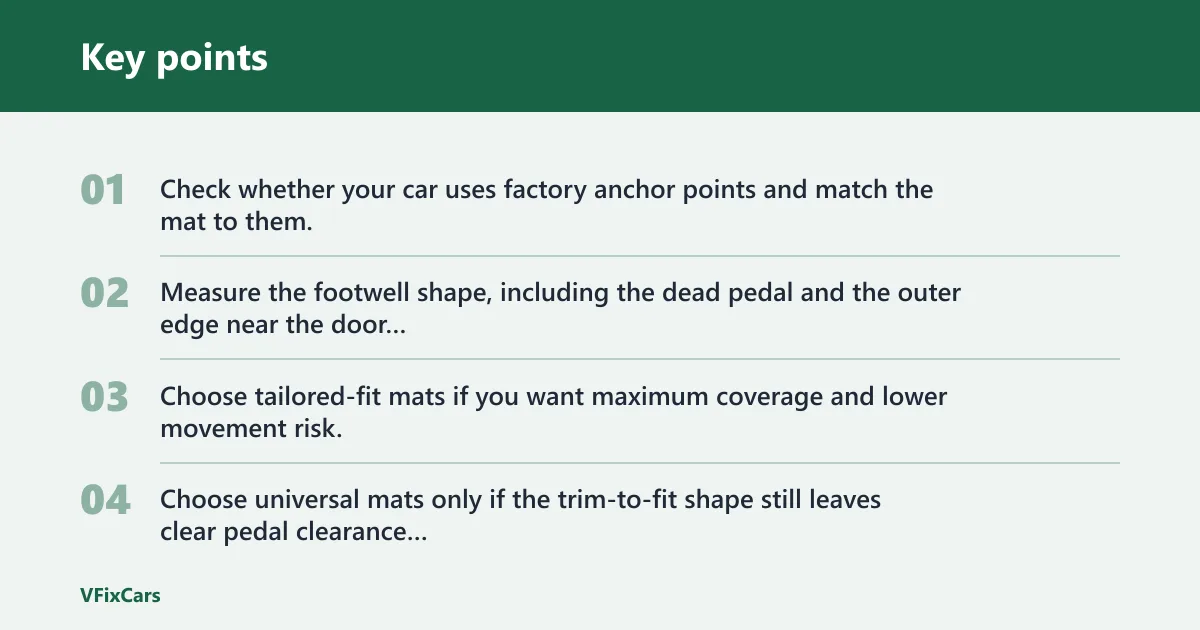
- Check whether your car uses factory anchor points and match the mat to them.
- Measure the footwell shape, including the dead pedal and the outer edge near the door sill.
- Choose tailored-fit mats if you want maximum coverage and lower movement risk.
- Choose universal mats only if the trim-to-fit shape still leaves clear pedal clearance after installation.
Say your compact SUV carries two kids through a wet February. A rubber front mat with raised edges can catch most of the slush and cereal dust, while carpet rear mats may stay acceptable if the back row sees only dry shoes and light use.
Suppose a sedan gets used for commuting in a dry city and garage parking. carpet mats can stay cleaner longer there because the main contamination is dust, not water, and the cabin keeps its factory-like look with less visual contrast.
Rubber mats decision matrix
| Scenario | Rubber mats | carpet mats | Recommended mat type | Why it wins | One caution |
|---|---|---|---|---|---|
| Rain commute | Strong water control, quick cleanup | Can hold moisture and road grime | Rubber mats | Wet shoes and runoff stay on the surface | Needs a secure fit to avoid sliding |
| Snowy region | Handles slush and salt well | Salt can stain and settle in fibers | Rubber mats | Better containment for meltwater | Check for deep enough edges and anchors |
| Family kids | Easy after spills and dirty shoes | More likely to hold stains | Rubber mats | Faster after snacks, drinks, and mud | Some textured surfaces trap crumbs |
| Pet transport | Better for damp paws and hair cleanup | Hair and moisture work into the pile | Rubber mats | Wipeable surface simplifies cleanup | Confirm traction so pets do not slip |
| Work boots | Resists grit and heavy contamination | Wear and staining show sooner | Rubber mats | Better for coarse dirt and boot tread | Boot edges can still abrade thin mats |
| Luxury cabin focus | Functional look, less OEM-like | Blends with interior trim | carpet mats | Cleaner match for a refined cabin | Watch for staining in bad weather |
| Lease return | Protects well, but can look utilitarian | Often reads closer to stock | carpet mats | Better visual fit for resale or return | Still needs stain control and vacuuming |
| Washability | Fast hose-off cleanup | Needs deeper cleaning and drying | Rubber mats | Lowest cleanup effort after grime | Let them dry fully before reinstalling |
Choose Rubber mats if… / Choose carpet mats if…
Choose Rubber mats if your car sees wet shoes, winter slush, mud, pet mess, or work boots. Choose carpet mats if your priority is a quieter cabin, a more factory-like look, and light contamination rather than regular water or grit.
Mixed setups can work well. Rubber fronts and carpet rear mats make sense when the driver’s footwell takes the most abuse but the back seat stays relatively clean.
For the long run, replace either type when fit loosens, edges curl, retention points no longer hold, or stains and odor stop coming out with normal cleaning. Over 2 to 5 years, the better mat is usually the one that still fits flat and cleans without a fight.
Frequently asked questions
Are rubber mats better than carpet mats for cars?
Rubber mats are often better for cars that regularly see water, mud, snow, or messy passengers. Carpet mats are often better when the cabin stays dry and appearance and a factory-like feel matter more. The right answer depends on contamination risk and how often you clean the interior.
Do carpet mats look better than rubber mats?
Usually, yes, if the goal is an OEM-like cabin. carpet mats blend in with factory trim and look less utilitarian than rubber. That said, a tailored rubber mat can still look tidy in a work truck or winter commuter where function matters more than visual softness.
Which car mats are easier to clean?
Rubber mats are usually easier to clean because dirt, salt, and spills tend to stay on the surface. You can often hose them off and dry them quickly. carpet mats usually need vacuuming, spot cleaning, and more drying time after heavy contamination, especially in winter.
Which mats are best for rain, snow, and mud?
Rubber mats are the better choice for rain, snow, and mud because they contain liquid and grime instead of soaking it up. Deep edges and vehicle-specific fit help keep slush from spreading to the carpet. carpet mats are a weaker match when moisture is part of the routine.
Can floor mats affect pedal safety?
Yes. A mat that slides, bunches, or rides up near the pedals can interfere with brake or accelerator travel. That is why retention clips, proper coverage, and a shape that matches the footwell are important. If a mat cannot stay flat, it is the wrong mat for the car.
How do I choose the right floor mats for my car?
Start with your real contamination risk: rain, snow, mud, kids, pets, or work boots push you toward rubber mats; dry commuting and a cleaner cabin push you toward carpet mats. Then check vehicle-specific fit, anchor points, dead-pedal coverage, and whether the mat lies flat without trimming tricks.