Roof Racks vs Cross Bars: What’s the Difference?
Cross bars are the horizontal bars that carry accessories. A roof rack includes feet or tracks and holds the cross bars. Buy cross bars alone only if your vehicle already has the matching mounting system. The wrong parts can cause poor fit, wind noise, leaks, or an overloaded roof. This guide compares fitment, load limits, and which setup matches factory rails, bare roofs, and common cargo like bikes, boxes, kayaks, and skis.
What is the real difference?
| Decision factor | Roof racks | cross bars | Winner |
|---|---|---|---|
| What you are buying | Broader system with feet, tracks, side rails, or platform parts | Two horizontal bars that span the roof and take accessories | tie |
| Fitment flexibility | Better when you need a complete solution for bare roofs or special mounting points | Best when the vehicle already has rails or fixed points | Roof racks |
| Accessory base | Can support larger or more specialized cargo systems | Works well with roof boxes, bike racks, kayak carriers, and ski carriers | Roof racks |
| Installation and removal | Usually more parts to fit and remove | Usually quicker to install and remove | cross bars |
| Wind noise potential | Can be louder if the system is bulkier or less streamlined | Usually quieter when the bars use an aerodynamic profile | cross bars |
What the table means
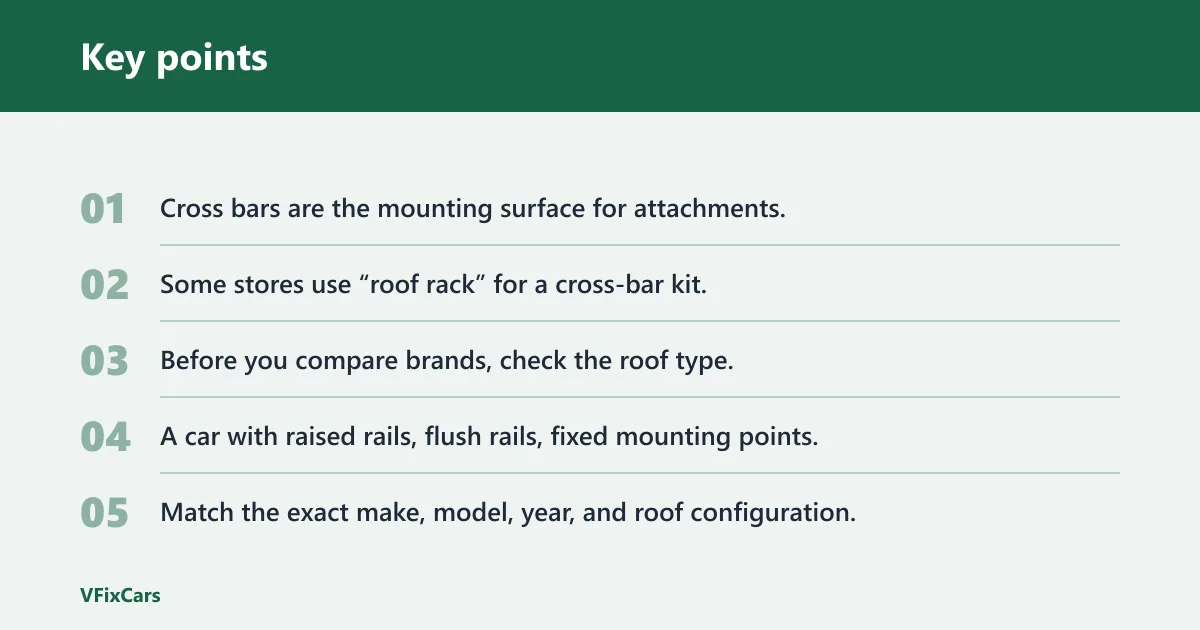
The real split is system architecture. Cross bars are the mounting surface for attachments, while roof racks usually mean the full hardware package that lets those bars sit on the car securely.
That is why retail listings get messy. Some stores use “roof rack” for a cross-bar kit, while others use it for a larger platform or basket system.
Fitment is the first filter
Before you compare brands, check the roof type. A car with raised rails, flush rails, fixed mounting points, or no rails at all needs different hardware, and a mismatch can make the system unusable.
Do not buy by vehicle appearance alone. Match the exact make, model, year, and roof configuration.
Load rating is not one number
The roof rating, the rack or bar rating, and the accessory rating all matter. The safe load limit is the lowest of the roof, rack, and accessory ratings.
Some competitor pages list cross bars around 75–165 lbs on average and roof racks up to 200 lbs or more on some systems. Those figures only make sense when they also match the vehicle’s roof limit and the mount type.
Roof bars comparison matrix
| Roof type | Required hardware | Best accessory | Typical dynamic load | Installation difficulty | Common mistake to avoid |
|---|---|---|---|---|---|
| No rails, fixed mounting points | Vehicle-specific feet and cross bars | Roof box or bike rack | Depends on the vehicle and kit; stay within the lowest published limit | Moderate | Buying a rail clamp kit for a roof that needs mounting-point feet |
| Raised rails | Clamp-on feet plus cross bars | Kayak or ski carrier | Often similar to other cross-bar setups, but still vehicle-limited | Easy to moderate | Assuming every raised-rail clamp fits every rail width |
| Flush rails | Flush-rail feet and cross bars | Roof box or cargo basket | Vehicle and accessory dependent | Moderate | Using a raised-rail kit on a flush rail |
| Bare roof | No-drill feet, door-jamb clamps, or a vehicle-specific rack | Bike rack or compact roof box | Often lower than rail-based setups | Moderate to hard | Forcing a clamp system meant for rails onto a bare roof |
Do you have roof rails?
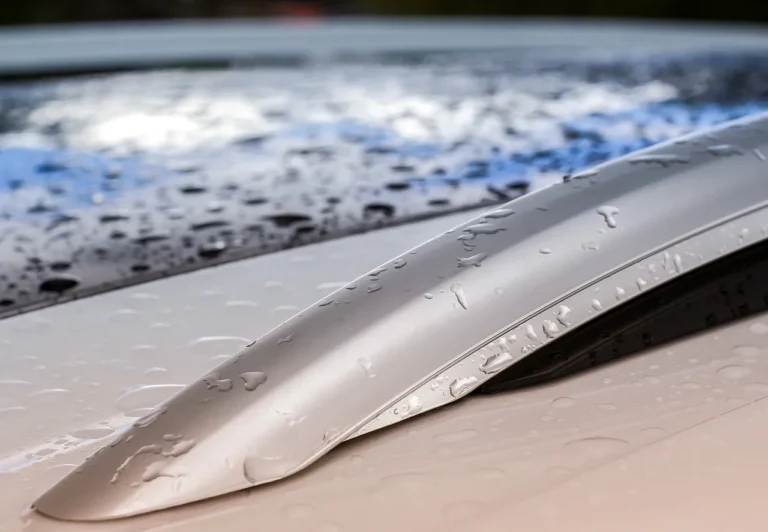
Roof rails are the long bars or tracks that run along the roof length. They form the mounting base for many cross-bar kits, but the rail style matters because raised rails, flush rails, and fixed mounting points use different feet and clamp shapes.
Raised rails
Raised rails leave space between the rail and the roof. That gap lets many cross-bar feet clamp around the rail, which usually keeps fitment simpler.
Flush rails
Flush rails sit close to the roof line. They often need purpose-built feet or clamps, so a “universal” kit may not fit even if the car looks rail-ready.
Factory mounting points
Some vehicles have hidden or capped mounting points rather than visible rails. In that case, you need a kit made for those points, not a rail clamp kit.
No-rail roofs
A bare roof can still take cross bars, but only with the correct no-drill or door-jamb system. A common first-timer mistake is buying bars first and finding the feet do not match the roof.
What can each system carry?
Both roof racks and cross bars can carry common cargo, but the accessory and the mount method must match. Cross bars are the usual base for roof boxes, bike racks, kayak or canoe carriers, and ski carriers, while larger platform-style systems are better for awkward cargo or heavier setups.
Roof boxes
Most roof boxes mount to cross bars. That is why the bar spread and clamp style matter as much as the box itself.
Bike racks
Bike trays usually attach to cross bars. Check wheelbase clearance, clamp width, and whether the tray needs round, square, or aero bars.
Kayak and canoe carriers
Cradles, J-cradles, and saddles commonly mount to cross bars. Longer boats raise the stakes for bar spacing and load distribution.
Ski and snowboard carriers
These are typically bar-mounted accessories. They are a good match for drivers who want a lighter system and do not need a platform rack.
Luggage and cargo baskets
Many baskets mount directly to cross bars, so a full rack is not always required. Some platform systems integrate the basket into the rack structure, which is useful when the cargo is irregular or heavy.
Rooftop tents
Rooftop tents are the case where static load matters most. Do not choose the larger-looking system first; choose the system that the vehicle maker approves and that meets the tent maker’s static load and mounting rules.
Say your SUV has raised rails and you want a 16-cubic-foot box for weekend trips. Cross bars plus the right feet are usually the cleaner solution, because the box mounts to the bars and you do not need a larger platform unless the cargo plan changes.
Which carries more weight?
Neither option wins by name alone. Dynamic load capacity is the limit while the vehicle is moving, and static load capacity is the limit while parked. The vehicle roof rating, rack rating, and accessory rating all have to agree, or the lowest one controls the load.
Dynamic load capacity
Dynamic load is the driving limit. Those numbers are not universal.
Static load capacity
Static load matters for rooftop tents and any parked use. A system with a modest moving limit can still be suitable for a tent only if the vehicle and tent maker both approve that use and the static limit is enough.
Vehicle roof rating versus accessory rating
If the roof is rated below the bars, the roof wins. If the accessory clamp or basket is rated below the bars, the accessory wins. That is the order that prevents overloading.
Installation and wind noise
Cross bars are usually quicker to install and remove than more built-out roof rack systems. That said, some platform racks use the same mounting process as bar-only kits, so the difference comes from the exact hardware, not the label alone.
How fitment changes the install
Raised rails often give you the simplest clamp-on install. No-rail roofs and fixed mounting points usually take longer because the feet must line up exactly with the vehicle’s attachment hardware.
Why some setups make more noise
Added roof hardware can increase wind noise and drag, especially at highway speeds. Cross bars usually create less wind noise when they use a streamlined shape rather than a blunt profile.
What aerodynamic bar shapes change
Teardrop or streamlined bars help air move over the roof more cleanly. That can reduce whistle and buffeting, though the accessory on top can still create noise if it sits high or has large flat surfaces.
Picture a sedan with bare roof mounting points and a ski carrier. A narrow, aerodynamic bar set may fit cleanly and keep noise lower than a bulkier rack, as long as the vehicle-specific feet and the carrier clamps are matched correctly.
Choose Roof racks if… / Choose cross bars if…
Choose Roof racks if you need a more built-out cargo system, if your vehicle needs tracks, side rails, or specific mounting hardware, or if you plan to carry heavier or more irregular cargo. They also make more sense when the roof system itself is the limiting factor and you need a purpose-built fit.
Choose cross bars if your vehicle already has compatible rails or mounting points, if you want the base for a roof box or sports carrier, or if you want the simpler, lighter setup for occasional trips. They are also the better starting point when you want quicker removal and less roof hardware.
Stop and check the manual before you buy if you are considering a rooftop tent, if your roof has no obvious rails, or if your cargo is close to the published limit. That is the point where a bigger-looking system does not guarantee a safe one.
Frequently asked questions
What is the difference between roof racks and cross bars?
Cross bars are the horizontal bars that span the roof and carry accessories. A roof rack is the broader roof-mounted system, which may include the feet, tracks, side rails, or platform parts that hold those bars in place. Retailers sometimes use the terms loosely, so fitment matters more than the label.
Do cross bars go on roof rails?
Often, yes. Many cross-bar kits clamp to factory-installed rails, but the rail shape has to match the feet. Raised rails, flush rails, and fixed mounting points each need different hardware, so a kit that fits one roof style may not fit another.
Can you use a roof box with just cross bars?
Usually, yes. Roof boxes are commonly mounted to cross bars, and they do not require a full platform rack unless the box maker says otherwise. You still need the correct bar spacing, clamp style, and load limit for the vehicle and the box.
Which carries more weight, roof racks or cross bars?
It depends on the specific vehicle and hardware, not the name alone. The safe limit is the lowest of the vehicle, rack, and accessory ratings.
Are roof racks harder to install than cross bars?
Usually, but not always. Cross bars are often quicker to install and remove, especially on raised rails. A more complete rack may take longer because it uses extra feet, tracks, or platform parts, though some kits are still straightforward if they are made for the exact roof type.
Can I install roof bars on a car without rails?
Yes, if the vehicle supports a no-rail or fixed-point system. You need a kit made for that roof, usually with vehicle-specific feet or clamps. Do not assume a universal set will fit, because the roof shape and attachment points decide the hardware you need.