Brakes: How They Work, Warning Signs and Service
Brakes turn your foot input into hydraulic force at the wheels; if the pedal drops, braking pulls hard, fluid leaks, or the red brake light stays on, stop driving now. Ignore early signs and stopping distance can grow, rotors or calipers can be damaged, and braking can fade or fail with little warning. This guide ties each brake part to its job, explains what common noises, smells, lights, and pedal changes usually mean, and shows when to inspect soon versus park the car.
Technical review note: Reviewed for mechanical accuracy against manufacturer and safety-agency guidance. The inspection cues below use practical driveway checks a technician would start with from outside the vehicle: pedal feel with the engine running, reservoir level at the MIN/MAX marks, fresh wetness at lines or wheels, one-wheel heat after a short drive, and whether a warning light is ABS-only or the red brake warning.
How do car brakes work?
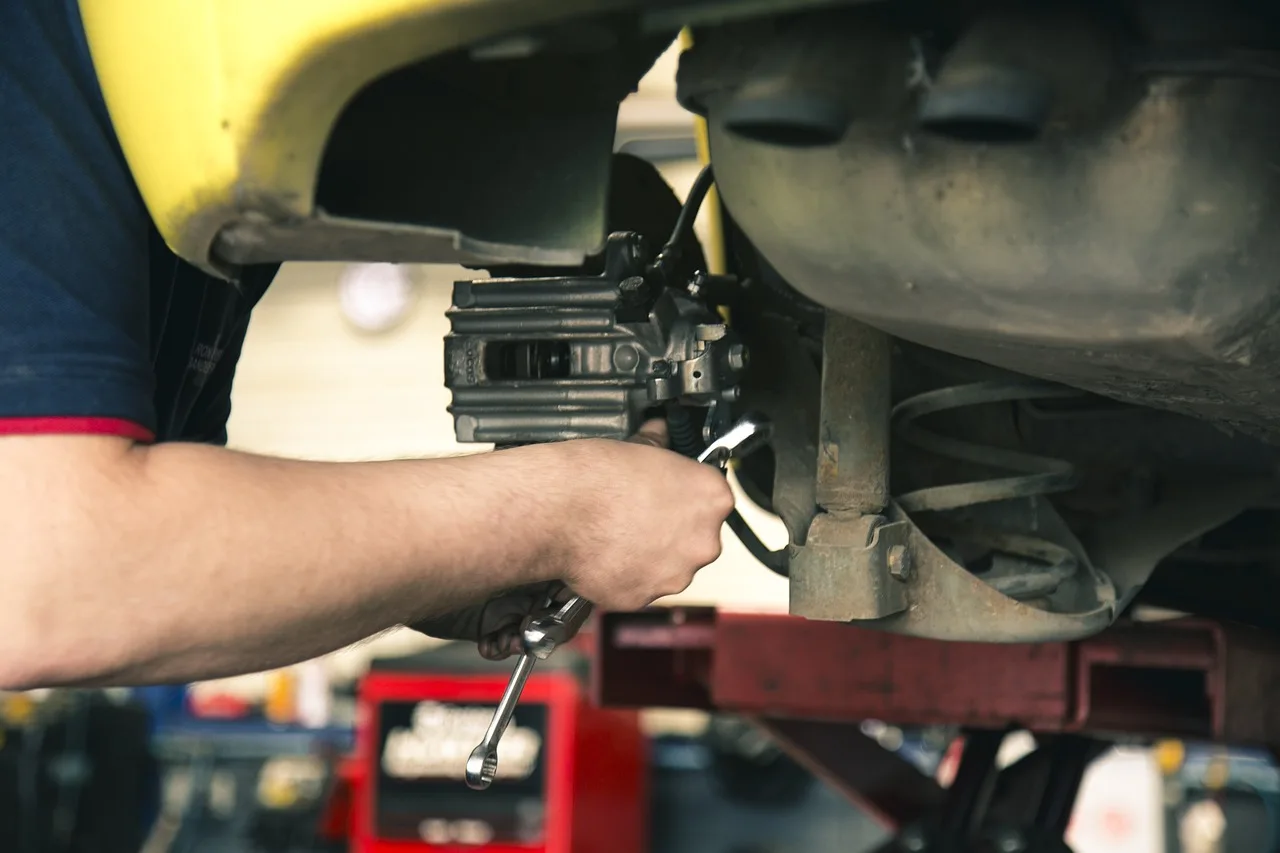
Pressing the brake pedal starts a chain: pedal force is assisted, sent into the master cylinder, turned into hydraulic pressure, and carried by brake fluid to the wheel ends. There, pads clamp rotors or shoes press into drums. Friction at the rotor or drum turns the vehicle’s moving energy into heat at the wheel ends, which is why brakes get hot after repeated stops, while ABS can release and reapply hydraulic pressure many times per second in a hard stop so a tire is less likely to fully lock, as described by the National Highway Traffic Safety Administration.
From pedal force to hydraulic pressure
The brake pedal is the driver input point. Changes in pedal feel matter because they often appear before noise or warning lights. A firm, consistent pedal usually means the system is holding pressure correctly; a soft, sinking, or unusually long pedal travel suggests a hydraulic fault, air in the system, low fluid, or internal master-cylinder trouble.
Behind the pedal, most passenger vehicles use a brake booster to reduce the effort needed for normal stops. The booster does not create braking on its own. It multiplies driver effort, then the master cylinder creates hydraulic pressure from pedal input.
That pressure moves through the brake fluid. Brake fluid carries pressure from the pedal to wheel-end components, so anything that lets pressure escape or compress, such as a leak, cracked hose, or air in the lines, changes how the pedal feels and how the vehicle stops.
How wheel-end friction slows the vehicle
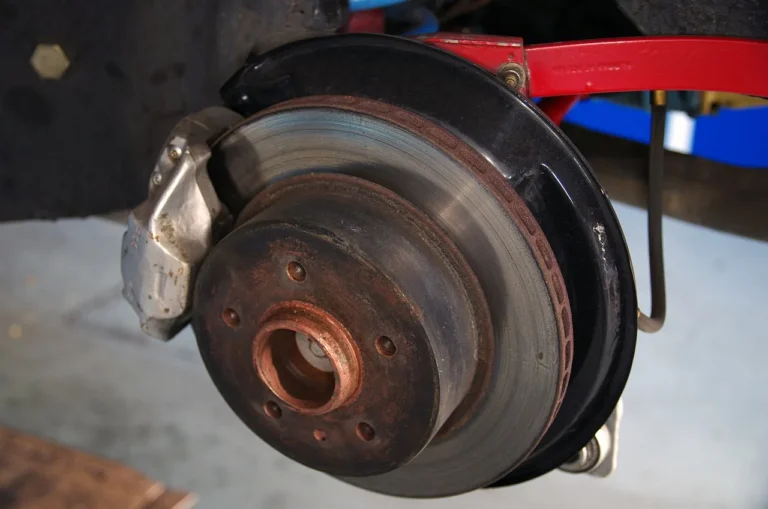
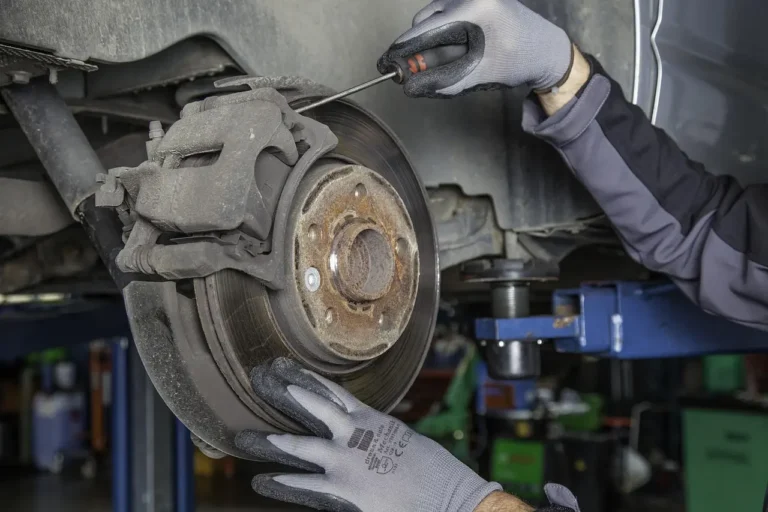
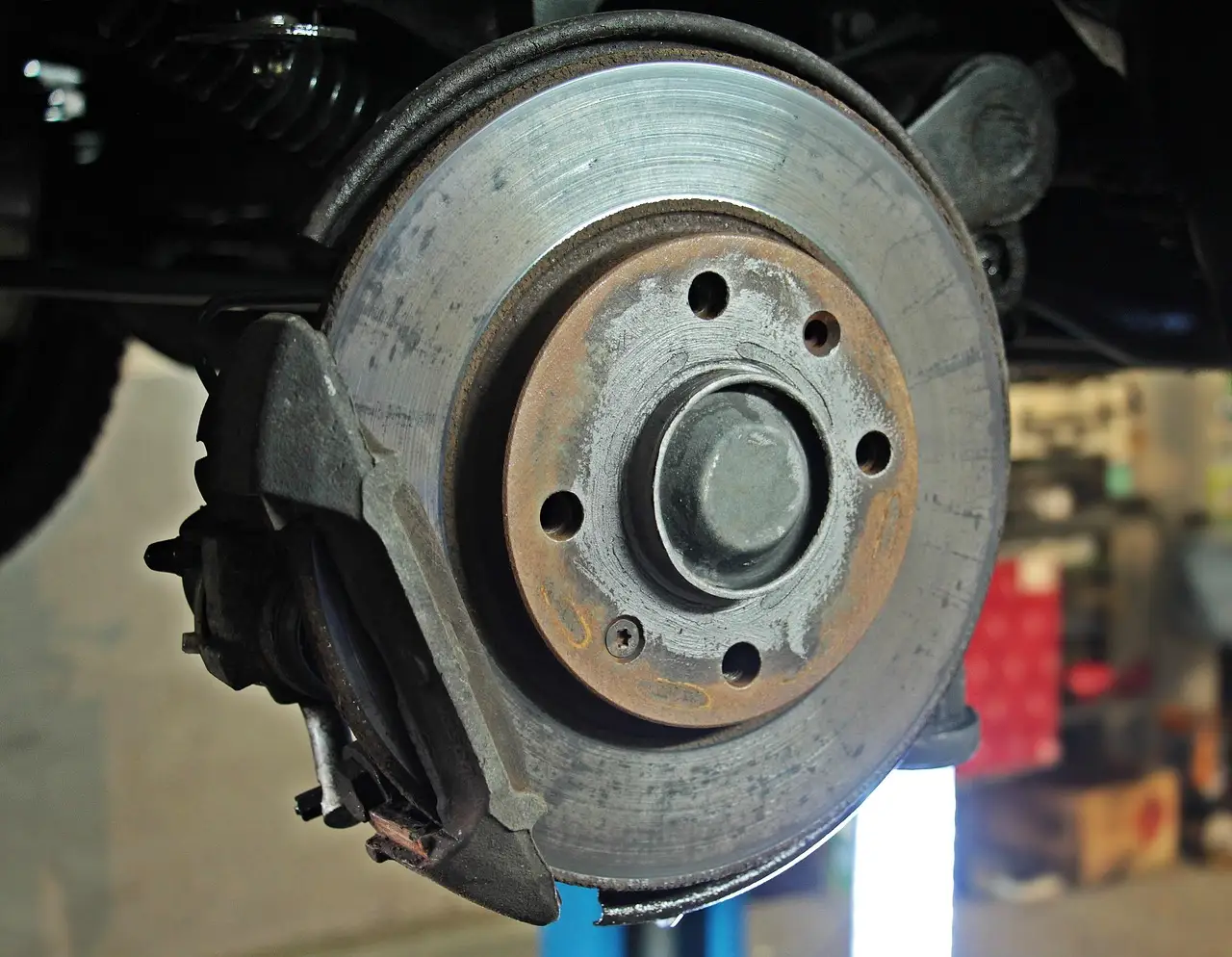
At disc brakes, calipers squeeze brake pads against rotors. Brake pads clamp against rotors in disc-brake setups. At drum brakes, wheel cylinders push shoes outward against the inside of a drum.
Both designs slow the wheel by converting speed into heat. The diagnostic value is knowing where that heat and force are made, because a symptom at one wheel often points to one corner of the system, not every brake part at once.
Suppose the pedal feels normal, but one front wheel smells hot after a short city drive. That pattern fits a dragging caliper or hose restriction more than a master-cylinder fault, because the pressure problem appears concentrated at one wheel rather than throughout the system.
Where brake assist and ABS fit
Brake assist changes how hard the driver needs to push. ABS changes how pressure is managed when a wheel is about to lock during hard braking. ABS opens and closes valves in the hydraulic unit to drop and rebuild pressure at a wheel that is slowing too quickly, which helps keep the tire rolling enough for steering input.
ABS is a control layer, not a substitute for healthy friction parts. It may pulse the pedal and make rapid mechanical sounds during a panic stop on wet pavement or loose gravel. That can be normal. It will not fix worn pads, a fluid leak, cracked hoses, or a sinking pedal. For related diagnosis, see what an ABS warning light means.
What parts are in a brake system?
A brake system includes the pedal, booster, master cylinder, brake fluid reservoir, hard lines, flexible hoses, wheel-end friction parts, and often ABS hardware and sensors. Disc systems use calipers, pads, and rotors; some rear axles use drum brakes with shoes and wheel cylinders. Each part leaves a different symptom pattern when it wears, leaks, sticks, or overheats.
Brake pedal, booster, and master cylinder
The pedal starts the sequence and gives the driver feedback. A higher, firm pedal usually means pressure is building normally. A pedal that slowly sinks while held can point to internal leakage past seals in the master cylinder or to an external hydraulic leak.
The booster reduces required foot effort. If booster assist is weak, the pedal may feel hard rather than soft. The vehicle may still stop, but it can take much more effort.
The master cylinder is the pressure source. When it fails internally, the pedal can feel soft or drift downward at a stop even if no obvious external leak is visible.
Brake fluid, lines, and flexible hoses
Brake fluid is the hydraulic medium between the master cylinder and the wheels. Brake fluid is usually checked in a reservoir marked MIN and MAX. A low level is a warning to find out why the level dropped. It is not something to top off and forget.
Hard metal lines carry fluid along the chassis. Flexible rubber hoses connect the body to moving suspension and steering parts. Metal lines can corrode; hoses can crack, swell, or collapse internally. Any of those faults can reduce pressure delivery or keep pressure trapped at one wheel.
Brake fluid maintenance depends on the vehicle, so owner’s manual guidance matters. Many service schedules call for brake-fluid replacement on a time basis, often around every few years, though exact intervals vary by make and model; Consumer Reports and manufacturer maintenance schedules both stress following the vehicle-specific schedule rather than a universal rule. If you are comparing symptoms with maintenance needs, a dedicated brake-fluid change interval guide can help separate overdue fluid from an active leak.
Calipers, pads, and rotors
Calipers apply pad force in disc brakes. If a caliper sticks or seizes, the vehicle may pull to one side, a wheel may run hotter than the others, pads may wear unevenly, and fuel economy may drop slightly because that wheel is dragging.
Brake pads are friction material bonded or attached to backing plates. Some pads include a wear indicator, and a squeal can come from a wear indicator touching the rotor. Pad material, dust, rusty hardware, and rotor condition can also create noise, so squeal is a warning sign, not a complete diagnosis.
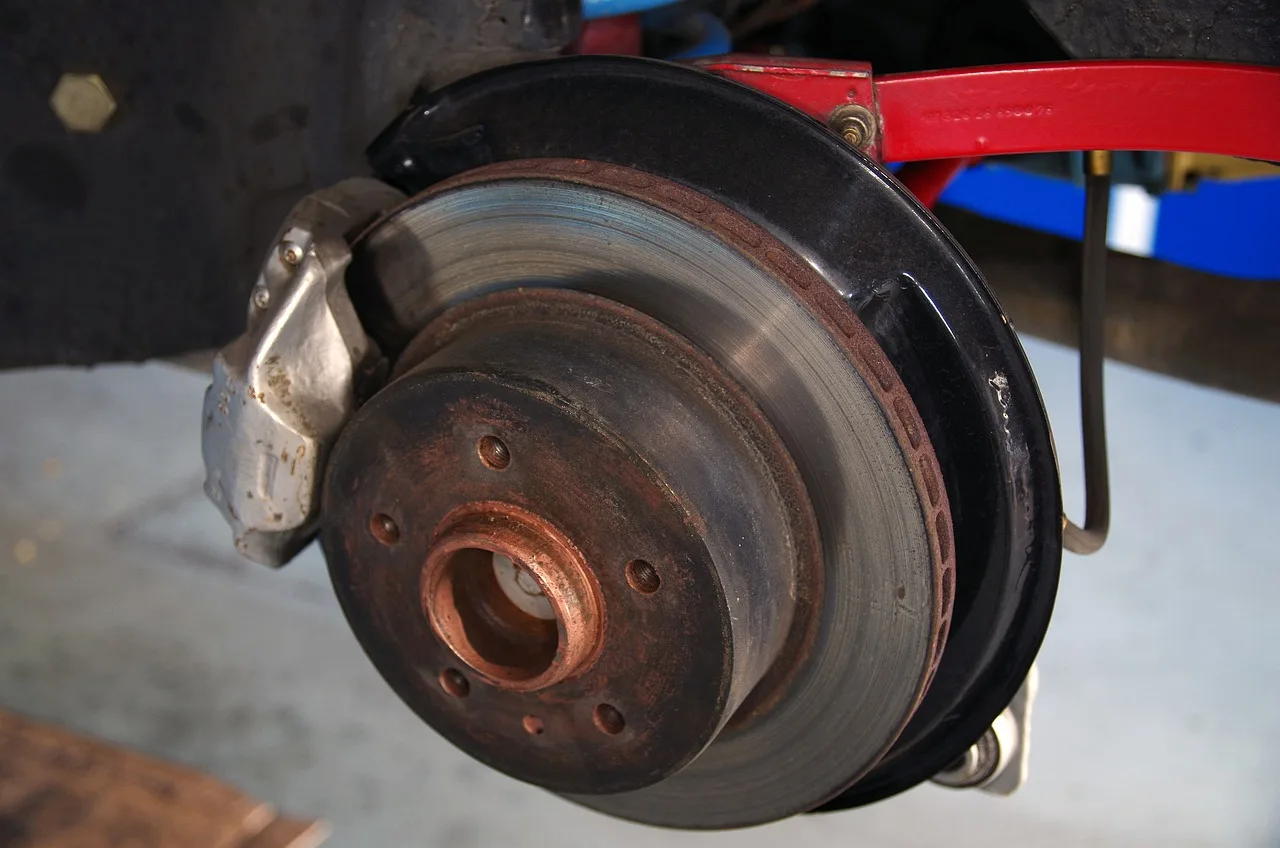
Rotors are the discs the pads clamp against. Scoring, heat spots, cracks, and thickness variation can all create vibration or noise. It is better to describe a pulsation as a rotor surface or thickness issue than to assume every pulse means a rotor is “warped.”
Drum brakes, shoes, and wheel cylinders
Some vehicles still use drum brakes on the rear axle. Instead of a caliper squeezing inward, a wheel cylinder pushes shoes outward against the drum’s inside surface.
Rear drums can hide wear more easily than open disc brakes because the friction surfaces are enclosed. Inspection also differs. Shoe thickness, drum condition, hardware springs, adjuster operation, and wheel-cylinder leakage all matter, and most of that cannot be judged from outside the wheel.
Disc brakes vs drum brakes
Disc brakes squeeze pads against a rotor, while drum brakes push shoes outward against a drum. Both rely on hydraulic pressure, but they wear, cool, and are inspected differently. Disc brakes usually shed heat better and show rotor and pad condition more directly; drum brakes package parking-brake functions well but can hide wear and wheel-cylinder leaks.
How disc brakes apply force
With disc brakes, the caliper moves one or more pistons to clamp the pads onto the rotor. Heat leaves the rotor relatively quickly because it is exposed to airflow. That helps discs recover from repeated stops better than drums on many vehicles.
Disc-brake wear signs are often easier to spot: pad thickness may be visible through the wheel, rotor scoring may show on the friction face, and a sticking caliper often creates a single hot wheel or uneven pad wear pattern.
How drum brakes apply force
With drum brakes, hydraulic pressure pushes the wheel-cylinder pistons outward, spreading the shoes against the inside of the drum. The design can provide strong parking-brake holding force, which is one reason it remains common at some rear axles.
Drums can trap more heat and dust. They also hide problems better. A leaking wheel cylinder can contaminate shoes with fluid, and an out-of-adjustment drum brake can lengthen pedal travel without making obvious noise.
Wear patterns and inspection differences
Disc systems often reveal pad taper, rotor scoring, and caliper drag. Drum systems more often need inspection for shoe lining thickness, spring condition, adjuster movement, and wheel-cylinder seepage.
Picture a compact sedan with rear drums and a parking brake that suddenly needs more lever travel, while the front pads still look thick through the wheel spokes. That change points toward rear adjustment or drum-hardware issues before it points to front rotors.
What does ABS do during hard braking?
ABS helps keep wheels from locking during hard braking by adjusting pressure rapidly, which can let the tires keep rotating enough for steering control. Pedal pulsing during an emergency stop can be normal ABS operation. An ABS warning light usually indicates a fault in the anti-lock system and should be checked even if the base brakes still work, according to NHTSA and the Insurance Institute for Highway Safety.
Why the pedal can pulse
When ABS activates, the pedal may pulse or chatter under the driver’s foot. The noise can sound harsh if a stop happens on broken pavement, wet leaves, or gravel. That sensation alone is not the same as a failing rotor or loose suspension part.
What ABS can and cannot correct
ABS supports control by managing wheel lock risk. It does not create extra friction where none exists. If pads are worn out, a caliper is seized, a line is leaking, or the red brake warning light is on with a soft pedal, ABS cannot cover for those faults.
ABS also does not guarantee the shortest stop on every surface. Its main benefit is helping maintain wheel rotation and steering control during hard braking.
ABS warning light versus normal ABS action
A momentary ABS event during a panic stop is one thing. An ABS light that stays on after startup is another. A lit ABS light means the anti-lock function may be disabled, though normal hydraulic braking may still remain.
If the ABS light is on by itself and the pedal feels normal, the problem is usually less urgent than a red brake warning combined with poor pedal feel. If both lights appear together, treat the car more cautiously and arrange diagnosis promptly. If both are illuminated, this related page on red brake warning light causes helps separate parking-brake, fluid-level, and hydraulic-fault possibilities.
Brake symptom triage table
| Symptom | Likely system area | Urgency level | First check |
|---|---|---|---|
| Soft or spongy pedal | Brake fluid, lines, hoses, air in hydraulic system, master cylinder | High; limit driving and inspect immediately | Check reservoir level at MIN/MAX marks; look under car and around wheels for wetness |
| Pedal sinks toward floor while held | Master cylinder internal leak or external hydraulic leak | Do not drive if braking is reduced | With engine running, hold steady pressure at a stop and note whether pedal continues dropping |
| Squeal | Pads, wear indicator, rotor surface, pad hardware, brake dust | Schedule service soon | Note whether noise happens only lightly braking, only cold, or all the time |
| Grinding | Severely worn pads or shoes, rotor or drum damage, hardware failure | Do not drive | Park the vehicle; grinding is described as metal-on-metal contact and serious trouble |
| Pull to one side when braking | Sticking caliper, seized slide, contaminated pad, hose restriction, tire issue | High; stop if pull is strong | Compare wheel temperatures after a short drive without touching hot metal |
| Vibration or pulsing in pedal or steering | Rotor thickness variation, uneven deposits, rotor damage, front suspension overlap | Moderate to high depending on severity | Note whether it appears only during braking and whether it worsens from highway speeds |
| Red brake warning light | Low fluid, hydraulic fault, parking brake not fully released, other base-brake issue | High; do not ignore | Confirm parking brake is fully released, then check pedal feel and fluid level |
| Fluid leak near wheel or under vehicle | Brake line, hose, caliper, wheel cylinder, master cylinder area | Do not drive | Look for clear to amber fluid and a dropping reservoir level |
| ABS activates on a hard stop | Normal ABS function if on slippery or rough surface | Usually normal | Note whether activation happened during a genuinely hard stop or on loose/wet pavement |
| ABS light stays on | ABS sensor, wiring, control fault, tone ring issue | Service soon | Check whether the red brake warning is also on or pedal feel has changed |
| Smoke, burning smell, major grinding, severe pull, very low pedal, or much longer stopping distance | Mechanical damage, seized caliper, major leak, failed friction parts, hydraulic failure | Do not drive | Park safely and arrange towing or mobile inspection |
What warning signs mean your brakes need service?
Brake service is due when the system shows a change in sound, feel, direction, heat, or warning lights. The most useful signs are squeal, grinding, soft or sinking pedal feel, pulling, pulsation during braking, fluid loss, and overheating at one wheel. The symptom matters, but so does urgency: some issues need prompt scheduling, while others mean stop driving now.
Squealing, scraping, and grinding noises
Squealing often points to pad wear, and a squeal can come from a wear indicator touching the rotor. It can also come from pad compounds, dust, rusty rotor surfaces after rain, or vibrating hardware.
Scraping and grinding need more caution. Grinding is described as metal-on-metal contact and serious trouble. Once the friction material is gone, the backing plate can cut into the rotor quickly, turning a pad job into pad, rotor, and possibly caliper service.
Soft, spongy, or sinking pedal feel
A soft pedal often suggests compressible air in the hydraulic system, low fluid from a leak, hose expansion, or master-cylinder problems. A spongy pedal that improves after pumping can point toward hydraulic air or shoe adjustment issues in rear drums.
A sinking pedal is more serious. If steady foot pressure at a stop lets the pedal keep drifting lower, suspect pressure loss inside the system. That can be internal at the master cylinder or external through a leak.
Pulling, dragging, vibration, or pulsing
Pulling under braking often points to uneven braking force side to side. A sticking caliper, seized slide, contaminated friction material, or hose restriction are common suspects. Tire issues can overlap, but a pull that appears mainly when the brake pedal is pressed deserves brake inspection first.
Dragging can show up as a hot wheel, burning smell, smoke, or a car that feels reluctant to coast. Vibration or pulsing that appears only when braking often points to rotor thickness variation, uneven pad deposits, or another rotor-surface problem. It does not automatically prove a bent rotor.
Brake warning lights, fluid loss, and overheating
The red brake warning light carries more urgency than a routine service reminder. If it stays on and the pedal feels low or soft, stop driving. If the fluid reservoir is low, the next question is why, not whether to just refill it.
Low fluid can result from pad wear as caliper pistons extend, but a meaningful drop may also come from a leak at a line, hose, caliper, wheel cylinder, or master cylinder. Overheating at one wheel, especially with smoke or a burning smell, points toward a seized caliper or stuck drum-brake hardware and should be treated as unsafe.
When should you stop driving immediately?
Stop driving when braking ability is reduced or the system suggests rapid failure is possible. That includes a pedal sinking toward the floor, a severe fluid leak, major grinding, smoke or a burning smell from a wheel, a strong pull during braking, much longer stopping distance, or a red brake warning light with poor pedal feel. Mild squeal or an ABS event during a hard stop usually does not fall into that same category.
Unsafe symptoms that justify parking the car
Park the vehicle and arrange towing or mobile service if any of these happen:
- The pedal drops close to the floor or sinks while held.
- Stopping distance suddenly increases.
- The car pulls sharply to one side under braking.
- Grinding is loud and constant.
- Fluid is visibly leaking near a wheel or under the car.
- A wheel smokes or gives off a strong burning smell.
- The red brake warning light stays on and the pedal feel is poor.
Symptoms that usually allow short-term scheduling
A light squeal with otherwise normal stopping, a brief rust scrape after overnight rain, mild pulsation without loss of braking, or an ABS light by itself often allow short-term scheduling rather than immediate parking. That does not mean they should wait for weeks. It means there is usually time to book a proper inspection and avoid bigger damage.
How to describe the problem clearly
A good service write-up speeds diagnosis. Note when the symptom happens, which side it seems to come from, whether the pedal changed, and whether any warning lights came on.
Say your SUV squeals only during the last 10 feet of a gentle stop, the pedal stays firm, and there is no pull. That gives a shop a very different starting point than “brakes are bad.” If the symptom instead is a soft pedal after a puddle or visible fluid at the left rear wheel, say that first.
Can low brake fluid cause poor braking?
Yes. Low brake fluid can reduce pressure delivery and often comes with a soft pedal, longer travel, or warning lights. The level itself is only the first clue. A low reservoir can point to pad wear, but it can also mean a leak or another fault, so the reason for the drop matters as much as the level.
What a low reservoir level may indicate
Brake fluid is usually checked in a reservoir marked MIN and MAX. If the level is near or below MIN, the correct next step is to inspect for the cause. Worn pads can lower the level as caliper pistons extend outward. That is common, but it should still trigger a brake inspection.
If the level dropped quickly or there is wetness around a wheel, along a brake line, or at the master cylinder area, treat it as a likely leak. Low fluid by itself is not a normal wear item to ignore.
Why fluid condition matters as much as fluid level
Old or contaminated fluid can affect pedal feel and internal component life. Moisture contamination lowers fluid quality and can contribute to corrosion in expensive parts such as calipers, ABS components, and wheel cylinders.
That is why fluid condition matters even when the reservoir is technically full. Dark fluid alone does not diagnose a problem, but dirty or overdue fluid should move the car closer to service, not farther from it.
General brake fluid service timing
Brake fluid maintenance depends on the vehicle, so owner’s manual guidance matters. Many maintenance schedules list brake-fluid replacement on a time basis rather than waiting for a failure symptom; Consumer Reports notes that a common recommendation is every two years, while some manufacturers specify different intervals in their maintenance booklets. That interval is broad guidance, not a promise for every model, climate, or duty cycle.
If a shop quotes line or hose work, ask what that repair addresses in the symptom chain. Pricing varies widely by vehicle, corrosion level, and whether the job expands into calipers, rotors, or bleeding the system; consumer estimate tools from AAA and Kelley Blue Book are useful for ballpark comparisons, but diagnosis and safety come first.
What to check when your brake pedal goes soft
A soft or sinking pedal is a primary indicator of hydraulic failure, such as air in the lines, a master cylinder leak, or low fluid levels. This condition drastically increases stopping distances and requires immediate attention before driving. Understanding the specific symptoms helps distinguish between a simple fluid top-up and critical component replacement.
To diagnose these issues correctly, consult the detailed breakdown in brake pressure loss causes. This resource covers everything from booster failures to ABS bleeding procedures, ensuring you can identify the root cause of your pedal feel efficiently.
Before you book service
Safe checks from outside the car
- Check whether the red brake warning light or ABS light stays on after startup.
- Press the brake pedal with the engine running and note whether it feels firm, spongy, or slowly sinking.
- Look at the brake fluid reservoir and compare the level to the MIN and MAX marks.
- Scan the ground under the car and the inside of each wheel for fresh wetness.
- Notice whether the car pulls, vibrates, or requires more pedal travel during a slow, safe stop.
- After a short drive, check for a burning smell or one wheel that seems much hotter than the others without touching brake parts.
- Listen for when the noise happens: cold only, light pedal only, every stop, or constant.
What to note before the appointment
Write down the symptom pattern, not a guess at the failed part. Record whether the issue happens at parking-lot speeds, highway speeds, only after several stops, only after rain, or only on one side.
That detail helps separate a normal ABS pulse on gravel from a true brake pulsation, and a pad wear squeal from a seized caliper cooking one rotor.
Service pairing logic that avoids replacing the wrong part
Pads and rotors should be assessed together because worn pads can score rotors, and damaged rotors can shorten the life of new pads. Replacing pads alone on a badly scored or cracked rotor often leaves the root problem in place.
Calipers and hoses also need pairing logic. A seized caliper may overheat one rotor and destroy one pad set. A swollen hose can mimic caliper trouble by trapping pressure. If the symptom is a pull or drag, the right question is not “pads or rotors?” but “what caused uneven braking force?”
Rear drums deserve the same logic. New shoes on a leaking wheel cylinder or sticky adjuster do not solve the cause of poor rear brake performance. If you are comparing hydraulic faults against friction wear, this related guide to brake pad replacement signs helps separate normal pad wear from a deeper system problem.
Frequently asked questions
What are the warning signs that my brakes need service?
Common warning signs include squealing, grinding, a soft or sinking pedal, pulling during braking, vibration or pulsing that appears only when braking, fluid loss, overheating at one wheel, and warning lights. The strongest stop-driving signs are leaks, major grinding, severe pull, smoke, longer stopping distance, or a red brake light with poor pedal feel.
Why do my brakes feel soft or spongy?
A soft or spongy pedal often points to air in the hydraulic system, low fluid from a leak, flexible hose problems, rear drum adjustment issues, or a failing master cylinder. A pedal that keeps sinking under steady pressure is more serious and can mean hydraulic pressure is escaping internally or externally.
What does it mean when my brakes squeal or grind?
Squeal often means pad wear, and it can come from a wear indicator touching the rotor, though dust, pad material, hardware, and rotor condition can also matter. Grinding is far more serious because it usually means metal-on-metal contact or major hardware damage, and that is a stop-driving symptom.
When should you stop driving because of brake problems?
Stop driving if the pedal drops near the floor, keeps sinking, or braking distance suddenly grows. Visible fluid leaks, loud grinding, smoke or strong burning smell from a wheel, a severe pull under braking, or a red brake warning light with poor pedal feel also justify parking the car and arranging towing.
How often should brake fluid be changed?
The right interval is the one in the owner’s manual, because manufacturers do not all use the same schedule. Many vehicles call for brake-fluid service on a time basis rather than waiting for mileage alone; Consumer Reports summarizes that two years is common, but not universal.
How long does brake service usually take?
Simple pad-and-rotor work on one axle is often a same-day repair, while seized hardware, rusted brake lines, bleeding issues, or ABS-related diagnosis can add time. Ask the shop whether the estimate includes inspection, machining or rotor replacement, fluid service, and any test drive needed to confirm the pull, noise, or pedal complaint.
How much do brake repairs usually cost?
Cost depends on the vehicle, axle, parts quality, labor rates, and whether the job stays limited to friction parts or expands into hydraulic repairs. For a reality check before approving work, compare the estimate with consumer tools from AAA and Kelley Blue Book, then make sure the quoted parts match the actual symptom chain.
In short, brake problems are best judged by pattern: pedal feel, warning lights, one-wheel heat, fluid level, and whether the symptom appears only during braking. Use those clues to separate routine wear from hydraulic or ABS faults, and treat any sinking pedal, leak, severe pull, smoke, or red brake warning as a do-not-drive condition.