Why Do My Brakes Squeak Only in Reverse? Causes and Fixes
A reverse-only brake squeak is often due to light surface rust or pad movement and may clear after a few stops. If it persists, appears forward too, or gets louder, suspect worn pads, seized hardware, or rotor issues. Ignore the wrong pattern and you can waste money on parts while a dragging brake chews rotors and heats the wheel. This guide shows how to separate normal first-stop noise from faults by symptom pattern, and what to check next.
This guide is part of our Brakes: how they work, warning signs and service series.
Why brakes squeak only in reverse
Reverse changes the way the pad meets the rotor, so a noise that is quiet in forward motion can appear at the pad’s leading edge when the wheel turns backward. That makes reverse a useful diagnostic direction, not random noise. The first reverse stop tells you whether the sound clears quickly or repeats every drive.
Why reverse exposes pad-edge noise that forward braking can hide
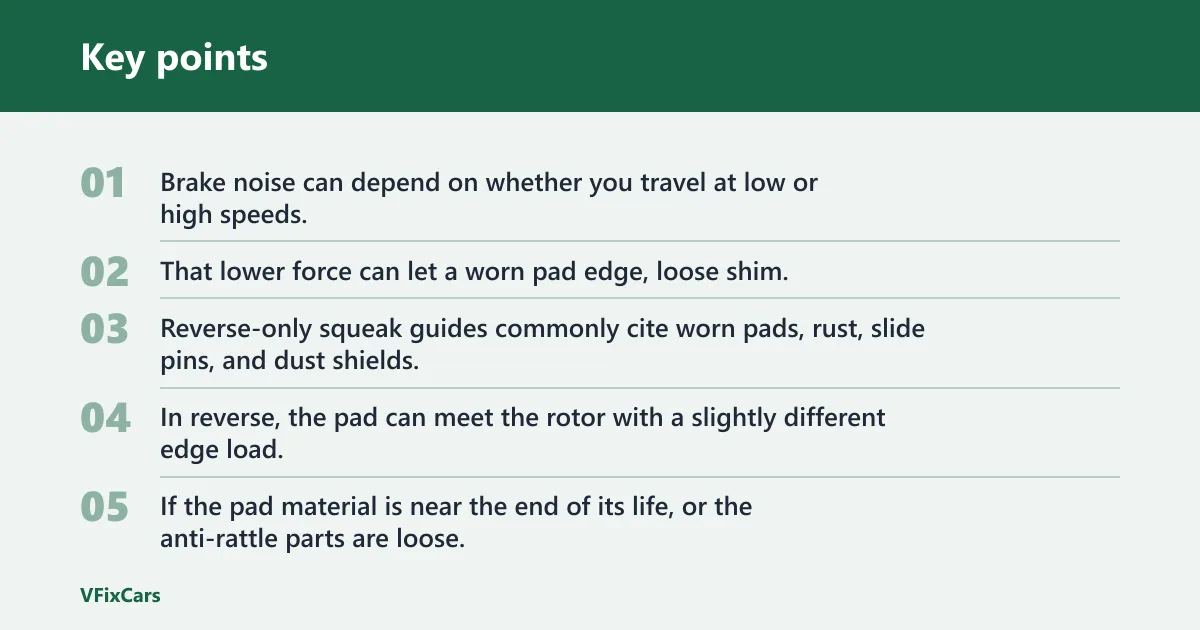
Brake noise can depend on whether you travel at low or high speeds, and reverse is usually a low-speed, low-force event. That lower force can let a worn pad edge, loose shim, or small amount of rotor rust chatter instead of being pressed flat. Reverse-only squeak guides commonly cite worn pads, rust, slide pins, and dust shields.
How direction changes the contact pattern at the rotor and pad
In reverse, the pad can meet the rotor with a slightly different edge load. If the pad material is near the end of its life, or the anti-rattle parts are loose, that edge load can create a squeal that forward braking does not. A bent backing plate or a dust shield that kisses the rotor can also sound more obvious in reverse.
What the first reverse stop tells you
If the first reverse stop squeaks and the next one is quiet, surface rust, moisture, or a light transfer-layer issue is more likely. If the sound repeats on every drive, gets louder, or comes with pull, heat, or scraping, treat it as a mechanical fault. A common mistake is assuming every morning squeak is harmless.
Is it normal rust noise or a real fault?
Temporary rust scrub is common after rain, overnight parking, or cold, damp weather. Surface rust can form overnight and make the first braking noises in the morning, and moisture can sometimes freeze between brake pads and cause squeaks in cold weather. If the sound fades after a stop or two, that pattern is often normal.
Temporary rust scrub after rain or overnight parking
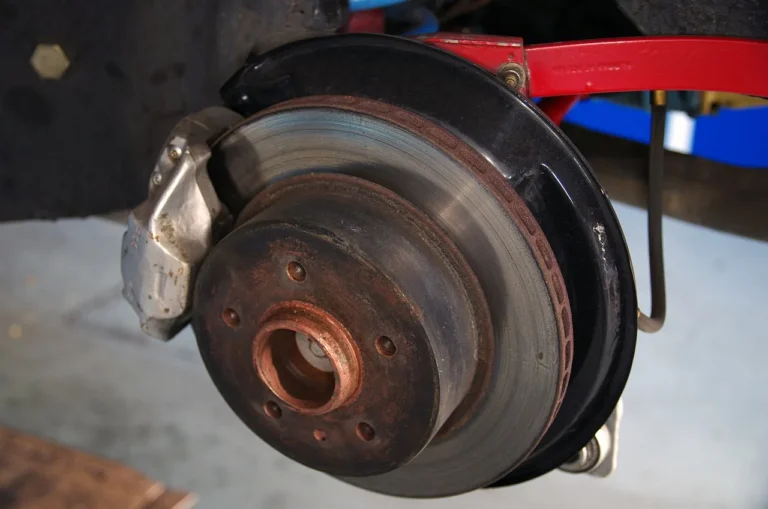
After the car sits, a thin rust film can coat the rotor face. The first stop scrapes that film away, often with a short squeak or light scrape. Dirty or dusty environments can contaminate brake components too, so road grit or dust may add a brief chirp before the rotor cleans itself.
Moisture, grit, and a thin rust film on the rotor
Moisture, rust film, stones, and dust can sit on the pad and rotor surfaces overnight. That does not mean a part has failed. It does mean you should watch the pattern: if the noise is gone after 1–3 stops, it points toward surface contamination rather than worn hardware or a caliper problem.
When noise that returns every drive is no longer normal
If the squeak returns every morning for weeks, or it never fades at all, move past the rust explanation. Persistent noise can come from glazed pads, wear edges on the rotor, bent shields, or hardware that has lost tension. When the sound starts to change in volume, urgency rises.
What the noise pattern tells you
The pattern matters more than the sound alone. One-wheel noise, a pull, or heat at one corner usually means the problem is local, not general. Squeak is often less serious than grind, but a grind-type sound, especially with a hot wheel, needs prompt attention because F4 says a stuck caliper can create grinding-type sounds when braking and when not braking.
One-wheel squeak versus both sides
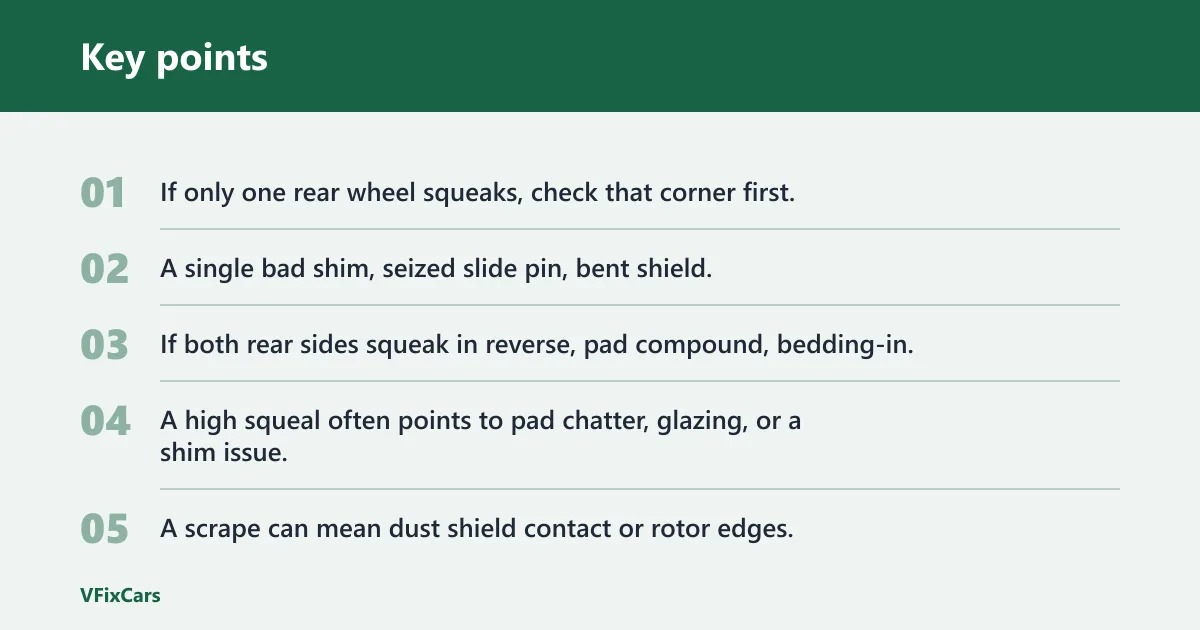
If only one rear wheel squeaks, check that corner first. A single bad shim, seized slide pin, bent shield, or contaminated pad can create one-wheel noise while the opposite side stays quiet. If both rear sides squeak in reverse, pad compound, bedding-in, or a shared contamination issue becomes more likely.
Squeak, squeal, scrape, or grind
A high squeal often points to pad chatter, glazing, or a shim issue. A scrape can mean dust shield contact or rotor edges. A grind is more serious, especially if it happens both when braking and when not braking, because that pattern can point to a stuck caliper or a pad worn very thin. Worn-out brake pads are listed as the most common cause of brake noise.
Pulling, vibration, or a hot wheel after driving
Pulling during reverse or forward braking can point to a seized caliper or slide pin. A wheel that feels much hotter than the others after a drive suggests drag. If the vehicle vibrates, the rotor may be warped, heavily rusted, or contaminated. Heavy loads can make squeaking worse, so note whether noise appears only when the car is packed or towing.
How to inspect the likely causes
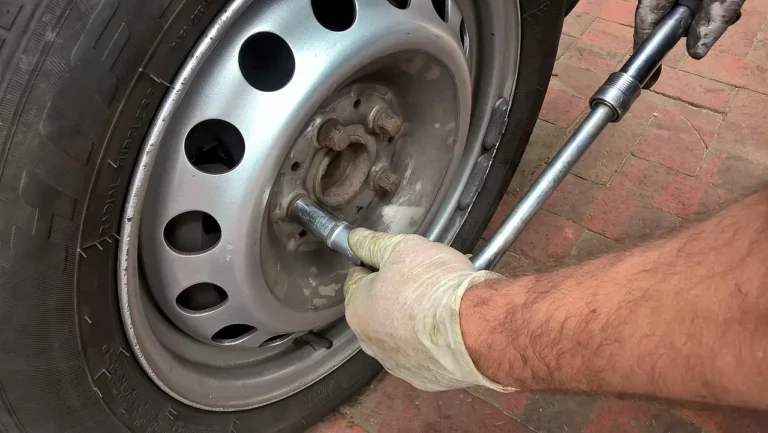
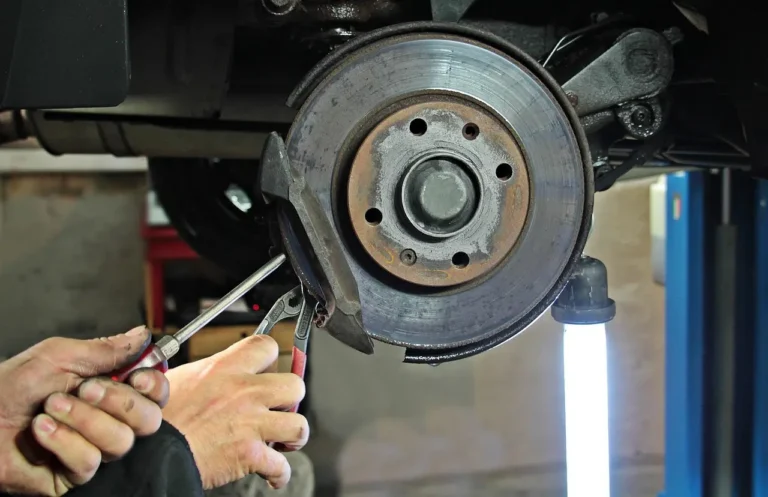
You can do a useful check without removing every part. Start with the wheel area, then inspect pads, rotors, hardware, and shields in that order. The goal is to separate a temporary surface issue from a part that is worn, bent, seized, or loose. Do not replace pads before checking pad thickness, hardware condition, slide pins, and shield clearance.
Brake pads: thickness, wear indicators, glazing, and friction material quality
Brake pads use friction material that should still have at least 3 mm of material remaining. Wear indicators can squeal when the pad gets low, and glazed pads can chatter or squeal in reverse. Aftermarket pads vary more in noise behavior than many OEM-style pads, so compound choice matters. Pads near the limit should be replaced rather than kept in service longer.
Brake rotors: rust, contamination, wear edges, and resurfacing versus replacement
Look for surface rust, oil film, embedded grit, or a wear ridge at the rotor edge. Light rust and contamination can often be cleaned off, but deep grooves, cracking, or a heavy wear lip point to replacement. Resurfacing is only sensible if the rotor still has enough thickness after machining; otherwise replacement is the safer repair.
Caliper slide pins and hardware: movement, corrosion, shims, and anti-rattle clips
Slide pins let the caliper move so both pads clamp evenly. If they corrode or seize, one pad can drag and squeal. Clean and regrease them with high-temperature brake grease at the slide/contact points only. The brake pad shim sits between the brake pad and caliper to fill gaps that would create noise, and broken or loose anti-rattle clips can do the same thing. Slide-pin replacement cost is often quoted around $100–$250 per axle including labor for pad replacement jobs when parts and labor are bundled, while DIY grease and hardware costs are usually lower.
Dust shields, splash shields, and backing plates: bent edges and rotor contact
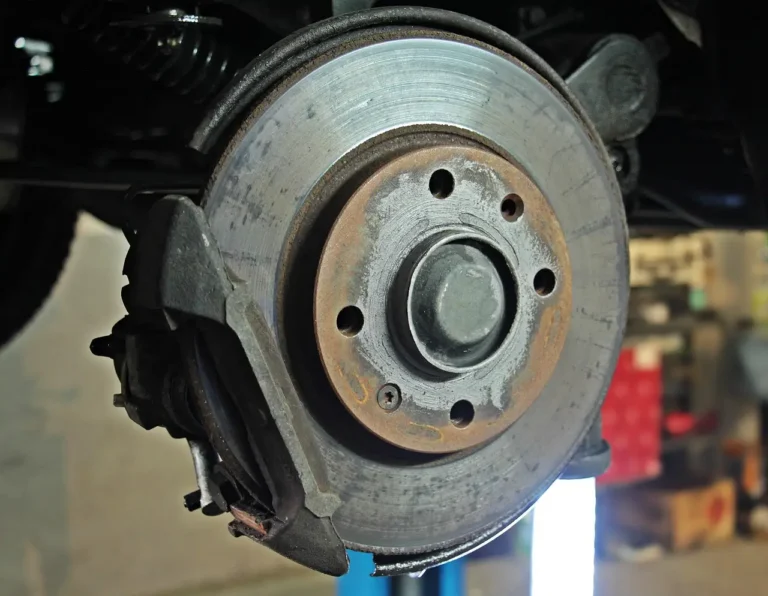
Dust shield, splash shield, and backing plate may be used for the same thin metal shield behind the rotor. If it bends and touches the rotor, reverse may make the contact more obvious because the rotor edge loads change direction. Look for fresh shiny rub marks on the shield, then check for stones trapped between the shield and rotor.
Reverse-only brake noise decision table
| Symptom pattern | Most likely cause | Quick driveway check | Urgency and likely repair cost range |
|---|---|---|---|
| First reverse stop squeaks, then stops after 1–3 brakes | Surface rust, moisture, light contamination | Drive a short loop and recheck after a few stops | Low urgency; often no repair if it clears |
| Noise returns every drive, mostly at the rear | Pad edge chatter, glazing, worn shims, rust film | Inspect pad thickness, rotor surface, and hardware | Moderate; pads or hardware often $25–$80 DIY per axle, or $100–$250 per axle with labor for pad replacement |
| One wheel squeaks, other side is quiet | Seized slide pin, bent shield, local contamination | Check wheel temperature, shield clearance, caliper movement | Moderate to high; pin service or hardware repair, sometimes caliper work |
| Scrape or grind in reverse and forward | Worn pads, stuck caliper, rotor damage | Look for pad thickness near 3 mm or less; feel for heat | High; inspect now, repair before rotor or caliper damage grows |
| Pulling, vibration, or hot wheel after driving | Dragging caliper, seized hardware, contaminated rotor | Compare wheel temperatures side to side after a short drive | High; do not keep driving long distances |
How to stop brakes from squeaking in reverse
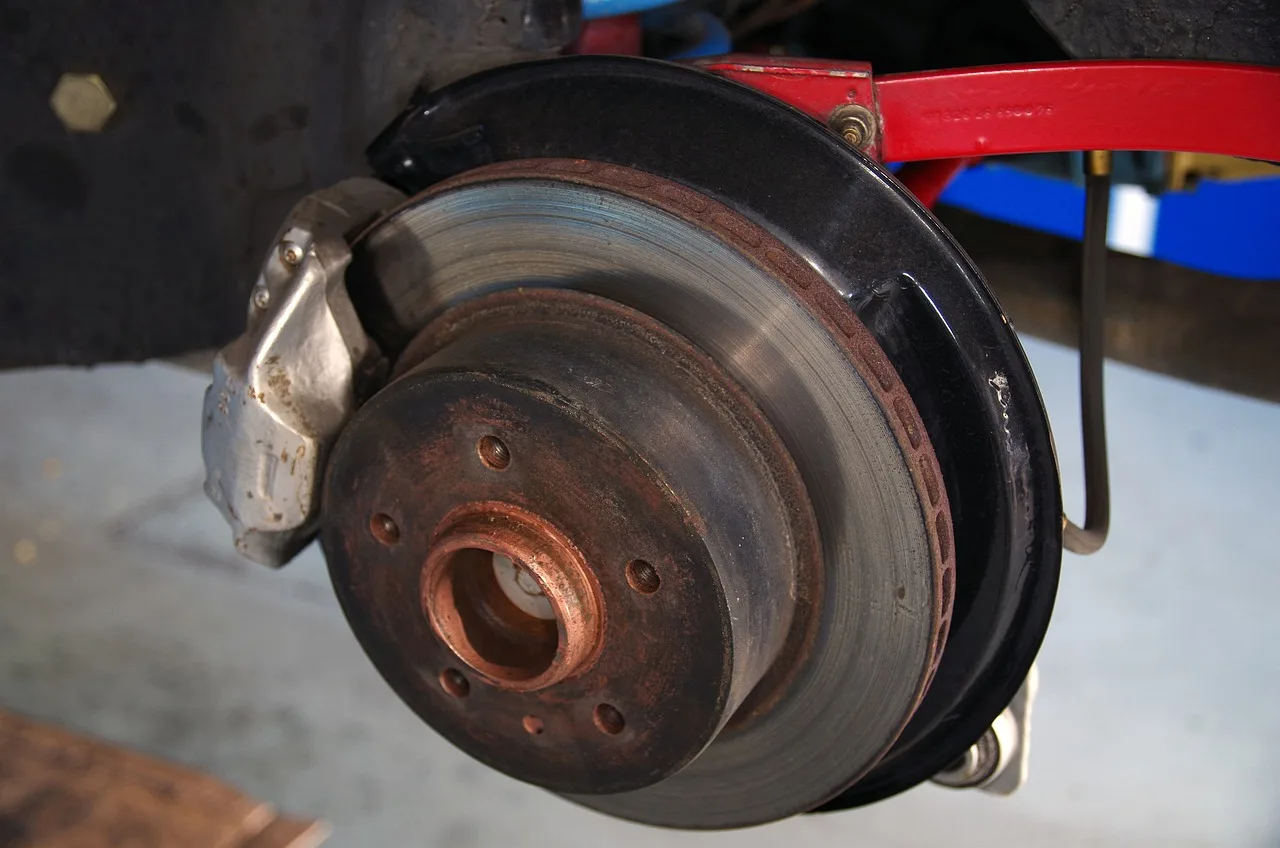
Start with cleaning and inspection, then move to lubrication, bedding, or part replacement only if the pattern points there. The goal is noise reduction without masking a safety problem. Use brake grease only on slide and contact points, never on friction surfaces.
Clean contamination and remove loose rust
Wash off road dust and grit from the wheel area, then inspect the rotor face. Light rust can usually be cleared by normal braking after a short drive. If stones or debris are trapped near the shield or pad, remove them before they keep scoring the rotor.
Lubricate slide points and hardware with high-temperature brake grease
Apply high-temperature brake grease to the slide pins, pad ears, and other specified contact points only. That helps the pad move without sticking and can quiet pad-edge chatter. Do not put grease on the rotor or pad friction faces. If grease has reached the friction material, the pad may need replacement.
Bed in new brakes so the transfer layer forms correctly
New vehicles may squeak because the brakes need bedding in, and new pads or rotors may need a transfer layer to form evenly. A bedding-in sequence can include repeated braking from 30/40 mph down to 5 mph, and another step in the source uses 50 mph before braking. Follow the pad maker’s procedure if one is supplied.
Replace worn pads, damaged shims, seized pins, or bent shields
If the pads are near 3 mm or below, replace them. If the shim is missing or broken, replace the hardware set. If a slide pin binds or a shield rubs the rotor, repair that fault before fitting new pads. A rotor with deep wear edges or contamination that will not clean off may need replacement instead of another cleaning pass.
Why do my new brakes squeak only in reverse?
New brakes often squeak in reverse because the pad and rotor are still bedding in, the transfer layer is uneven, or the pad compound is simply noisier in one direction. If the squeak fades after a few drives, that can be normal. If it persists, suspect fitment, hardware, or compound choice.
Bedding-in and transfer layer issues
Fresh pads can squeak before they lay down an even transfer film on the rotor. Until that layer is stable, reverse braking can trigger a brief chirp or squeal. If the brakes were replaced recently and the car stops normally, give the bedding process a little time before replacing parts again.
Aftermarket pad compound versus OEM-style pad behavior
Pad friction material type matters. Some aftermarket pads are more prone to low-speed squeal than OEM-style pads, especially in reverse or during light braking. That does not automatically mean the pads are bad, but it does mean the compound may be noisier on your vehicle than the original design.
When new pads or rotors still point to a hardware or fitment problem
If the noise is one-sided, loud, or paired with drag, new parts alone are not the answer. Check the shims, clips, and slide pins first, then confirm the rotor is not rubbing a bent shield. New parts should be quiet after bedding; if they are not, something in the install or caliper movement is off.
Frequently asked questions
why do my brakes squeak only when going in reverse
That pattern usually points to a direction-sensitive contact problem, not random noise. Reverse can wake up pad chatter, worn anti-rattle clips, or a shield that just kisses the rotor. If the sound is only at low speed and disappears after a few stops, rust or moisture is still a strong suspect.
why do my rear brakes only squeak in reverse
Rear brakes often show this complaint because they see less aggressive loading than the fronts, so rust, glazing, or loose hardware may be more noticeable there. A rear squeak that is one-sided, persistent, or paired with heat should push you toward slide pins, shims, or a bent shield on that corner.
what does it mean when your brakes squeak only in reverse
It usually means the reverse direction is exposing a small fault that forward braking hides. That can be harmless, like overnight rust scrub, or it can be a worn pad, seized hardware, or a shield touching the rotor. The first stop after sitting is the key clue.