Why Is a Car Seat Not Safe After a Crash?
A car seat is generally not considered safe after a moderate or severe crash and should be replaced; only a minor crash that meets NHTSA’s five criteria and the manufacturer’s instructions may allow reuse. If you guess wrong, hidden damage can leave the seat unable to protect a child in the next crash. This guide explains why crash forces replacement, the NHTSA minor-crash rule, and a simple decision path using the owner manual.
Why car seats may need replacement after a crash
Why hidden damage matters
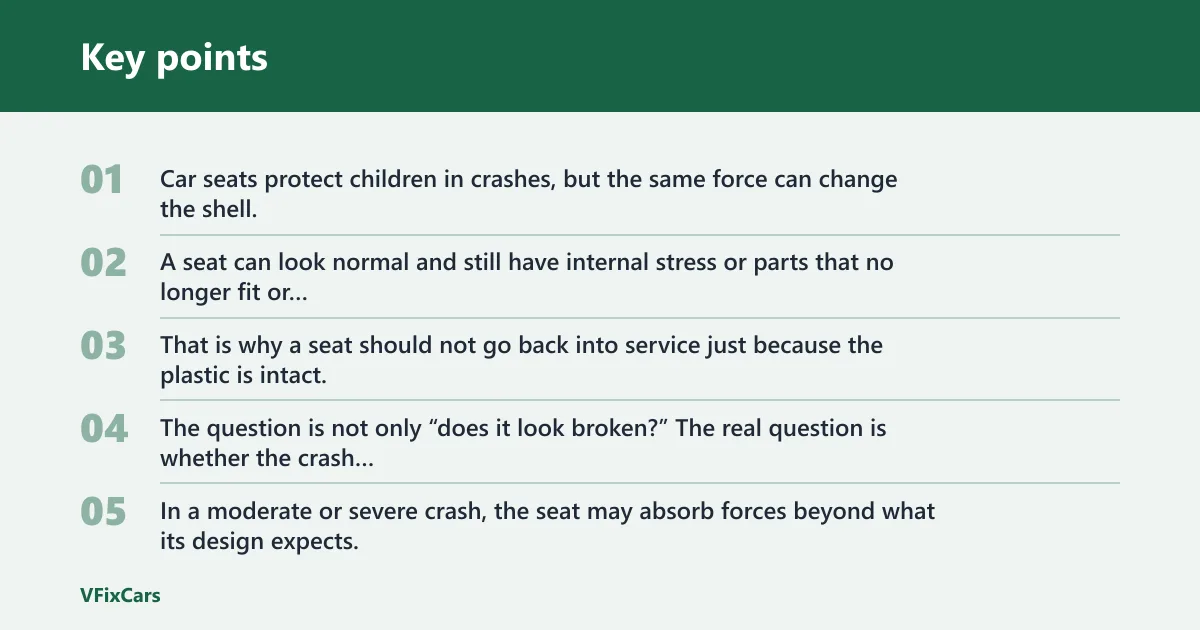
Car seats protect children in crashes, but the same force can change the shell, strap path, buckle, or energy-absorbing foam in ways you cannot see. Visible damage is only one clue. A seat can look normal and still have internal stress or parts that no longer fit or hold the way they should.
That is why a seat should not go back into service just because the plastic is intact. The question is not only “does it look broken?” The real question is whether the crash loaded the seat enough to change how it will perform next time.
Why crash force can change the seat
In a moderate or severe crash, the seat may absorb forces beyond what its design expects. NHTSA recommends replacement after a moderate or severe crash. That advice is based on the risk that the seat has been stressed in ways a quick visual check will miss.
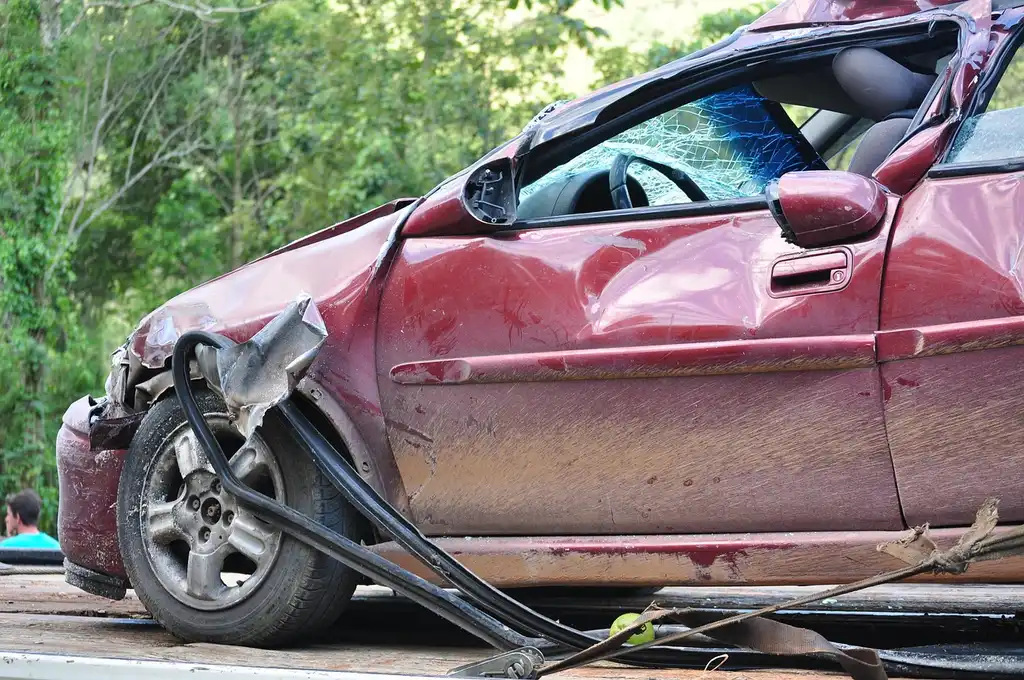
Say your child’s convertible seat is on the side nearest the impact, the door is crushed inward, and the car needs towing. Even if the shell looks fine, that crash no longer fits the minor-crash test. The seat should not be reused.
What counts as a minor crash?
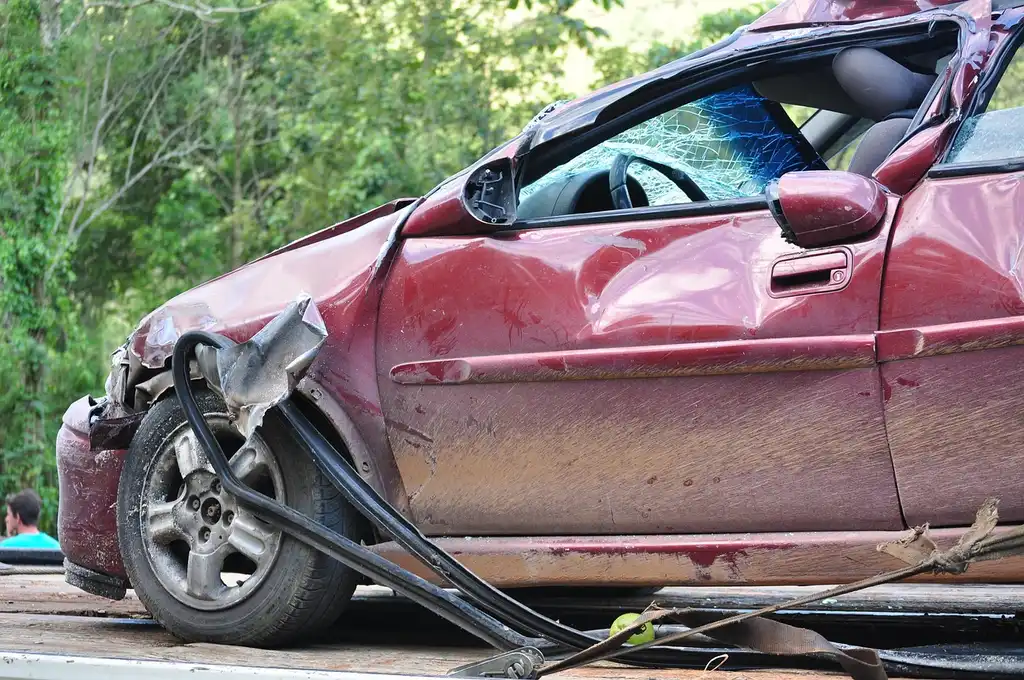
A crash is generally considered minor only when all five NHTSA conditions are met: the car can be driven away from the crash site, the door closest to the car seat is undamaged, no one in the vehicle is injured, no airbags deployed, and there is no visible damage to the car seat. If even one item fails, treat the crash as more than minor.
The five NHTSA conditions
- The car can be driven away from the crash site.
- The door closest to the car seat is undamaged.
- No one in the vehicle is injured.
- No airbags deployed.
- There is no visible damage to the car seat.
When a crash fails the minor-crash test
If the vehicle cannot be driven away, if the nearest door has damage, if anyone was hurt, if any airbag deployed, or if the seat has visible damage, the crash does not qualify as minor. The same source recommends replacement after a moderate or severe crash, and the seat should not be reused.
Suppose a rear-facing infant seat looks normal, but the side curtain airbag deployed and the car had to be towed. That seat fails the minor-crash test, even without scuffs or cracks you can see.
Why towing or intrusion changes the answer
Towing often points to more than a light bump, and intrusion near the seating area raises concern that the seat or its belt path was loaded hard enough to fail later. Door damage matters because the crash energy may have reached the area around the child restraint, even if the seat itself still appears straight.
Car seat decision table
| Crash scenario | Reuse the seat? | What proof to collect |
|---|---|---|
| Minor crash: all five NHTSA conditions are met | Maybe, but only after the manual and brand review | Vehicle drivable, nearest door undamaged, no injuries, no airbag deployment, no visible seat damage, manufacturer contact |
| Moderate crash | No | Vehicle drivable status, any towing record, damage photos, injuries, airbag deployment, manufacturer contact |
| Severe crash | No | Vehicle damage report, intrusion notes, towing record, injuries, airbag deployment, manufacturer contact |
Car seat not safe checklist
- Can the car be driven away from the crash site?
- Is the door closest to the car seat undamaged?
- Was anyone in the vehicle injured?
- Did any airbag deploy?
- Is there no visible damage to the car seat?
If you answer “no” to any item, the crash does not meet the minor-crash rule. Keep the seat out of use until the manufacturer says what to do or the manual requires replacement after any crash.
Does the seat type change the answer?
Yes. Manufacturer guidance can differ by seat type, so the model matters as much as the crash facts. An infant seat, convertible seat, and booster can all have different replacement rules, even from the same brand. The owner manual controls that specific seat.
Infant seats
Infant seats often have detachable bases, rigid shells, and delicate belt or LATCH paths. A crash may affect the base, the carrier, or both. If the manual says to replace after any crash, follow that instruction even if the seat looks fine.
Convertible seats
Convertible seats stay in the vehicle longer and are often used in more than one mode. That means a crash can affect rear-facing or forward-facing installation parts, not just the shell. Check the manual for crash replacement rules and for any brand-specific inspection steps.
Booster seats
Boosters may seem simpler because they have fewer harness parts, but the shell, belt guide, and padding can still be affected. Do not assume a booster is safe just because it has no strap system. The same crash rules and manual review still apply.
What the manufacturer manual says
The manual can be stricter than NHTSA guidance. Some manufacturers require replacement after any crash, including minor crashes. Some require parents to consult customer service for a final decision. That means the manual overrides general advice for that specific seat.
Why brand policy can be stricter than NHTSA
The same source gives a minimum screen for minor crashes, but a brand can decide its product should be replaced more often. That is not unusual. A seat that passes the NHTSA minor-crash test may still need replacement under the manufacturer’s own policy.
When customer service review is needed
If the manual says to call or email customer service after a crash, follow that step before using the seat again. Who decides if a car seat must be replaced after a crash? The manufacturer, using the crash facts and the seat’s own rules, not a guess based on appearance alone.
Before you call, record the model number, date of crash, whether the car was drivable, whether the nearest door was damaged, whether anyone was injured, whether any airbag deployed, and whether the seat has visible damage. That makes the decision faster and more accurate.
Post-crash proof checklist
Keep the seat out of use until you have enough information to decide. The child’s position in the seat after a crash depends on the scene and on emergency responder instructions, so follow those instructions first. Then gather proof while the details are still fresh.
What to record for later
- Vehicle drivable status: note whether it could be driven away.
- Nearest door damage: photograph the door closest to the car seat.
- Injuries: write down whether anyone was hurt.
- Airbag deployment: note which airbags deployed, if any.
- Visible seat damage: photograph cracks, loose parts, stretched straps, or broken foam.
- Manufacturer contact: save the email, case number, or chat transcript.
This is the evidence families often need later for replacement claims or reimbursement. Insurance providers may ask for manufacturer email or proof, so keep the records together.
What should you do next?
Check the manual, contact the brand, and keep the seat out of use until you get a clear answer. If the crash was moderate or severe, replace the seat. If it may qualify as minor, the seat still should not go back in service until the manufacturer confirms that model’s rule.
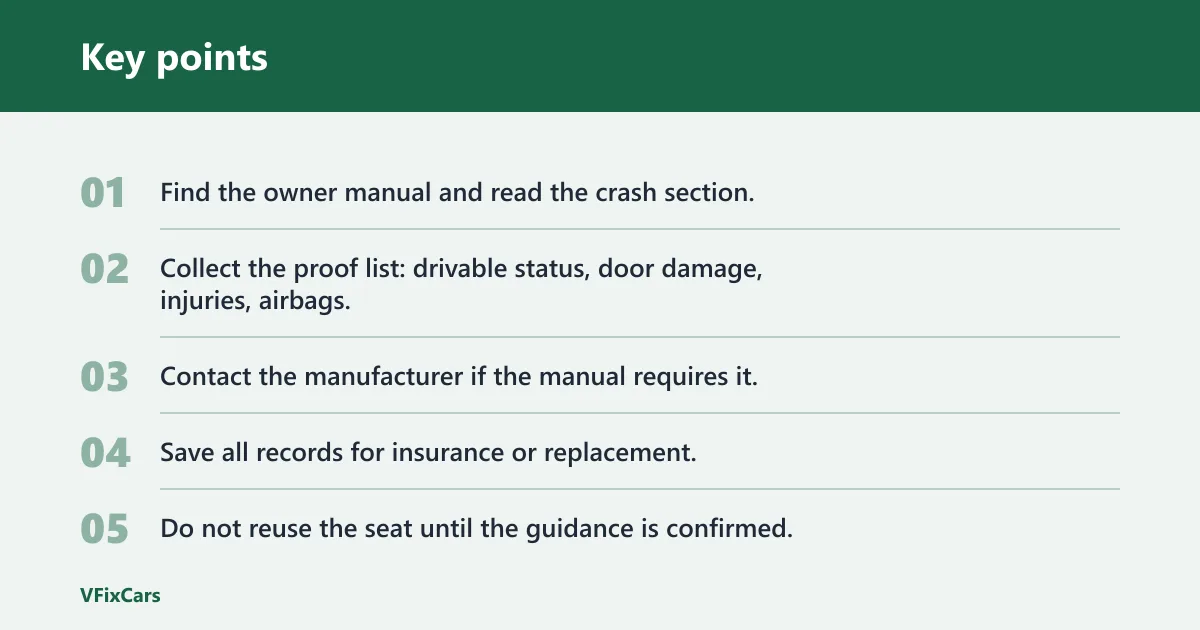
Step-by-step next moves
- Find the owner manual and read the crash section.
- Collect the proof list: drivable status, door damage, injuries, airbags, visible seat damage, and manufacturer contact.
- Contact the manufacturer if the manual requires it.
- Save all records for insurance or replacement.
- Do not reuse the seat until the guidance is confirmed.
Insurance may cover replacement cost. That does not mean payment is automatic. Policies often require proof, and the insurer may want the manufacturer’s written guidance.
What to do with a seat that should not be reused
If the seat is replaced, keep the unsafe one out of circulation. For recycling or disposal, follow your local program’s instructions for damaged car seats; some may ask you to cut the straps or remove padding and foam, while others may not. If a local program accepts trade-ins, check its current terms before bringing the seat in.
Frequently asked questions
Are car seats safe after an accident?
Only sometimes. A car seat may be reused after a minor crash if it meets all five NHTSA conditions and the manufacturer’s manual allows it. After a moderate or severe crash, NHTSA recommends replacement. Visible damage is only one concern, so do not rely on appearance alone.
Why replace car seat after accident
Crash forces can damage parts you cannot see. The shell, belt path, harness, or foam may be stressed enough to affect how the seat performs in the next crash. That is why moderate or severe crashes usually mean replacement, and why some brands replace after any crash.
Should you replace car seat after accident?
Yes, if the crash was moderate or severe. If the crash may be minor, check the five NHTSA conditions and then follow the owner manual for that exact model. Some manufacturers are stricter than NHTSA and may still require replacement or customer service review.
What counts as a minor crash for a car seat
A minor crash meets all five NHTSA conditions: the car can be driven away, the nearest door is undamaged, no one was injured, no airbag deployed, and there is no visible damage to the car seat. If any one of those is missing, do not treat the crash as minor.
Who decides if a car seat must be replaced after a crash
The manufacturer and the crash facts decide it, using the owner manual for that seat. A child passenger safety technician can help with correct use and installation, but that person is not the final authority for a legal or forensic replacement decision after a crash.
Are car seat covers safe?
Only if the manufacturer allows that specific cover. After a crash, do not add a cover and assume the seat is fine. A cover can hide damage or interfere with fit. Check the manual before using any accessory, especially after an accident.