What Do Spark Plugs Do in a Car?
Spark plugs create the timed electrical spark that ignites the air-fuel mix in each cylinder, usually once every two crankshaft revolutions. Worn plugs can make starts longer, idle uneven, throttle response lazy, and fuel use higher. This guide explains what spark plugs do and how weak spark changes real driving.
What do spark plugs do?
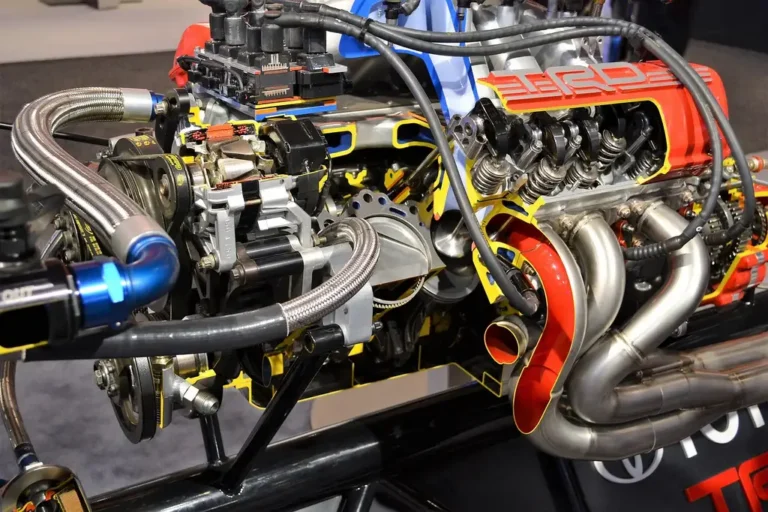
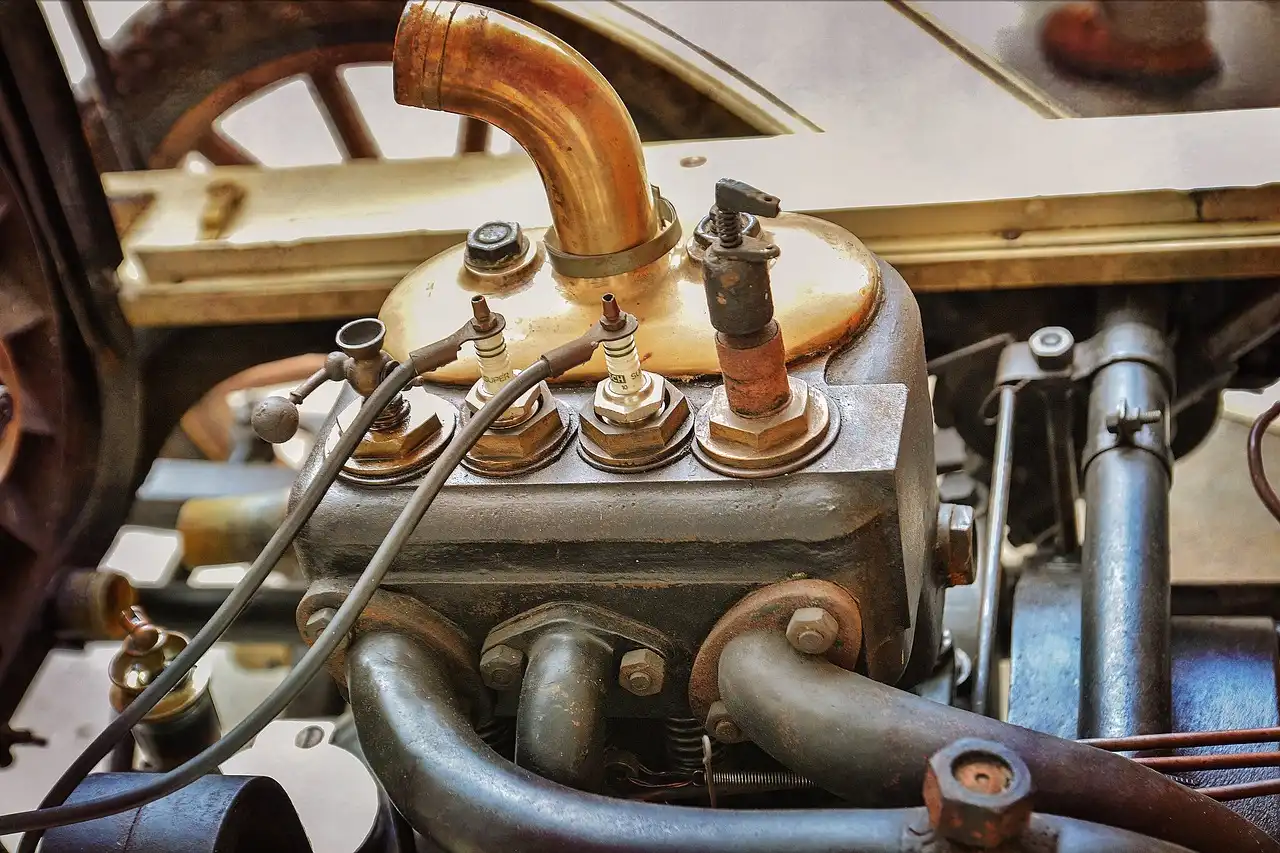
Spark plugs fire inside the combustion chamber of a gas-powered engine to ignite the air/fuel mixture at the exact moment the cylinder needs it. Most engines use one spark plug per cylinder, and that cylinder needs its own timed spark to run smoothly.
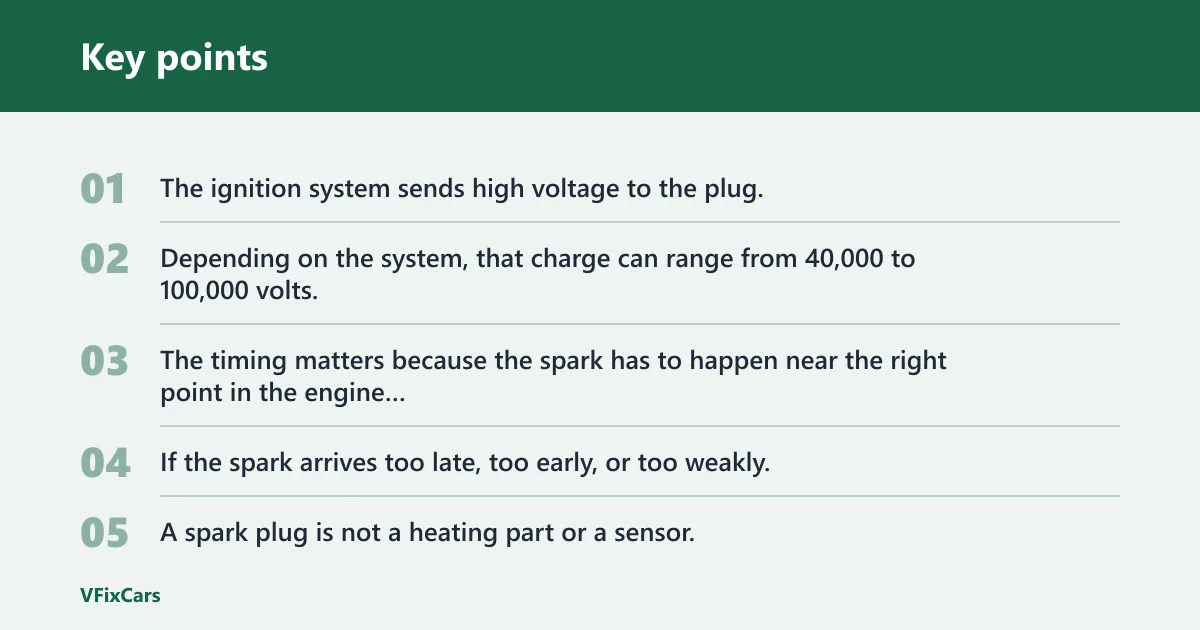
That spark is not small in electrical terms. The ignition system sends high voltage to the plug, and the plug creates a spark across the electrode gap. Depending on the system, that charge can range from 40,000 to 100,000 volts.
The timing matters because the spark has to happen near the right point in the engine cycle, not whenever the plug happens to fire. If the spark arrives too late, too early, or too weakly, the burn in that cylinder becomes less effective and the engine feels it.
The spark at the right moment
A spark plug is not a heating part or a sensor. It is the timed ignition trigger for the cylinder. In a four-stroke gas engine, the plug fires near the end of the compression stroke, just before the air-fuel charge finishes being squeezed and the power stroke begins. (Wikipedia)
That is why a healthy plug matters most during start-up, idle, and load changes. Those are the moments when the engine depends on clean, repeatable ignition in each cylinder.
Why each cylinder needs its own spark
Each cylinder is its own combustion chamber. A typical gas engine gives each one a dedicated plug so the ignition system can fire every cylinder on schedule. If one cylinder misses or fires weakly, the crankshaft still turns, but the engine runs unevenly.
Diesel engines do not use spark plugs. They rely on compression heat to ignite fuel, and many diesel engines use glow plugs for cold starting instead.
How do spark plugs work in an engine?
The ignition coil boosts battery voltage to a much higher level and sends it to the spark plug. The spark jumps the electrode gap, lights the air/fuel mixture in the combustion chamber, and starts the burn that pushes the piston down. When that sequence is right, the engine runs smoothly.
If the spark is weak, late, or inconsistent, combustion becomes uneven. The result can be a rough idle, a stumble when you open the throttle, or a misfire under load. The engine control system may try to compensate, but it cannot make a worn plug fire like a healthy one.
From ignition coil to electrode gap
The ignition system is more than the plug itself. It has to deliver voltage, route it correctly, and fire each cylinder at the correct time. The plug then bridges the final gap between that electrical pulse and combustion.
The electrode gap is the space the spark must jump. If the gap is too wide or too narrow, the spark can become unreliable. An incorrect gap can cause symptoms that look a lot like worn plugs.
What happens inside the combustion chamber
Inside the combustion chamber, the plug ignites the air/fuel mixture in a very small area. That flame front then spreads through the rest of the charge. A good spark lets the burn start fast and repeat in the same way every cycle.
When ignition is poor, the cylinder may not contribute its full share of power. At idle, that shows up as shaking or a lumpy sound. Under acceleration, it can feel like the engine hesitates or falls flat for a moment.
Where do spark plugs go?
Spark plugs go into the cylinder head so the electrode points into the combustion chamber. In most gas engines, there is one spark plug in each cylinder. That placement lets the ignition system fire each cylinder where the mixture burns.
Because they sit in the cylinder head, plugs are tied to the engine’s top end rather than the bottom end. On many engines, the coil or plug wire connects right above the plug well. On others, the coil sits directly on the plug.
The cylinder location
Each cylinder needs its own spark source because each one has its own intake charge, compression event, and power stroke. The plug has to fire that cylinder on time so the crankshaft keeps turning smoothly.
A common first-timer mistake is to treat all rough running as a single bad-part problem. One cylinder can misfire from a plug issue while another stays healthy, so location and cylinder count matter during diagnosis.
Why diesels are different
Gas-powered engines need spark plugs to start and run properly. Diesel engines do not use spark plugs. They use compression ignition, and glow plugs help with cold starts rather than creating the combustion spark a gas engine needs.
Spark plug symptom vs likely cause
This table separates the most common symptom patterns from the most likely plug-related causes. It also shows where ignition coil issues can mimic spark plug trouble, because the symptoms overlap more than many drivers expect.
| Symptom | Worn plugs | Incorrect gap | Ignition coil issues | What to check first |
|---|---|---|---|---|
| Hard starting | Yes, especially if the plugs are old or fouled | Yes, if the gap is too wide for the system | Possible, if spark is weak on one or more cylinders | Check plug condition and service age first |
| Rough idle | Yes, worn electrodes can cause uneven firing | Yes, a bad gap can create intermittent misfire | Possible, especially if one coil fails at idle | Inspect the plugs in the rough cylinder |
| Misfire under acceleration | Yes, load can expose a weak plug | Yes, wider gaps can break down under load | Yes, coil breakdown often shows up under load | Check plugs and coils together |
| Poor fuel economy | Yes, incomplete combustion can waste fuel | Yes, if misfires reduce burn quality | Possible, if a coil causes repeated misfire | Look for misfire codes and plug wear |
| No-start | Possible, if plugs are badly worn or fouled | Possible, if the gap is far off spec | Possible, if there is no strong spark at all | Check for spark before replacing parts |
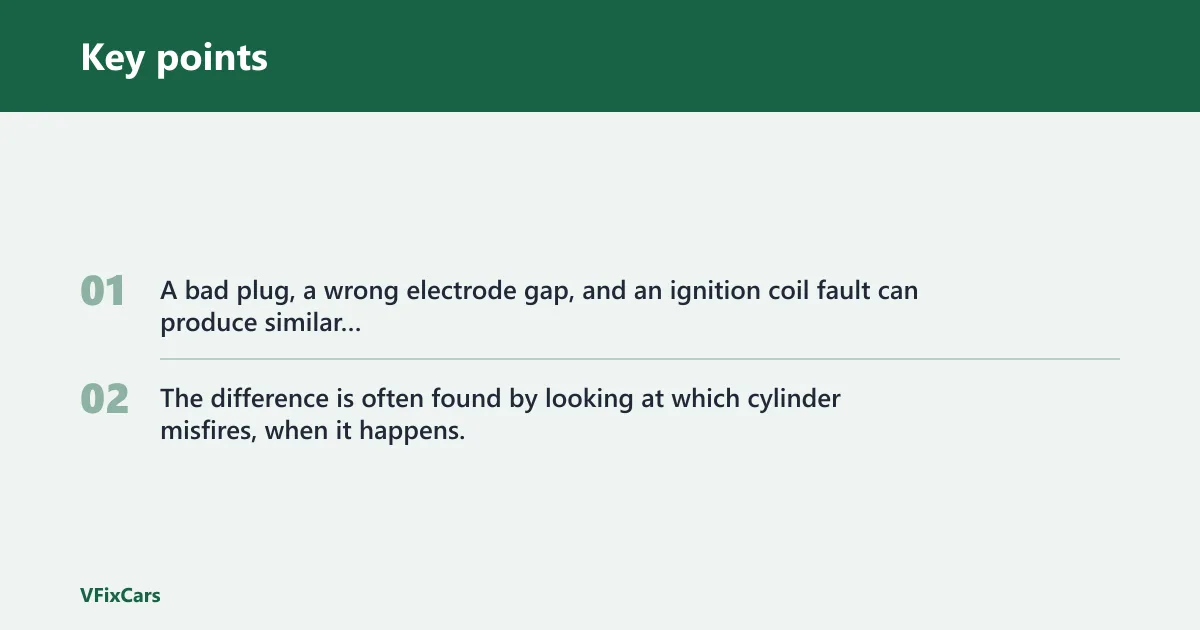
The table is a guide, not a final diagnosis. A bad plug, a wrong electrode gap, and an ignition coil fault can produce similar symptoms. The difference is often found by looking at which cylinder misfires, when it happens, and how old the plugs are.
How long do spark plugs last?
Service life depends on plug material, engine design, and driving conditions. Standard copper spark plugs may need replacement every 20,000 miles. Platinum or iridium plugs might last 60,000 miles, and high-end iridium or double platinum plugs can last 100,000 to 120,000 miles.
Those figures are service targets, not a promise. Short trips, heavy idle time, oil use, and rich-running problems can shorten plug life. A vehicle with a well-tuned engine may go longer, but the plug type still sets the general range.
Copper, platinum, iridium, double platinum, and silver
Copper plugs usually have the shortest service life because the metal wears faster. Platinum and iridium plugs last longer because their tips resist wear better. Double platinum plugs use platinum on both sides of the electrode design, which can support longer service intervals in some engines. Silver plugs exist too, though they are less common and are chosen for specific heat and conductivity needs.
If you are planning maintenance, match the interval to the plug type already specified for the engine. Do not assume every engine can use the same schedule. The manufacturer’s schedule matters more than a generic mileage number.
What changes the interval by vehicle and driving style
Repeated cold starts, long idling, short commuter trips, and oil contamination can shorten plug life. Engines with direct injection, turbocharging, or harder-to-access plug wells can also change how quickly symptoms show up. The service interval should follow the vehicle’s maintenance guide and the plug type installed.
- Check the engine’s recommended plug type and interval.
- Look for misfire codes, hard-start complaints, or rough idle.
- Inspect plug wear, gap, and fouling before replacing coils.
- Compare one cylinder against the others if only one misfires.
- Replace plugs as a set when the service interval is reached.
What do bad spark plugs do to a car?
Bad spark plugs can make a car harder to start, rougher at idle, slower to respond to throttle, and more likely to misfire. They can also hurt fuel economy because the air/fuel mixture does not burn as completely or as consistently as it should. The effect is usually clearest under load or during cold starts.
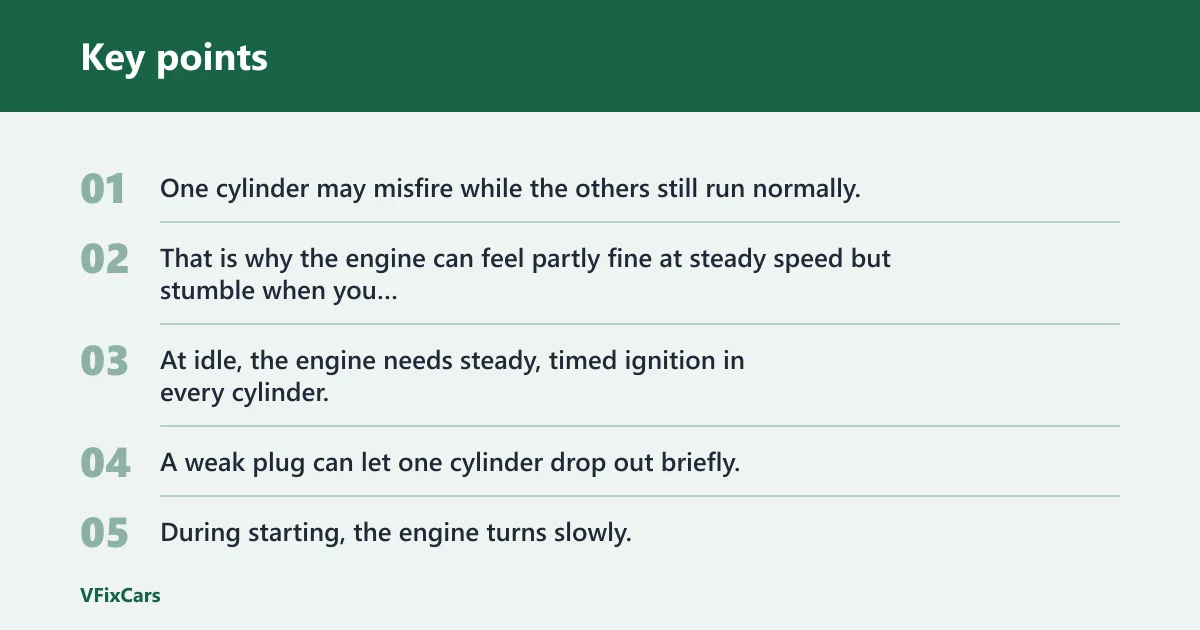
Bad plugs do not always fail all at once. One cylinder may misfire while the others still run normally. That is why the engine can feel partly fine at steady speed but stumble when you accelerate, climb a hill, or start the car on a cold morning.
Idle, starting, and throttle response
At idle, the engine needs steady, timed ignition in every cylinder. A weak plug can let one cylinder drop out briefly, which creates a shake or an uneven exhaust note. During starting, the engine turns slowly, so a weak spark can be enough to cause a long crank or a no-start.
Suppose a four-cylinder engine starts after several extra cranks and then idles with a light shake. If the plugs are overdue and one cylinder is misfiring, that pattern fits a worn-plug problem better than a fuel delivery fault alone. The first move is still inspection, not guessing.
Why worn plugs can mimic coil problems
Worn plugs and bad coils can look alike because both can cause weak spark. A plug with worn electrodes needs more voltage to fire. A coil with poor output may not supply enough voltage in the first place. Either problem can create a misfire under acceleration.
That is why the decision should not stop at “it misfires, so the plugs are bad.” Check plug age, plug gap, and coil condition together. If the misfire stays with one cylinder after plug and coil checks, the fault is elsewhere in that cylinder’s ignition or engine system.
When you should stop guessing and inspect the ignition system
If the car has a hard start, rough idle, or a repeated misfire warning, inspect the ignition system instead of swapping parts at random. A quick plug check can show worn electrodes, oil fouling, or an incorrect gap. If the plugs look acceptable, the next step is usually coil testing and cylinder-by-cylinder comparison.
Can you drive a car that needs spark plugs? Sometimes, yes, for a short distance. But if the engine is misfiring badly, struggling to start, or shaking hard at idle, driving it risks worse running and may hide a coil or fuel problem that needs attention.
Frequently asked questions
What do spark plugs do in a car engine?
Spark plugs fire the air/fuel mixture in each cylinder at the correct time. That spark starts combustion, which pushes the piston down and turns the crankshaft. In a gas engine, the car needs that repeated spark to start and keep running smoothly.
What are spark plugs in a car used for?
They are used to ignite the mixture inside the combustion chamber. One spark plug per cylinder is typical, and each plug works with the ignition system to fire on time. Without that spark, the engine would not start.
Where do spark plugs go in a car?
They screw into the cylinder head so the tip reaches the combustion chamber. That puts one plug in each cylinder on most gas engines. Their location lets the ignition system fire each cylinder where the burn happens.
How do spark plugs work in a car?
The ignition coil sends high voltage to the plug, and the plug jumps that voltage across its electrode gap. The spark lights the compressed air/fuel charge, which begins combustion. If the spark is weak or the gap is wrong, the cylinder may misfire or run unevenly.
What do old spark plugs do to a car?
Old spark plugs wear down and may need more voltage to fire. That can lead to long cranking, shaky idle, hesitation, or a misfire under acceleration. If the plugs are past their service interval, replacing them is often the first practical step.