Why Do My Brakes Squeak When Stopping?
Brake squeaks usually point to pad wear, a light rust film, glazing, or a small stone; the timing tells you how urgent it is. A worn pad left alone can score rotors and turn a small service into a bigger brake job. This guide maps first-stop, low-speed, hard-stop, reverse, and no-brake squeaks to the likeliest cause and next step.
This guide is part of our Brakes: how they work, warning signs and service series.
What the squeak timing tells you
The timing is the clue. A squeak that fades after a few stops often points to moisture, surface rust, or bedding-in. A squeak that shows up only with light pedal pressure often points to pad vibration, dust, or hardware. A noise that happens without touching the pedal often warrants a closer inspection.
Cold-start squeak after overnight parking
Morning squeak after an overnight park is often a thin layer of condensation and surface rust on the rotors. That rust film usually wipes off after a few gentle stops. If the sound disappears quickly and the brakes feel normal, it is often temporary.
Wet-weather rust after rain, snow, or ice
Rain, snow, and slush can leave a water film on the rotor face, then a light rust layer forms as the car sits. That can make the pads chatter on the first stop or two. Ice, slush, and road spray can do the same thing.
Noise only when you touch the pedal
If the noise starts only when the pedal moves, the brake parts are likely vibrating against each other. That points to pad shims, clip fit, pad material, rotor glazing, or dust between the pad and rotor face. A sound that also changes with pedal pressure is more useful than the pitch alone.
Brake squeak decision table
Use the timing of the sound to sort normal, temporary noise from a service issue. This table is built for quick triage, not diagnosis by guesswork.
| Noise pattern | Most likely cause | Quick at-home check | Safe-to-drive status | When to book service |
|---|---|---|---|---|
| Cold morning start | Overnight condensation and light surface rust | Drive gently and note whether the noise fades after 1 to 3 stops | Usually okay if braking feels normal | If it keeps happening after dry nights or lasts more than a few stops |
| Wet-weather rust | Moisture film or temporary rust after rain, snow, or ice | Check whether the squeak began right after wet weather and then faded | Usually okay if it clears quickly | If the noise persists after the rotors dry |
| New pads | Break-in period, pad material, or missing shim contact points | Count mileage since service and check for gentle-bedding instructions from the shop | Often okay during the first few hundred miles | If the squeak is loud, worsening, or still present after 300-400 miles |
| Low-speed squeak | Pad vibration, dust buildup, glazing, or worn pads | Look through the wheel spokes for pad thickness and uneven wear | May be okay short term if braking feels normal | If pads look thin, the noise is repeatable, or one wheel is noisier than the rest |
| Hard-stop squeal | Glazing, pad material noise, or heat-related squeak | Note whether repeated hard stops make it worse | Drive cautiously and avoid aggressive braking until checked | If the squeal turns into grinding, pull, or pedal vibration |
| Reverse-only noise | Pad angle, hardware fit, or contact point noise in front or rear brakes | Back up slowly once and then brake forward to compare | Often okay if the noise is brief and the pedal feels normal | If it repeats every time or comes with drag, heat, or uneven wear |
| Noise while not braking | Rotor shield contact, stuck caliper hardware, debris, or a damaged wear indicator | Listen at low speed without touching the pedal; check for wheel heat after a short drive | Not ideal to ignore | Book service soon, especially if one wheel runs hot or the sound changes with speed |
Why new brakes squeak
New brakes may squeak during the break-in period. Fresh pads and rotors need time to form a transfer layer, and that process can make light noise during the first few hundred miles. A short-lived squeak is common; a loud, persistent squeal needs a check for fit, material choice, or contamination.
Break-in miles and transfer-layer formation
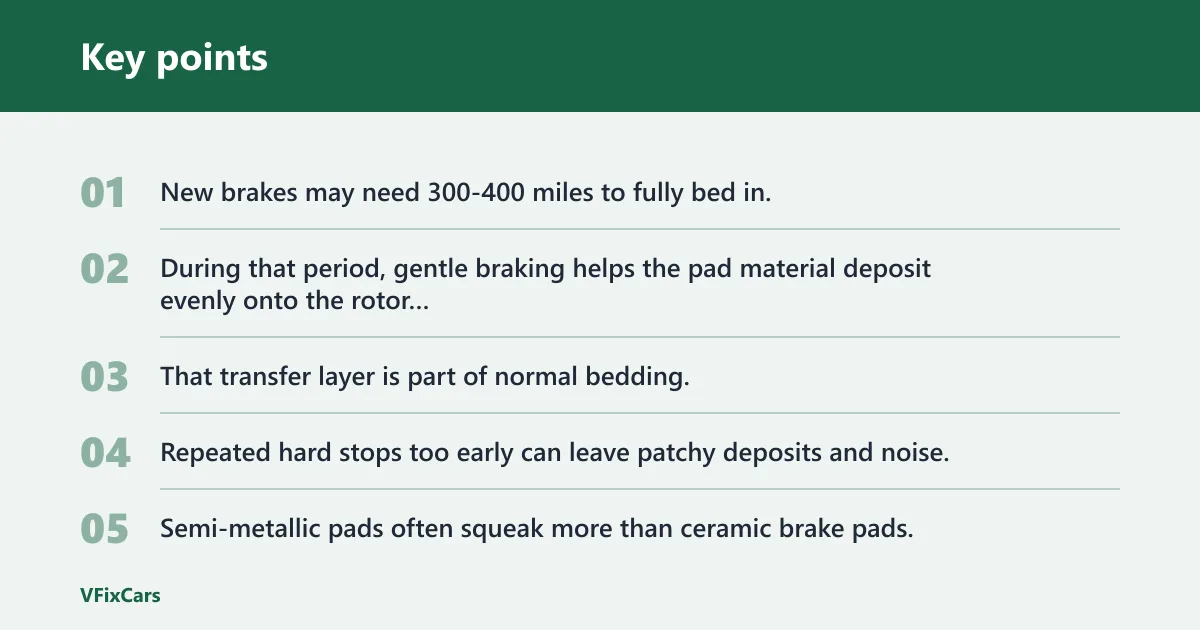
New brakes may need 300-400 miles to fully bed in. During that period, gentle braking helps the pad material deposit evenly onto the rotor face. That transfer layer is part of normal bedding. Repeated hard stops too early can leave patchy deposits and noise.
Pad material, shims, and contact points
Semi-metallic pads often squeak more than ceramic brake pads, which many makers tune for lower noise. That does not make one type universally noisy; the exact formulation and the vehicle setup matter. Brake pad shims can reduce squeaking by filling gaps and damping vibration, and some pads come with shims already installed.
What is normal versus what needs inspection?
A little noise during the first few drives can be normal. A squeal that gets louder, happens every stop, or shows up with dust, shim issues, or poor pad fit deserves attention. Say your front pads were replaced last week and the squeak appears only on the first cold stop, then fades. That is much less concerning than a steady metal-on-metal sound.
Why do my brakes squeak at low speeds?
Low-speed squeak often points to light pedal pressure, vibration, or a pad that is touching unevenly. Worn pads can cause squeaky brakes at slow stops, and dust buildup between pads and rotors can create squeaky sounds. The sound may come from the front or rear brake set, depending on the vehicle and where the wear sits.
Light pedal pressure and pad vibration
At low speeds, the pads can hover at the edge of contact and vibrate against the rotor face. That makes a sharp squeak more likely than a hard grind. Pads with worn shims, loose clips, or poor contact points can amplify the noise.
Dust, debris, and rotor face condition
Brake cleaner helps clear dust and debris during inspection cleanup, but it will not fix worn parts. If dust, road grit, or a small stone sits between the pad and rotor, the sound can come and go with each stop. Glazing on the rotor or pad face can also make low-speed squeak more likely.
Front or rear brake sources
Reverse or low-speed noise does not prove the rear brakes are the source. Depending on brake design, the sound can come from either axle. A quick check is to listen for which wheel area seems louder outside the car, then inspect the pad faces, clips, and rotor surfaces on that corner.
Brake parts that make noise
Several parts can create squeak without being fully worn out. The pad material, rotor surface, caliper movement, and anti-rattle hardware all affect noise. A proper inspection looks at the friction surface, backing plate, and the parts that keep the pad centered and quiet.
Brake pads
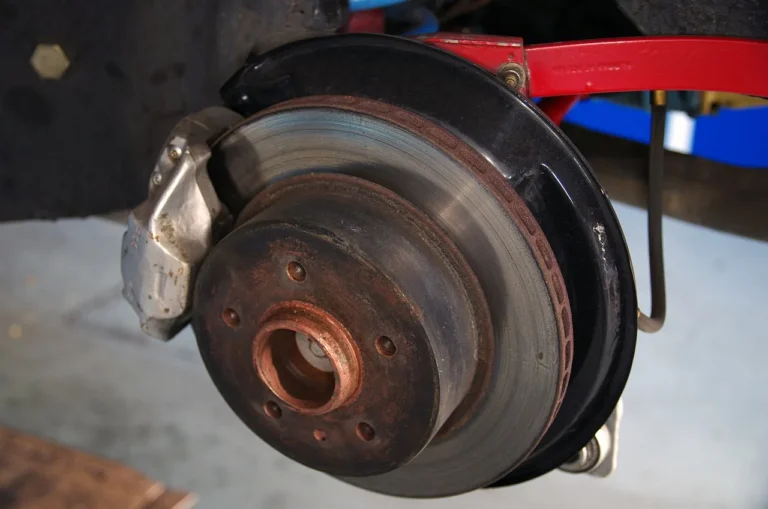
The pad friction surface does the stopping. The backing plate is the metal base behind it. Many pads also have a wear indicator tab that can squeak once pad material gets low. A visual inspection through the wheel spokes can help, and pads less than a quarter-inch thick may need replacement.
Brake rotors
Rotors can squeak when they carry surface rust, moisture, dust, debris buildup, glazing, or wear. Overheated brakes can squeak when stopping slowly, especially after aggressive braking. If the rotor face has patches that look shiny and hard, the pad may be skimming over a glazed area instead of bedding evenly.
Brake calipers
The caliper piston has to move smoothly so the pad releases after braking. A stuck piston can keep light pressure on one pad and create heat, drag, and repeat squeak. Worn seal symptoms often include uneven pad wear, one wheel that runs hotter than the others, or a brake that does not release cleanly.
Shims and anti-rattle hardware
Pad shims fill tiny gaps and reduce vibration. Anti-rattle springs, clips, and pad retainers do the same job by keeping the pad steady in its bracket. If any of these parts are bent, missing, or poorly seated, the brakes can squeak even when the pads still have useful material left.
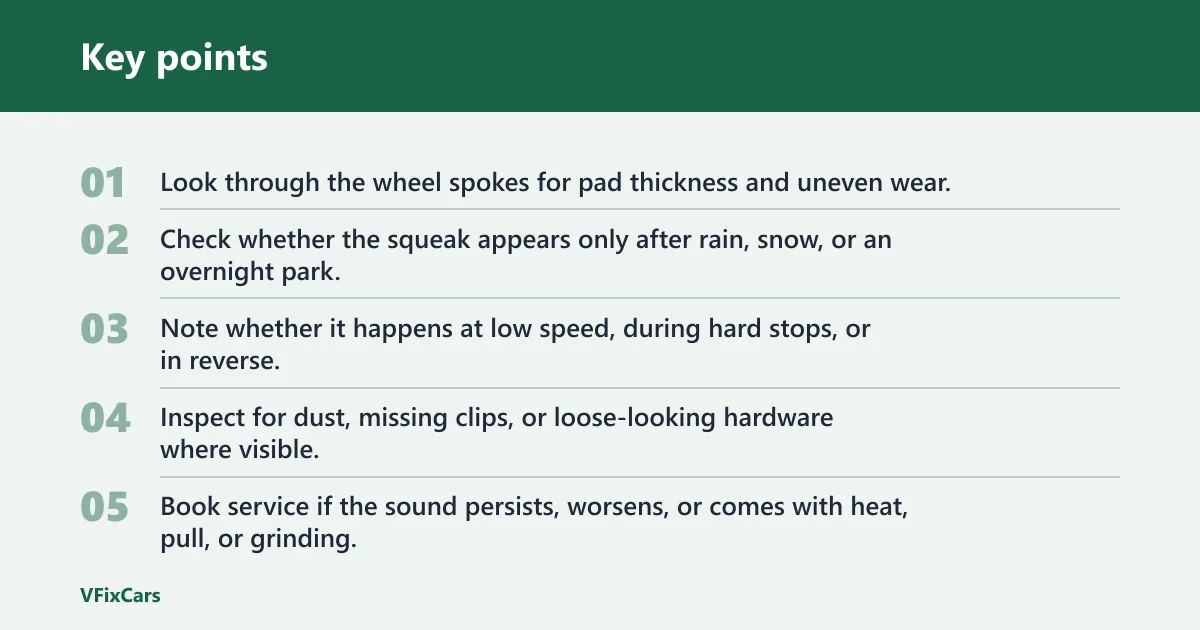
- Look through the wheel spokes for pad thickness and uneven wear.
- Check whether the squeak appears only after rain, snow, or an overnight park.
- Note whether it happens at low speed, during hard stops, or in reverse.
- Inspect for dust, missing clips, or loose-looking hardware where visible.
- Book service if the sound persists, worsens, or comes with heat, pull, or grinding.
Suppose the left-front wheel squeaks only when backing out of a driveway, then stops once you pull forward. That pattern can still come from front brake hardware, not only the rear brakes. The key is that the noise repeats in a narrow situation, which points to a contact or vibration issue rather than random road noise.
When squeak needs service
Some squeaks can wait a short time. Others should not. Noise while not braking, a hard-stop squeal that becomes grinding, or a pedal that feels different all raise the urgency. Heat at one wheel, a pull to one side, or clear uneven wear means the system needs inspection soon.
Noise while not braking
If the sound happens while you are coasting, a pad may be dragging, a rotor shield may be touching, or a caliper may not be releasing properly. That is more concerning than a light morning squeak because the brake parts are active even when your foot is off the pedal.
Hard-stop squeal or grinding
Why do my brakes squeak when braking hard? Hard braking can create squeal when the pads glaze or the system gets hot. If the noise turns into grinding, the pad material may be near gone or the rotor may already be damaged. That is a service-now problem.
Pedal feel, pull, heat, or uneven wear cues
A brake pedal that feels soft, pulsing, or longer than usual needs attention. So does a car that pulls to one side or leaves one wheel much hotter than the others after a short drive. Those are stronger clues than squeak alone because they point to movement, drag, or uneven braking force.
Frequently asked questions
Why do my brakes squeak when stopping?
The most common causes are pad wear, moisture, light rust on the rotor, dust, or a pad that is vibrating against the hardware. The timing matters: a first-stop squeak after rain is usually temporary, while a repeat squeak at every stop points to wear, glazing, or fit problems.
Why do my brakes squeak when braking at low speeds?
Low-speed squeak often comes from light pedal pressure, dust, glazed surfaces, or worn shims and clips. Because the pads are barely loaded, they can vibrate more easily. If the noise repeats at the same corner, inspect pad thickness, rotor condition, and nearby hardware.
Why do my brakes squeak when braking hard?
Hard braking can heat the pads and rotors quickly, which can trigger squeal if the pads are glazed or the friction material is not bedding evenly. Aggressive braking can lead to glazing and squeaking. If hard stops also bring grinding or vibration, the brakes need inspection.
Why do my brakes squeak when not braking?
That usually suggests dragging hardware, a caliper that is not releasing fully, a rotor shield touching the rotor, or debris trapped near the brake assembly. Since the noise happens with no pedal input, it deserves faster attention than a short-lived morning squeak.
Why do my new brakes squeak when stopping?
New brakes can squeak during the break-in period as the pads and rotors build a transfer layer. Mild noise can be normal for the first few hundred miles. If it remains loud past 300-400 miles, or the noise gets worse, the pad choice, shims, or installation should be checked.
Why do my brakes squeak when stopping in reverse?
Reverse squeak can come from front or rear brakes, depending on the vehicle design and how the pads load in reverse. A brief squeak that happens only while backing up is often a pad contact or hardware noise. Repeated reverse noise with drag or heat needs inspection.