Why Do Tires Lose Air With No Puncture?
A tire can lose a small amount of pressure over time normally, but repeated drops over days, or one tire dropping much faster than the others, point to a leak. Ignore it and you risk poor handling, uneven wear, and a flat at the worst time. This guide explains normal air loss, leak patterns, and the timing clues that point to the likely cause.
This guide is part of our Tires: how to choose safe tires for your car series.
Why a tire can lose air without a visible puncture
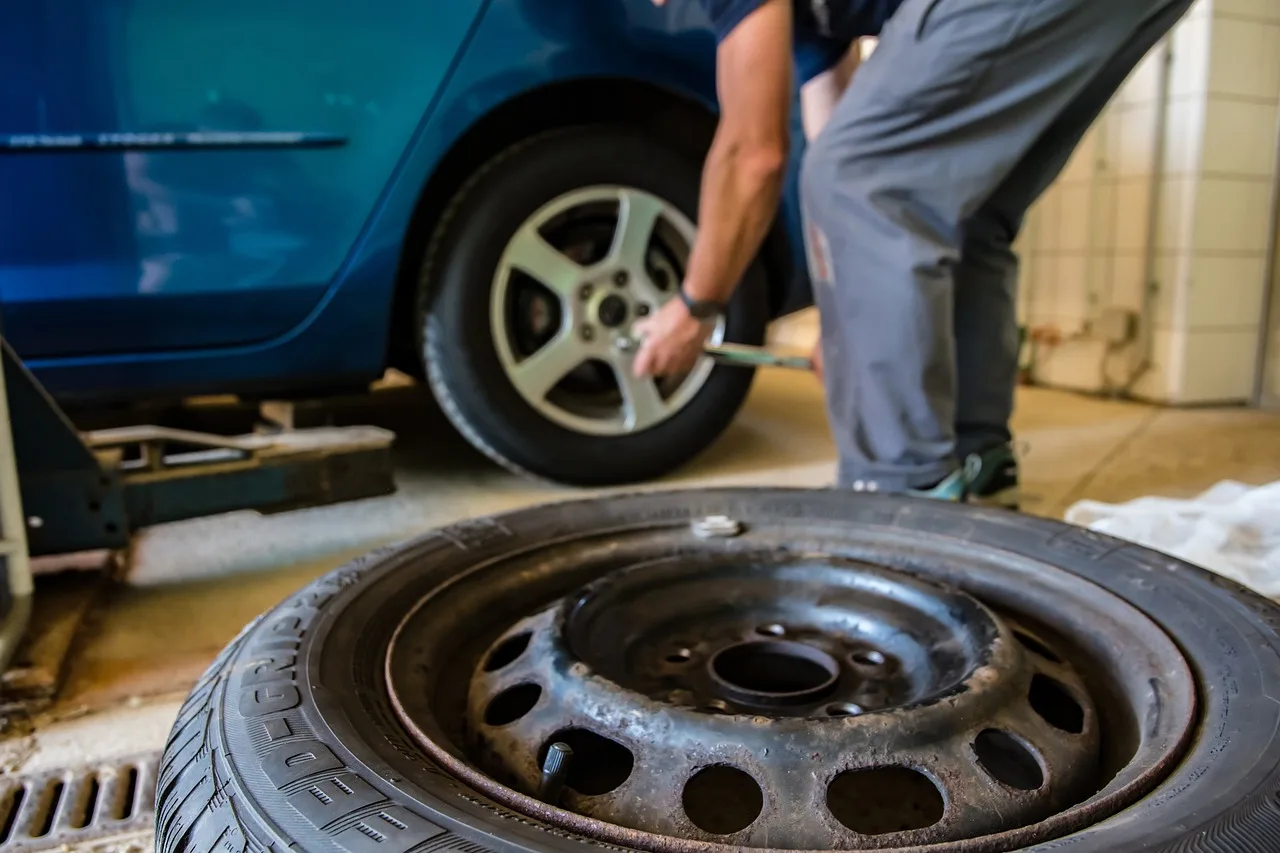
Tires do not hold pressure forever. A tubeless tire has an innerliner on the inside surface, and that liner slows outward permeation, but it does not stop all air loss. Cold weather can also drop tire pressure by roughly 1 psi for every 10°F, so a morning warning can be temperature-related rather than a puncture.
Normal pressure loss versus a leak
Normal loss is slow and fairly even. says new tires lost about 2 percent of pressure per month in NHTSA’s lab test, and says Consumer Reports found about 3.5 psi per year in an outdoor test. A tire that needs air every week or two is likely beyond normal pressure loss and deserves a leak check.
How cold weather changes tire pressure
Temperature changes can make tires seem like they are losing air. says cold air can drop tire pressure by roughly 1 psi for every 10°F, which can be enough to trigger a warning after a cold snap. That drop is not the same as a hole, and the pressure can rebound as temperatures rise.
Why repeated top-offs are a warning sign
Repeated top-offs mean the issue should be inspected. A tire that keeps going low usually has a real leak, and notes that overnight loss suggests a larger leak than one that needs air every week or two. The key is pattern, not just the dashboard light.
What the timing of the pressure drop tells you
The timing pattern narrows the cause fast. Overnight loss usually points to a larger leak, while weekly or monthly loss can come from a slow leak, normal permeation, or a service-related sealing problem. Loss right after mounting, rotation, or TPMS work often points to the wheel, bead, valve, or sensor area.
Why is my tire losing air when there is no puncture
The most common answer is that there is a leak you cannot see yet. The usual leak points are the valve stem, valve core, bead, wheel rim, tread, and sidewall. A missing valve cap does not cause air loss, and the TPMS light only warns that pressure is low; it does not identify the source.
Why the warning may appear after service
If the tire started losing air after mounting, rotation, or TPMS work, the leak may be at the bead, valve core, or wheel lip. says the valve cap is not the main air-retaining seal, so a cap issue is not the same as a seal issue. A wheel warning symbol is the flat horseshoe with an exclamation mark.
Why one tire may lose air faster than the others
One tire may have a local problem while the others are fine. That can happen after a repair, after a curb strike, or after the tire was remounted on a rim with corrosion or dirt on the sealing surface. Front tires often see more steering scrub and curb contact, so they can show the problem sooner.
What are the most likely leak points?
Common leak points include the valve stem, valve core, bead, wheel rim, tread, and sidewall. Those areas seal the air in different ways, so a problem in any one of them can create a slow loss with no nail visible. The exact pattern often tells you where to look first.
Valve stem and valve core
The tire valve stem is a common leak point because cracked rubber can bleed air slowly. says air loss can come from a broken valve stem. The valve core is the removable sealing part inside the stem; it can loosen or fail to seal, and it is easy to miss without bubble testing.
Tire bead and wheel rim
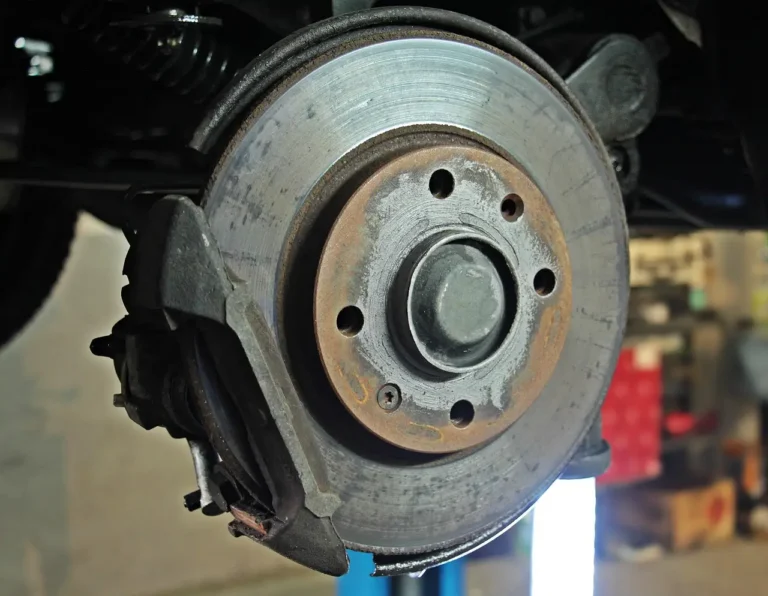
says the tire bead is where the tire seal meets the wheel. Dirt or corrosion there can keep the tire from sealing fully, especially after service. says a damaged wheel can let air leak if the tire cannot seat correctly, so inspect the inner and outer lips of the rim.
Tire tread and sidewall
Small injuries in the tread can leak without an obvious nail. Sidewall cuts are higher-risk because that area flexes constantly, and a cut there is more likely to worsen. Any bubble test that shows bubbles in the tread or sidewall area deserves close inspection, not just a top-off.
How do you find the leak with soapy water?
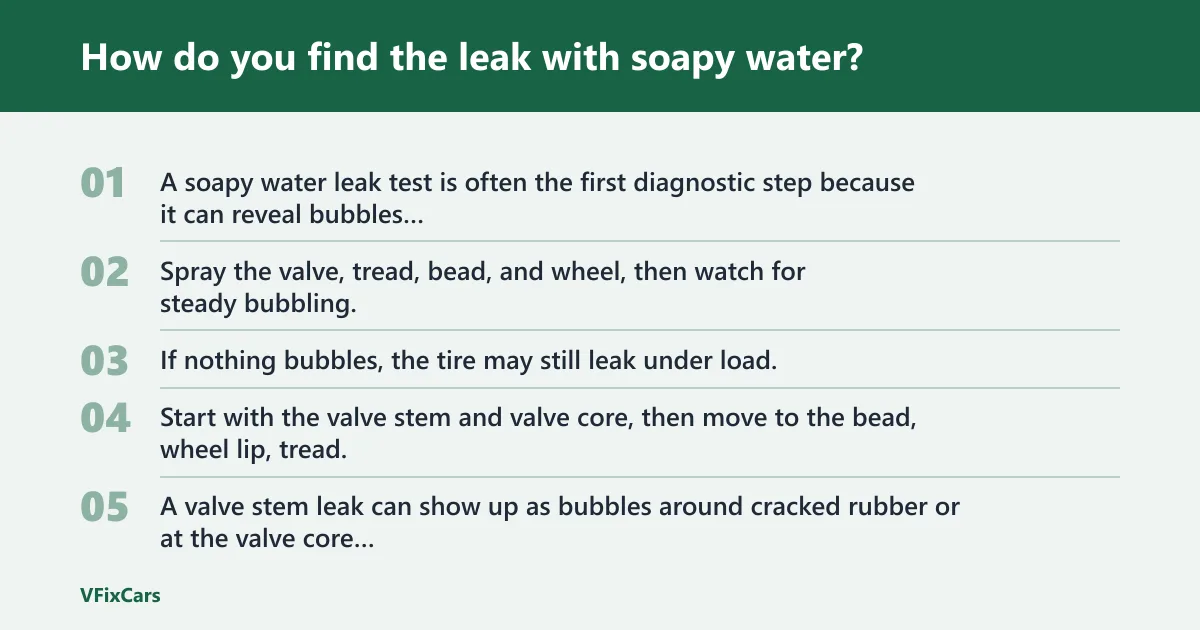
A soapy water leak test is often the first diagnostic step because it can reveal bubbles at the leak point. Spray the valve, tread, bead, and wheel, then watch for steady bubbling. If nothing bubbles, the tire may still leak under load, or the problem may be slow enough to need a more careful inspection.
Where to spray first
Start with the valve stem and valve core, then move to the bead, wheel lip, tread, and sidewall. A valve stem leak can show up as bubbles around cracked rubber or at the valve core opening. If the tire was recently serviced, inspect the bead and the rim closely before assuming the tread is the problem.
What bubbling means
Steady bubbles mean air is escaping at that spot. Slow foaming or a few random bubbles from soap residue is not the same as a leak. Recheck the area after cleaning it lightly and adding more solution. The goal is a repeatable bubble pattern that matches the symptom pattern.
What to inspect if the test is negative
If the test is negative, check the pressure when the tire is cold and compare it with the other tires. If one tire is still dropping faster, the leak may be tiny, intermittent, or hidden at the bead or wheel. A damaged rim, a weak valve core, or a small tread injury can be missed at first pass.
Use this symptom-to-cause table
This table ties the pressure-loss pattern to the most likely failure point. Use it with the leak test and your recent service history. The point is not to guess; it is to narrow the search so you know whether the tire needs air, a quick inspection, or immediate attention.
| Pressure-loss pattern | Recent service history | Leak-test result | Most likely failure point |
|---|---|---|---|
| Overnight drop of 5 psi or more | Any recent mounting, rotation, patch, or TPMS work | Visible bubbles at valve, bead, or rim | Valve stem, valve core, bead seal, or wheel rim |
| Needs air every 1 to 2 weeks | No recent service | Small bubbles at the valve or a slow bead bubble pattern | Slow valve stem leak, loose valve core, or dirty bead seat |
| Pressure drops after a cold snap, then rises later | No recent service | No leak found | Temperature change, not a puncture |
| One tire low soon after tire mounting | Recent tire service | Bubbles at inner or outer rim lip | Bead not seated, wheel corrosion, or damaged rim |
| Repeated low pressure with no bubble at valve or bead | No recent service | Bubbles on tread or sidewall | Small tread injury or sidewall damage |
- Check the tire cold and compare it with the others on the vehicle.
- Spray the valve stem, valve core area, bead, wheel lip, tread, and sidewall with soapy water.
- Watch for steady bubbles, not just wet foam.
- Match the leak location with recent service work and the timing pattern.
- Do not keep topping off a tire that drops again within days.
When should you stop driving or get the tire checked soon?

Stop driving if the tire is visibly low, the sidewall is damaged, or the pressure drops very quickly after inflation. If it only needs a small top-off and holds for a short drive to a shop, that may be acceptable. Any tire that leaks overnight or shows sidewall damage should be treated as urgent.
Stop-driving signs
Stop if the tire looks collapsed, the tread is separated, the sidewall is cut, or the pressure is so low that the tire may be overheating. A tire can fail fast once it runs too soft. Do not assume the TPMS warning alone tells you it is safe to keep driving.
Safe short-drive situations
If the tire is only slightly low and the bead, sidewall, and tread look normal, you can usually add air and drive a short distance to a shop. That is a reasonable choice when the tire holds pressure long enough to get there. Recheck it before you leave if the weather changed a lot.
When to schedule a shop visit
Schedule a shop visit soon if you are topping off the same tire more than once in a short period. Frequent pressure loss is not normal, and the likely source may be inside the tire, at the rim, or at the valve core. A slow leak today can become a flat later.
Why do my front tires keep losing air?
Front tires often lose air for the same reasons as rear tires, but they get more steering angle, curb exposure, and service attention. That makes valve stems, beads, and wheel lips more likely suspects after mounting or rotation. If the front tires keep going low, compare both sides and inspect recent work first.
Steering and curb exposure
Front tires see more side loads when you turn and park. That can stress a weak valve stem or make a small rim issue show up sooner. A curb rub can also nick the sidewall or disturb the bead seat, even if there is no obvious nail in the tread.
Recent front-end service
If the low tire is on the front axle after a tire rotation, balance job, or TPMS service, the issue may have started during that work. The tire bead may not have seated well, or the valve core may have been disturbed. A bubbling test at the valve and bead is the fastest way to narrow it down.
Why front and rear patterns matter
Front-only loss can point to different exposure, but rear-only loss can point to road damage or a wheel issue that stayed hidden longer. Compare the service history of each axle instead of treating all tires the same. That often shortens the diagnosis by a lot.
Why would a tire keep losing air
A tire keeps losing air when something in the sealing system is failing or when the tire is leaking faster than normal permeation. The usual causes are a bad valve stem, loose valve core, bead leak, rim corrosion, or small tread or sidewall damage. Repeated loss means the tire needs inspection, not another guess.
How to think about normal loss versus leakage
Normal loss is slow and predictable. A repeated need for air every few days or weeks is a leak pattern, especially if only one tire is affected. is useful here: a gauge reads pressure above atmospheric pressure, so compare the tire to its own previous reading, not just the dashboard light.
A common first-timer mistake is
A common first-timer mistake is adding air, seeing the TPMS light go out, and assuming the problem is gone. The light can turn off even though the tire still leaks. If the same tire drifts low again, the source is still there and should be found before the tire gets too soft.
Why does my tire always need air
If a tire always needs air, it is usually leaking faster than normal diffusion. That can be a slow valve stem crack, a valve core that does not seal fully, or a bead that leaks only in one section. Cold weather can speed up the symptoms, but it should not be the whole explanation.
How weather can confuse the picture
says temperature changes can make tires seem like they are losing air. That can happen after a cold front or a big day-night swing. Still, weather should affect all four tires in a similar way, while a true leak usually shows up as one tire that keeps dropping faster than the rest.
Why a gauge check matters
Check pressure with a gauge when the tires are cold. says U.S. TPMS rules keep the warning dark until pressure is 25 percent low, so the dashboard may not warn you early enough. The gauge gives the actual number; the TPMS light only tells you the tire is already low.
How to fix a tire that keeps losing air
The fix depends on the leak point. A valve core may need tightening or replacement. A cracked valve stem, leaking bead, or damaged rim often needs shop service. Tread punctures may be repairable if they are in a repairable area; sidewall damage is different and often means the tire should be replaced.
Order of repair by likely location
Start with the easiest and most common points: valve stem, valve core, bead, and wheel rim. Then inspect the tread and sidewall closely. If the leak appears after recent service, ask for the bead seats and rim lips to be cleaned and checked again. If the sidewall is damaged, do not treat it like a normal slow leak.
What not to ignore
Do not keep driving on a tire that is repeatedly low and still dropping. Slow leaks can become unsafe if ignored. A tire that can lose enough pressure to trigger the TPMS may still look usable, but it may also be running hotter and wearing unevenly long before it becomes flat.
Frequently asked questions
what to do if your tire keeps losing air
Inflate it to the correct cold pressure, then test the valve, bead, rim, tread, and sidewall with soapy water. If it loses air again within days, schedule a shop visit soon. If the sidewall is damaged or the tire drops fast, stop driving and get help.