Winter Tires vs All-season Tires in Rain: Which Grips Better?
All-season tires often grip better on wet pavement above about 45°F because their rubber and tread are generally tuned for mild temperatures. Winter tires usually grip better on cold rain near freezing because their compound stays pliable and their tread adds more biting edges. For hydroplaning, tread depth and pattern matter more than the season label. Choosing the wrong tire for the temperature can lengthen stops and reduce steering control on wet roads. This guide separates warm-rain grip, cold-rain grip, and hydroplaning resistance so you can match the tire to the weather.
| Factor | Winter tires | All-season tires | Winner |
|---|---|---|---|
| Warm rain above 45°F | Can feel less steady as temperatures rise, since the tread and compound are built for cold use. | Usually better balanced for wet, dry, and light winter use in mild temperatures. | all-season tires |
| Cold rain below 45°F | Rubber stays more flexible in cold weather, which can help grip and braking. | Still usable, but the balance shifts away from wet-cold traction as temperatures fall. | Winter tires |
| Heavy standing water | Deep grooves can move water well, but performance depends on the exact tread and wear. | Some models evacuate water well; others do not. Season label alone does not decide this. | tie |
| Slushy rain near freezing | More sipes, deeper grooves, and flexible rubber often help in mixed slush and cold water. | Can work, but may lose some bite as slush gets denser and colder. | Winter tires |
| Convenience and seasonal change | Needs a swap when weather warms up. | One set works through more of the year in moderate climates. | all-season tires |
Winter vs all-season in rain
What changes in warm rain
In warm rain, all-season tires usually have the edge. Their tread and compound are built for year-round use in moderate climates, so they tend to feel more balanced on wet pavement above 45°F. Winter tires can still function, but their cold-weather design is not aimed at warm-wet grip.
What changes in cold rain
Below 45°F, the balance shifts. Winter tire rubber stays flexible in cold temperatures, and that helps tread blocks keep working against the road surface when the pavement is cold and wet. That does not mean every winter tire beats every all-season tire in every shower, but it does change the odds in winter-like rain.
Why the answer depends on road temperature
The road temperature matters as much as the rain. A cold, damp surface can reduce grip even when there is no standing water, and the 45°F / 7°C guideline is a planning point, not a switch that flips all at once. Treat it as a guide for tire choice, not a precise cutoff.
Rain grip by temperature and road condition
Rain grip changes with temperature, water depth, and slush. That is why the same tire can feel better in one storm and worse in another.
| Temperature band | Road condition | Winter tire behavior | All-season tire behavior | Hydroplaning risk | Recommendation |
|---|---|---|---|---|---|
| Warm rain above 45°F | Wet pavement | Can grip well, but the design focus is not warm-weather wet use. | Usually steadier because it is built for wet, dry, and light winter use. | Depends mostly on tread depth, tread design, and speed. | all-season tires |
| Cold rain below 45°F | Cold wet pavement | Often has the advantage because the rubber stays flexible and the tread has more biting edges. | Can still be safe, but grip may trail a winter tire on cold pavement. | Still tied to tread depth and road water, not tire season alone. | Winter tires |
| Any cold band | Heavy standing water | Deep grooves can help move water, but model design and wear matter a lot. | Some tread patterns evacuate water well; others do not. | High if speed is too high or tread is worn. | tie |
| Near freezing | Slushy rain | Usually stronger because winter tread is built for snow, slush, and freezing conditions. | Can lose some bite as slush gets dense and colder. | Moderate to high, especially with deep slush or worn tread. | Winter tires |
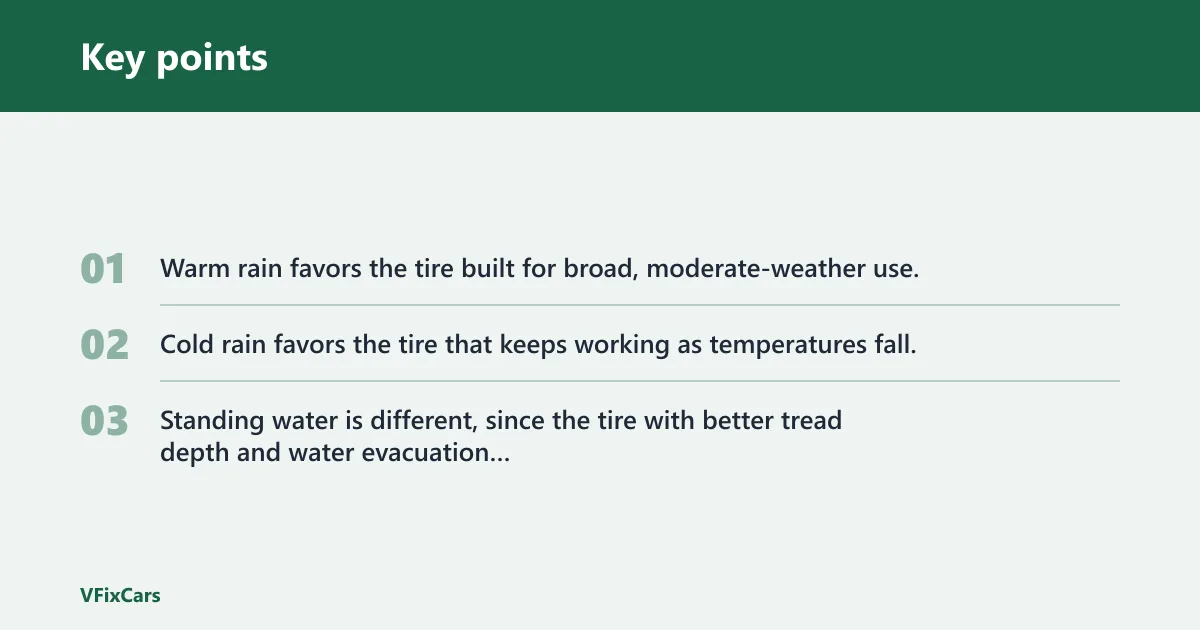
Warm rain favors the tire built for broad, moderate-weather use. Cold rain favors the tire that keeps working as temperatures fall. Standing water is different, since the tire with better tread depth and water evacuation usually wins, regardless of season label.
Do winter tires grip better in rain?
Usually, yes in cold rain and no in warm rain. Winter tires are engineered for snow, ice, and freezing temperatures, so their flexible rubber and deeper grooves help most when the pavement is cold and wet. In a warmer storm, all-season tires usually feel more composed and predictable.
Wet braking on cold pavement
Braking is where the difference becomes easier to notice. Cold wet pavement is harder on tire compounds, and winter tires are built to keep more flexibility in that range. That can shorten stops compared with all-season tires in low-traction cold rain, even when there is no snow on the road.
Where winter tread can help
Winter tread has deeper grooves and more biting edges. Those features help the tire move water and keep contact with the road surface when the pavement is cold, dirty, or slushy. The benefit shows up most clearly in mixed winter weather, not in a warm summer shower.
Where all-season tread may feel steadier
All-season tires are designed to perform well through many conditions, so they usually feel calmer in warm rain and everyday commuting. If your wet driving stays above freezing for most of the season, the all-season tire is often the more balanced choice.
How tread and compound change wet grip
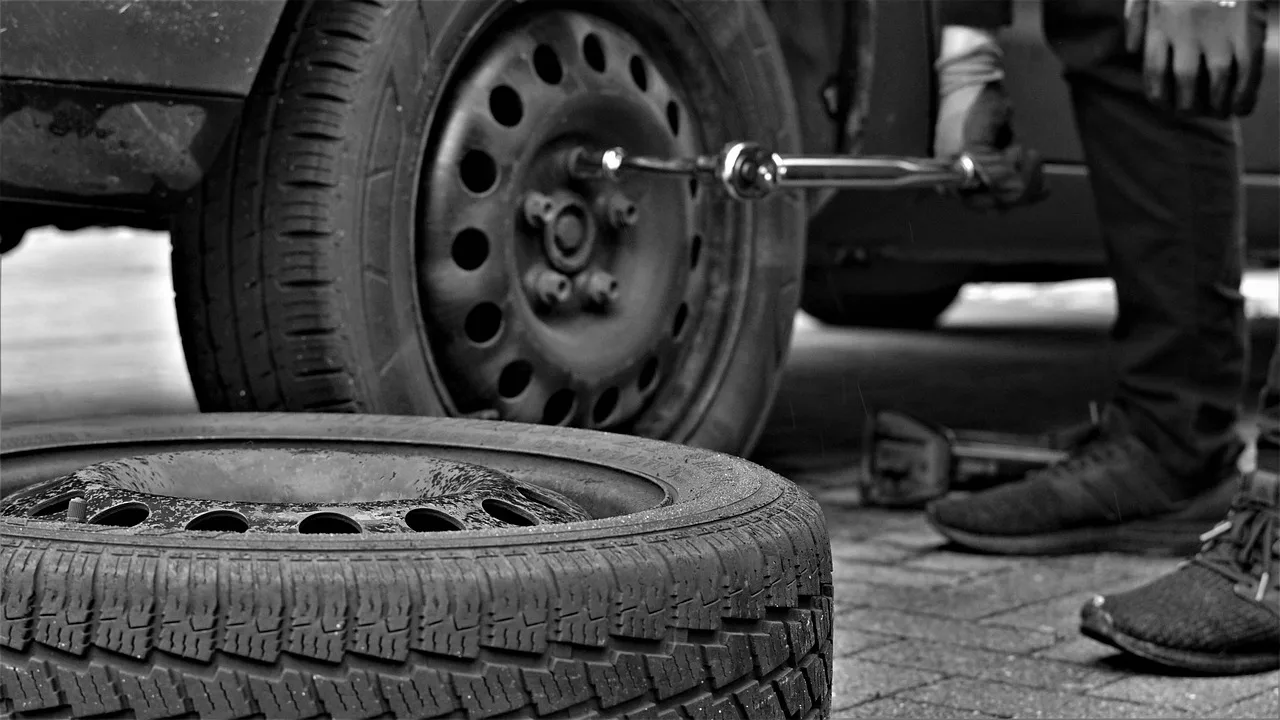
Wet grip is not one single trait. Water evacuation, siping, tread block movement, and cold-weather flexibility all work together, and the balance changes with temperature and road condition.
Deeper grooves and water evacuation
Deeper grooves give water somewhere to go. Winter tires use deeper grooves and more biting edges, and Canadian Auto Mall says winter tire grooves are about 30% deeper. That can help in slush and cold rain, but it does not guarantee the best hydroplaning resistance in every model.
Sipes and biting edges
Sipes are the small cuts in the tread that create extra edges. Canadian Auto Mall says winter tires have more sipes than all-seasons. Those extra edges can help the tread flex and bite into wet, cold, or slushy surfaces.
Flexible rubber in cold weather
Cold-weather flexibility matters because a tire that stays pliable can conform to the road surface more effectively. Winter tires are designed for that job, and Kelly says winter tires provide better grip than all-seasons below 45°F. That fits cold rain better than warm rain.
Contact patch and tread stability
A tread that moves too much can feel vague, while a tread that holds its shape can feel more stable under braking and steering. Directional or asymmetric patterns can help here, but the actual result still depends on the specific tire design and tread depth. That is why no season label guarantees the same wet result.
Say your compact SUV runs the listed tire size and you face steady rain at about 38°F on a county road. The winter tire is more likely to keep useful bite in that cold, wet surface. Change only the temperature to 55°F, and the all-season tire usually becomes the more balanced wet-weather choice.
What the 3PMSF mark means
The 3PMSF symbol, the mountain-and-snowflake marking, tells you the tire met a standardized severe snow service threshold. It is a winter-performance marker, not a promise that the tire is best in every wet condition. M+S marking is not the same thing, because it is not subject to the same regulatory winter-performance test.
3PMSF vs M+S
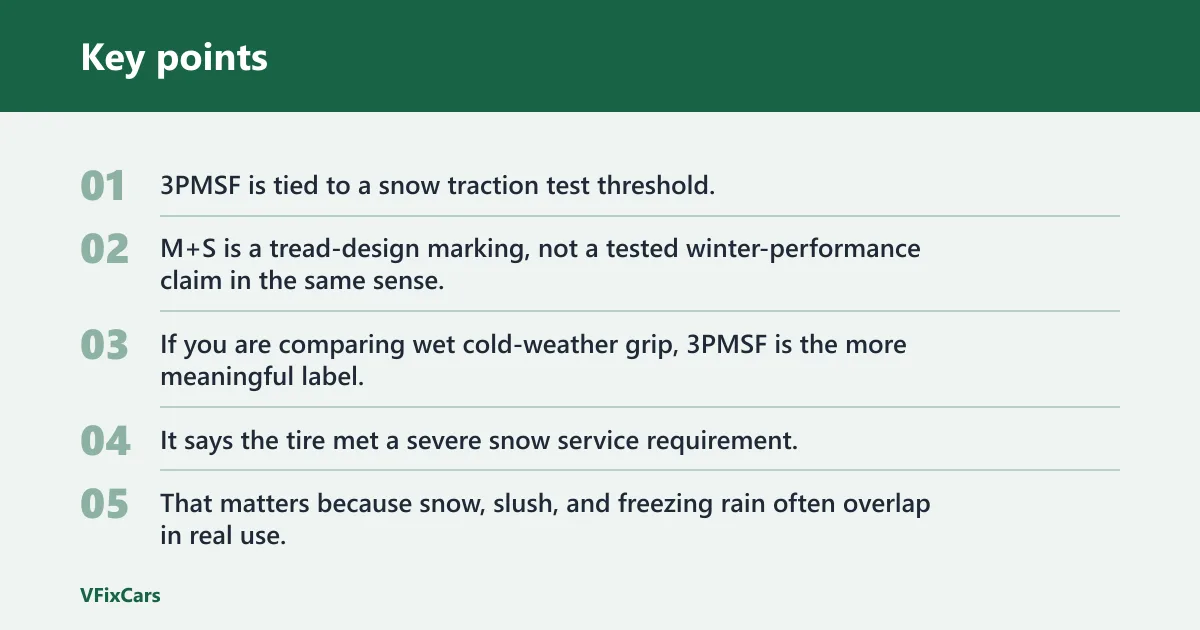
3PMSF is tied to a snow traction test threshold. M+S is a tread-design marking, not a tested winter-performance claim in the same sense. If you are comparing wet cold-weather grip, 3PMSF is the more meaningful label, but it still does not settle the rain question by itself.
What the symbol says about snow traction
It says the tire met a severe snow service requirement. That matters because snow, slush, and freezing rain often overlap in real use. It is one useful sign that the tire was built with winter conditions in mind.
What it does not prove in rain
It does not prove better hydroplaning resistance or shorter stops in warm rain. Hydroplaning risk depends heavily on tread depth, water depth, and speed. Two 3PMSF tires can behave very differently in standing water.
Which tire stops shorter in wet cold?
In wet cold conditions, winter tires often stop shorter than all-season tires because the rubber stays more flexible and the tread has more biting edges. In warm rain, that advantage can shrink or disappear. Stopping distance is the safety number that matters most, not just whether the steering wheel feels steady.
Stopping distance versus feel
A tire can feel stable and still stop longer than expected, or it can feel a little softer and stop sooner. Wet-road safety depends on braking performance, not only on steering response. That is why a tire comparison should always include stopping distance, not just dry handling feel.
Speed, water depth, and tread depth
Hydroplaning resistance depends on tread depth, tread design, speed, and how much water is on the road. Deeper grooves help evacuate water, but they do not cancel the effect of speed or worn tread. If the tread is low, both tire types lose wet performance.
Why model-to-model differences matter
A single winter tire can outperform one all-season tire in cold rain and lose to another all-season tire in standing water. That is normal. The safest rule is to compare the exact tire model, not just the category name, when wet weather is a serious concern.
Choose winter tires or all-season tires
Choose winter tires if your rain turns cold, slushy, or close to freezing for weeks at a time. Choose all-season tires if most of your rain is mild, you want one set for the year, and you do not need winter-specific traction for long stretches. If winter is more severe, all-weather tires may deserve a look because they sit closer to winter use than standard all-seasons.
- Check your coldest regular driving conditions, not your average weather.
- If cold rain, slush, or freezing mornings are common, lean toward winter tires.
- If rain stays warm and winter is brief, all-season tires are usually the better fit.
- For heavy standing water, compare tread depth and tread design on the exact model.
- Do not treat the 45°F / 7°C guideline as a hard switch. Use it as a planning point.
Picture a driver in a coastal city where rain is frequent but overnight freezes happen only a few weeks each year. All-season tires usually make more sense there. Now picture the same driver on a hillside commute where rain often falls at 35°F and slush collects in ruts. Winter tires are the safer call.
Verdict: Winter tires or all-season tires?
Choose Winter tires if your wet driving is in cold rain below 45°F, on cold wet pavement near freezing, or on slushy rain where the article says winter rubber and deeper grooves keep more bite and can shorten stops.
Choose all-season tires if your driving is mostly warm rain above 45°F, everyday commuting in mild temperatures, or you want one set that stays more balanced for wet, dry, and light winter use through more of the year.
Frequently asked questions
Do winter tires grip better than all-season tires in rain?
Usually only in cold rain near freezing. In warm rain, all-season tires are often the better wet-road choice because they are tuned for year-round use in moderate climates. The temperature and road condition matter more than the tire label alone.
Are winter tires safer than all-season tires on wet roads?
They can be safer on cold, wet roads and in slush because the rubber stays flexible and the tread has more biting edges. On warm wet pavement, all-season tires are often the more balanced option. Safety depends on the exact tire, the temperature, and the water on the road.
At what temperature do winter tires start to outperform all-seasons?
The common rule of thumb is 45°F / 7°C. Below that point, winter tires often begin to gain an advantage in grip and braking, especially on cold pavement. It is still a guideline, not a sharp cutoff where performance suddenly changes.
Do all-season tires hydroplane less than winter tires?
Not by category alone. Hydroplaning resistance is influenced by tread depth, tread pattern, speed, and water depth more than by the season name. Some all-season tires shed water very well, and some winter tires do too, but the exact model matters more than the label.
Will winter tires wear out faster if I drive them in rainy weather?
Rain itself is not the main wear issue. Warm pavement, high mileage, and aggressive driving are bigger factors because winter tires are built for cold use. If you run them through a wet but warm season, they can wear faster than they would in cold weather.
Should I use winter tires only when it snows, or all season below 45°F?
If your winter includes regular cold rain, slush, or freezing mornings, using winter tires below 45°F makes sense even when it is not snowing. If your weather stays mild and rain is usually warm, all-season tires are the simpler choice for the year.