What Is a Torque Wrench and Why Is It Important?
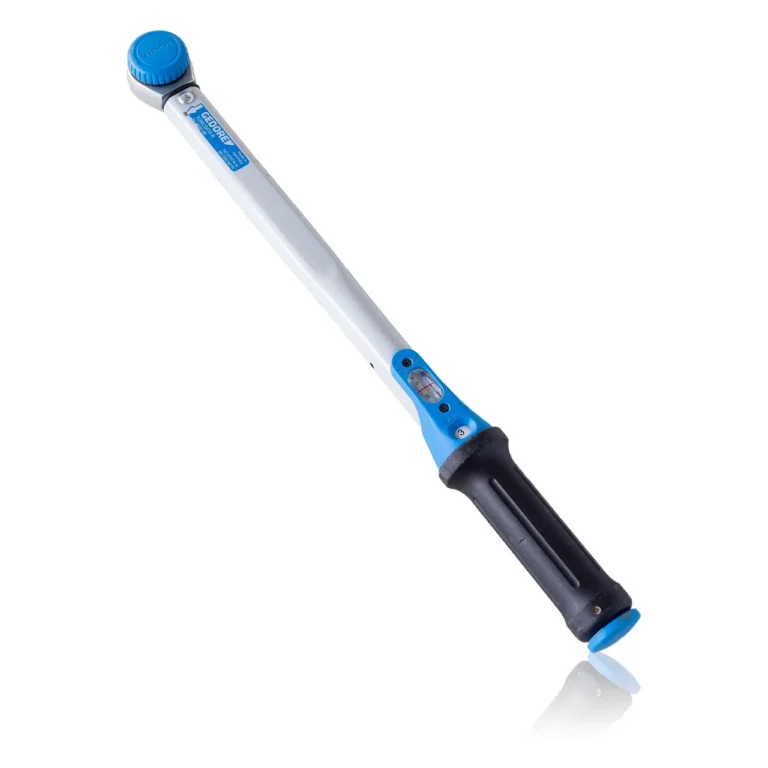
A torque wrench is a hand tool that tightens a bolt or nut to a set torque, usually listed in lb-ft or Nm, so critical car fasteners reach the right clamp load. Getting it wrong can strip threads, crack parts, warp brake components, or leave wheel lugs loose. This guide explains how torque wrenches work and where accuracy matters most on a car. (Wikihow)
What is a torque wrench?
A torque wrench is a tool for tightening nuts and bolts to a specified torque, not merely “tight enough.” Torque is the twisting force that makes an object rotate about an axis, and a wrench creates that twist when force is applied at one end. In cars, that matters because fasteners work only when clamping force stays in the intended range.
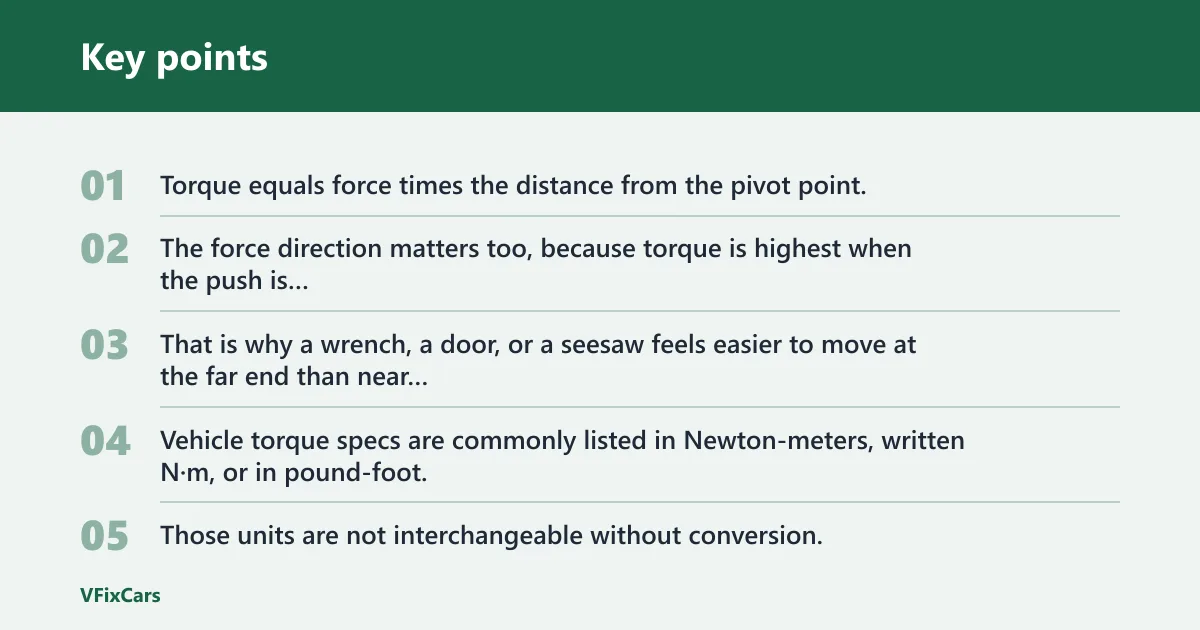
Torque equals force times the distance from the pivot point, so a longer handle creates more torque for the same push. The force direction matters too, because torque is highest when the push is perpendicular to the lever arm. That is why a wrench, a door, or a seesaw feels easier to move at the far end than near the hinge.
Units and the spec you must match
Vehicle torque specs are commonly listed in Newton-meters, written N·m, or in pound-foot, written lb-ft. Those units are not interchangeable without conversion, so read the specification in the same unit you plan to set on the wrench. The specification should match the fastener and the application, not just the bolt size.
Manufacturer torque specifications usually appear in the owner’s manual or service information. That number matters because a bolt or nut can be under-tightened or over-tightened. Either mistake changes clamp load, and clamp load is what keeps parts seated, sealed, and safe.
📊 WikiHow says common wrench increments are 10 or 20 pound-force-feet. Source: Wikihow.
Why torque matters on cars
Torque matters because the same bad fastener can create three different problems: safety risk, drivability trouble, or component damage. A wheel lug that is too loose can let the wheel clamp unevenly. A bolt that is too tight can stretch, strip, or crush the part it holds. A fastener that is merely inconsistent can create repeat problems during later service.
Safety problems
Wheel fasteners, brake hardware, steering-related parts, and some suspension fasteners can become dangerous when torque is wrong. Under-tightening can let a joint move, shift, or loosen further under vibration. Over-tightening can damage the fastener or the mating part, which is just as serious when that part carries load or keeps a wheel clamped.
Picture a lug nut tightened by feel after a tire rotation. It may feel firm at the driveway, then relax after heat cycles and vibration. That is how a small torque mistake turns into uneven wheel clamping and a roadside problem.
Drivability and repeatability
Some torque errors do not fail immediately. They show up as leaks, misfires, uneven pedal feel, or parts that need to be reopened soon after the job. Spark plugs are a common example: too loose can leak compression or gas, while too tight can damage threads in an aluminum head. Valve cover bolts can also create oil leaks if the clamp load is uneven.
Repeatability matters because the same repair should behave the same way each time. A torque spec gives you a target that does not depend on guesswork, hand strength, or how long the wrench handle is. That consistency is especially useful when several fasteners share a load, such as a wheel, cover, or caliper bracket.
Component damage and thread failure
Over-tightening can stretch bolts, crush gaskets, deform brake hardware, or strip threads in softer materials. Under-tightening can let a joint move, which damages surfaces and makes later removal harder. Fastener material, thread condition, and lubrication state all change the final clamp load, so the same number is not automatically right for every setup.
Suppose an aluminum cylinder head uses spark plugs that call for a specific setting on clean threads. Add anti-seize without changing the spec and the clamp load can climb higher than intended. That is why the spec and the exact fastener condition matter together.
What do you use a torque wrench for?
You use a torque wrench for fasteners that must be tightened to a specific value, especially where clamp load affects safety, sealing, or long-term reliability. It is the right tool when “snug” is not enough, when several fasteners must match each other, or when the part is easy to damage by guesswork alone.
Jobs that need even clamping
Common automotive jobs include lug nuts, spark plugs, brake caliper bolts, valve cover bolts, intake and exhaust fasteners, and some engine internal fasteners. In these jobs, even clamping matters more than brute force. Uneven load can warp a cover, distort a sealing surface, or leave one corner of a part carrying too much stress.
Where a normal wrench is not enough
A standard wrench can tighten a fastener, but it cannot tell you when you have reached the specified torque. That becomes a problem when the difference between acceptable and damaged is small. A torque wrench gives you a stop point instead of a feel-based estimate.
The basic decision rule is simple: if the service information gives a torque value, or the part is safety-critical, use the torque wrench. If the fastener is seized, rounded, or already damaged, stop and correct the hardware issue first. A torque wrench does not restore broken threads or remove corrosion.
When torque matters most
This checklist shows where torque accuracy matters most on common car jobs. The “yes” column means a torque wrench should be used because the fastener has a meaningful spec or the clamp load affects safety, sealing, or internal engine condition. The consequence category is the type of problem most likely if torque is ignored.
| Task | Torque needed? | Risk of skipping torque | Typical consequence category | Why it matters |
|---|---|---|---|---|
| Lug nuts | Yes | Uneven wheel clamping, loosening, rotor distortion at the hub face | Safety | Wheel retention depends on correct clamp load across all studs |
| Spark plugs | Yes | Damaged aluminum threads, poor sealing, hard removal later | Drivability | Correct torque protects the head and the seal |
| Brake caliper bolts | Yes | Loose caliper hardware or damaged threads | Safety | Brake hardware must stay fixed under heat and vibration |
| Valve cover bolts | Yes | Oil leaks, crushed gasket, warped cover | Component damage | Light, even clamping is usually more important than force |
| Engine internals | Yes | Rod, main, or head fastener failure; bearing or gasket damage | Component damage | These fasteners carry critical loads and often have strict specs |
How does a torque wrench work?
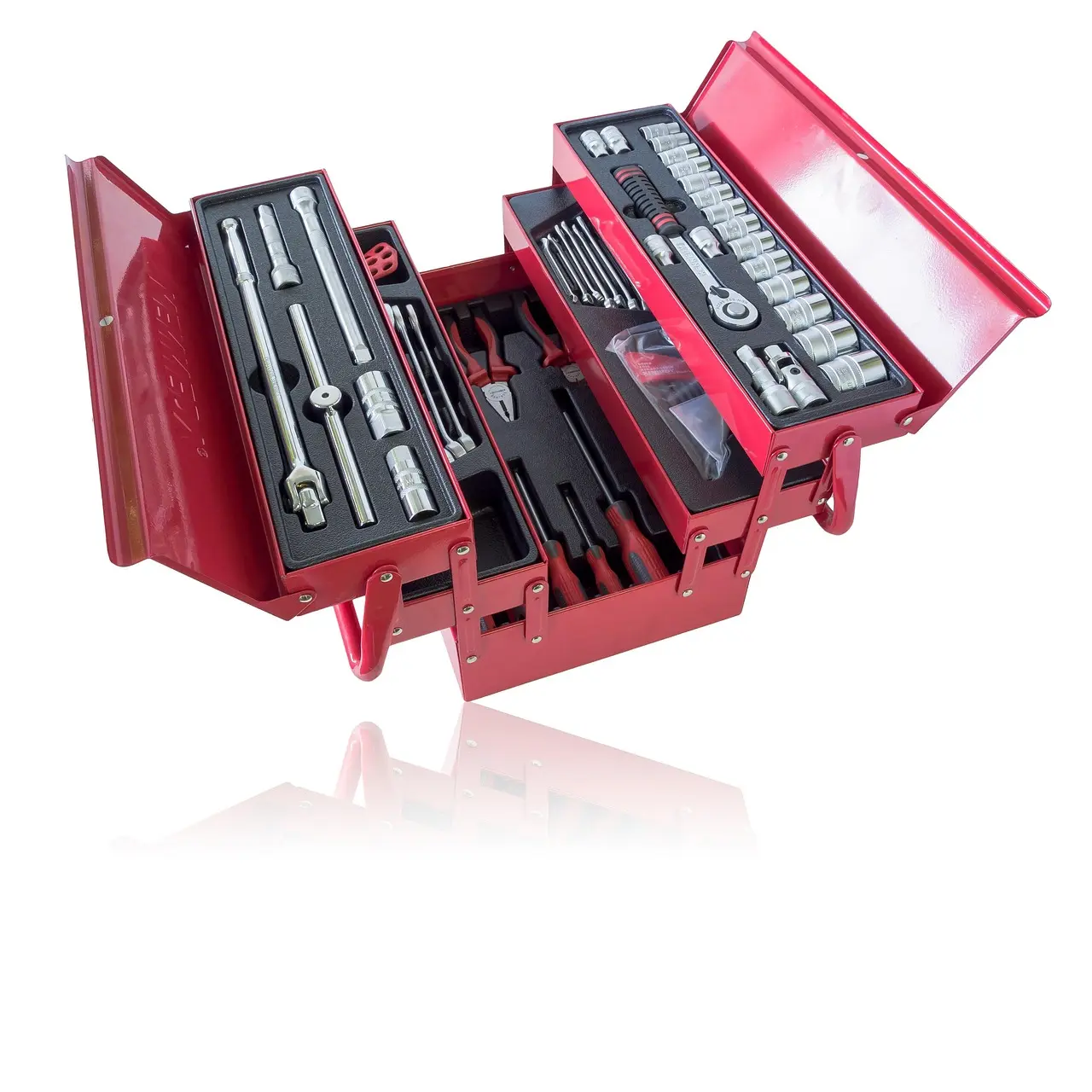
A torque wrench works by signaling when the fastener reaches a set torque value. A torque wrench tightens nuts or bolts to the exact amount specified in a manual, and many tools stop when they reach that setting. The exact mechanism depends on the type, but the goal is the same: controlled, repeatable tightening.
Click torque wrench
A click torque wrench is the common first choice for many car owners. It is adjustable, and when the set torque is reached it clicks or stops so you know to stop pulling. That makes it practical for wheel work, brake service, and general maintenance where a clear mechanical signal is useful.
Its appeal is simplicity. Set the value, tighten smoothly, and stop at the click. The main limit is that you still need to use the wrench correctly and within its working range; a torque wrench is only as accurate as the setting, calibration, and the way it is used.
Digital torque wrench
A digital torque wrench uses an electronic readout to show the applied torque and often adds alerts or memory functions. This is useful when you want a clear number on screen or need to work in a tighter range without relying on a click alone. It can also help when the spec is easy to overshoot.
Digital tools are helpful for repeat work, but they still need proper calibration and sensible storage. Batteries, settings, and display behavior add another layer to check before a critical job.
Split beam torque wrench
A split beam torque wrench uses a mechanical design that does not rely on spring compression the same way many click styles do. Some users prefer it for durability and calibration retention. It is a solid option when you want a tool that holds its setting well and is less dependent on spring preload.
For a first purchase, the choice often comes down to use pattern. A click wrench is common and familiar. A digital wrench adds readout features. A split beam wrench can be attractive if durability and stable calibration matter more than extra electronics.
How do you choose the right one?
Choose the wrench by matching the range, drive size, and unit system to the jobs you actually plan to do. A torque wrench should place the target spec near the middle of its usable range when possible, since many tools are easiest to use there. For a car owner, the right tool is the one that covers the needed fasteners without forcing you to work at the extreme low or high end.
Match the range to the task
Lug nuts, brake work, and many engine fasteners need different torque ranges. A tool meant for low-value fasteners is a poor choice for wheel lugs, and a heavy-duty wrench is awkward for small valve cover bolts. If the range does not fit the job, accuracy and control both suffer.
Pick the drive size and units
Drive size affects access and torque capacity. Small drive sizes fit tighter places and lower torque ranges, while larger drive sizes suit higher torque fasteners. Also check whether the wrench reads in N·m, lb-ft, or both, so you do not have to convert every setting by memory while working.
Units matter more than many beginners expect. If the manual lists N·m and the wrench is set in lb-ft, a simple conversion mistake can send you far off target. That is avoidable with a tool that matches your common specs.
Check calibration and storage habits
Calibration is the process that helps keep a wrench accurate and repeatable over time. The interval depends on use and storage, so a tool used often or stored poorly may need attention sooner than one used lightly and kept carefully. If a wrench is dropped, that is another reason to inspect it.
Store a click wrench at its lowest setting if the maker recommends it. Do not use a torque wrench to break loose stuck fasteners. That task can push the mechanism outside the job it was built to do and can hurt accuracy.
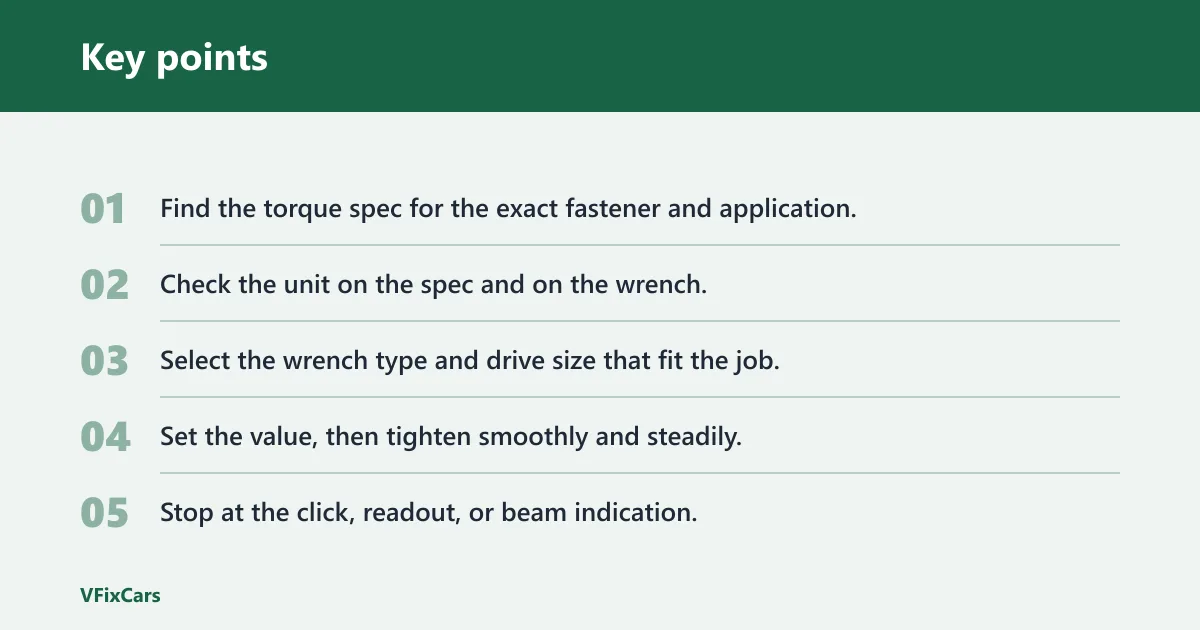
- Find the torque spec for the exact fastener and application.
- Check the unit on the spec and on the wrench.
- Select the wrench type and drive size that fit the job.
- Set the value, then tighten smoothly and steadily.
- Recheck only if the service procedure calls for it.
What a torque wrench cannot fix
A torque wrench cannot solve seized fasteners, rounded hardware, or stripped threads. If the bolt will not turn cleanly, the reading you get is not the same as a proper tightening event. You need to repair the fastener condition first, then torque the joint correctly.
It also cannot correct the wrong spec. If a part calls for a dry torque value but the threads are lubricated, or the fastener material is different from the one used in the specification, the number may no longer mean the same thing. That is why you must match the spec to the fastener and the exact condition.
Frequently asked questions
What is a torque wrench and why is it important?
A torque wrench is a tool that tightens a bolt or nut to a specified value instead of relying on feel alone. It is important because automotive fasteners can fail in different ways when torque is wrong: loose wheels, leaking covers, damaged threads, warped parts, or broken critical hardware.
What is a torque wrench and how does it work?
A torque wrench is a hand tool that signals when the set torque has been reached. A click wrench clicks, a digital wrench shows the reading and may alert you, and a split beam wrench uses a mechanical indicator. All of them help you stop at the target instead of guessing.
Why use a torque wrench?
You use a torque wrench to avoid under-tightening and over-tightening. That matters because both errors can cause safety problems, drivability complaints, and expensive component damage. It also helps you repeat the same result every time, which is important on parts with several fasteners.
Why is torque so important?
Torque is important because it sets clamp load, and clamp load is what holds a joint together. On cars, the wrong amount can let parts move, leak, loosen, warp, or break. The correct value depends on the fastener, the material, and the lubrication state.
Why is torque important?
Torque matters whenever a fastener has a real specification and the part must stay sealed, clamped, or safe under load. In automotive work, that includes wheels, brakes, plugs, covers, and engine hardware. A torque wrench gives you a repeatable way to hit that target instead of hoping by feel.