Why Are My Headlights Dim? Causes and Checks
Dim headlights usually come from aged bulbs, low charging voltage, bad grounds, cloudy lenses, or moisture in the housing; if brightness changes with rpm, braking, or accessories, check charging voltage and the ground path first. Ignoring it can leave you with poor night visibility and a charging or wiring fault that gets worse. This guide shows how to trace each symptom to the likely cause before you replace parts.
This guide is part of our Headlights: problems, replacement and safety series.
Quick diagnosis by symptom
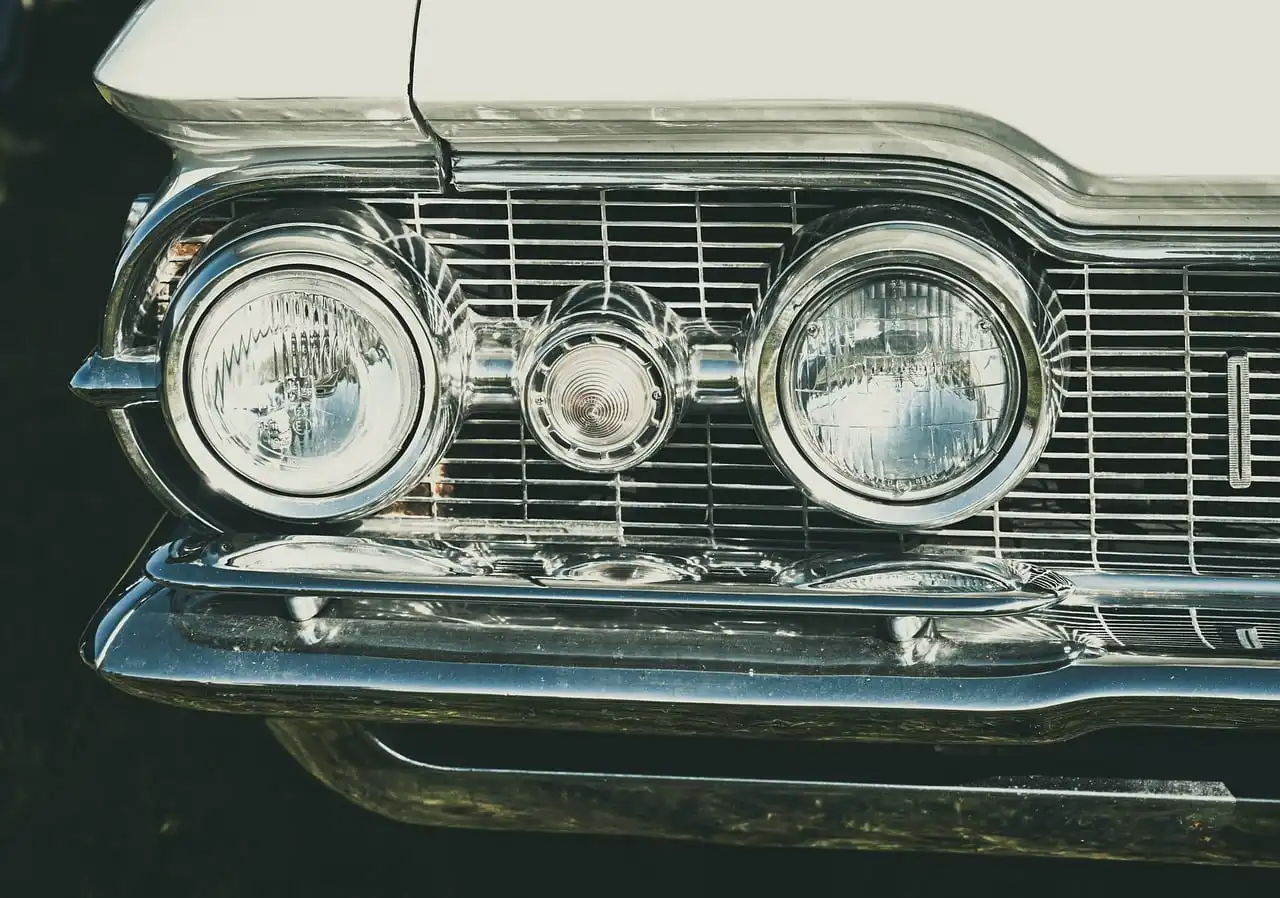
Start with the symptom pattern, not the bulb type. If both headlights are dim, think lens condition, aging bulbs, charging voltage, or moisture affecting both sides. If only one side is dim, focus on that lamp’s bulb, aim, connector, ground, and housing.
If the lights dim at idle and then recover when you rev the engine, the charging system is often one of the first things to check. If they dim when braking or turning on the blower, rear defogger, or other loads, look for voltage drop in the feed circuit, weak grounds, or a tired alternator.
Both headlights dim
Both sides dim at the same time usually points to a shared cause: low system voltage, aged bulbs, lens haze, or moisture affecting light output. A charging issue is more likely if the dimming changes with engine speed or accessory use.
One headlight dimmer than the other
One dim lamp usually means a side-specific problem: a weaker bulb, bad connector, poor ground, internal moisture, or poor aim. Compare both beams on a wall before replacing parts so you do not chase a lighting symptom that is really an alignment or wiring issue.
Dim at idle
A headlight that looks weak at idle and brighter off-idle usually points to alternator output, battery state, or a voltage drop in the charging path. That pattern is less consistent with lens haze or a single aged bulb because those do not change much with engine speed.
Dim when braking or using accessories
Lights that dip when you press the brake or switch on high-load accessories usually point to a weak alternator, poor grounds, or resistance in the feed circuit. The added electrical load exposes a problem that may not show up with the engine idling and few accessories on.
Headlight diagnostic matrix
| Check point | Both headlights dim | One side dim | Dim at idle | Dim with braking or accessories |
|---|---|---|---|---|
| Likely cause | Aged bulbs, low system voltage, cloudy lenses, or moisture on both sides | Bulb, aim, connector, ground, or housing fault on one circuit | Alternator output, battery voltage, or voltage drop under load | Charging-system weakness, loose ground, or high resistance in feed or relay contacts |
| Quickest check | Compare beam brightness on a wall, then inspect lenses and charging behavior | Swap bulbs side to side if the design allows, then compare aim and connectors | Watch for brightness change when rpm rises from idle | Turn on brake lamps, blower, and rear defogger while watching for a dip |
| Likely repair cost range | Bulbs: about $20 to $200 per pair; lens restoration or seal work varies widely | Bulb, connector, or aim correction: about $20 to $150; housing work can run higher | Battery, alternator, or wiring repair: about $100 to $800+ | Ground cleanup, relay, or charging repair: about $20 to $500+, depending on the fault |
Why are my headlights dim all of a sudden?

An abrupt change usually comes from a bulb that has aged out, a lens that lost transmission, or moisture and corrosion inside the lamp. If both headlights dim at once, look for a shared electrical or charging problem first. If only one side changes, the fault is likely local to that lamp.
Bulb aging and matched-pair replacement
Halogen bulbs lose output gradually as the filament ages. HID/xenon lamps can shift in color and lose usable output as the capsule wears. LED units also lose light over time, although the pattern depends on the design and driver electronics. If one bulb has aged out, the other is often close behind, so matched pair replacement is usually the better choice.
Color temperature matters too. A very cool-looking beam can seem brighter to the eye, but lumen output is what moves more road detail. A bulb that is still lit can still be weak enough to dim the beam. That is why appearance alone is not a reliable test.
Lens clouding and UV damage
Oxidized or cloudy lenses cut light transmission before the beam ever reaches the road. Surface haze from UV damage can usually be seen on the outside of the lens. If the lens looks cloudy but the inside of the housing is dry, lens loss is a stronger suspect than moisture.
Say your left and right headlights look equally yellow from the front, but one side still throws less light onto a wall. That split can mean the weaker side has both lens haze and a tired bulb. Fixing only the lens may leave the output still low.
Moisture, corrosion, or a cracked housing
Headlamp housings are vented top and bottom to allow for pressure differences. Condensation can form when the clear plastic lens is cooler than the air inside the housing. Droplets of moisture inside the lamp assembly can be normal, and moisture may evaporate when outside temperatures rise again.
The problem starts when moisture goes beyond droplets. Water can run down the lens and pool inside the housing, or it can reach connectors and grounds. A cracked or poorly sealed housing lets repeated wetting lead to corrosion and lower output.
Why are my headlights dimming in and out?
Intermittent dimming usually means voltage is not stable. The most common causes are weak charging output, voltage drop under load, loose grounds, connector resistance, or relay and fuse contact problems. A bulb that is simply old does not usually brighten and fade on its own.
Battery voltage and alternator output
The alternator should keep system voltage steady as electrical demand changes. If the headlights brighten with rpm and sag at idle, the charging system is not keeping up. Battery voltage can also matter if the battery is weak or has poor reserve capacity, especially after startup or with heavy accessory use.
Picture a car that idles with headlights slightly dim, then the beams recover when the engine speed rises. That pattern points more toward alternator output than lens haze. The next check should be the battery, alternator, and voltage drop under load, not the lamp itself.
Loose grounds and connector resistance
Corrosion, loose grounds, and heat-damaged connectors add resistance. That resistance turns into voltage loss and heat, which can make the lights flicker or fade. Check for green corrosion, loose terminals, broken ground straps, and melted plastic around the connector.
Fuse and relay contact problems
Fuse and relay contacts can wear, oxidize, or loosen. That can produce intermittent power loss even when the fuse element itself is intact. If both headlights dim at the same time, shared relay or feed contacts deserve attention before you replace lamps.
Why are my headlights dim on one side?
One dim headlight usually means the fault is local to that side: a weaker bulb, poor aim, connector resistance, ground loss, or a housing problem. Start by comparing the two beams on a flat wall. If the dim side also aims low or off-center, the issue may be alignment rather than light output.
Single bulb failure or low output
On halogen systems, one bulb often fails or ages faster enough to be obvious next to the other side. On HID/xenon systems, capsule wear or ballast trouble can leave one lamp dim. On LED systems, a driver fault can reduce output without fully killing the lamp.
Aiming and beam height checks
Beam height affects perceived brightness more than many drivers expect. A lamp pointed too low can seem weak even when it is working normally. A simple wall-test can reveal whether one beam is lower, narrower, or skewed compared with the other.
Use a level surface and a flat wall at a sensible distance. Mark the beam cutoffs, then compare height and left-right position. If the dim side is simply aimed lower, fix the aim before buying parts.
Connector, ground, or housing fault on one circuit
If a replacement bulb does not fix the problem, inspect the connector for heat damage, corrosion, and looseness. Check the ground path for resistance and look for water tracks or corrosion inside the housing. A single-side problem often stays single-side because the fault sits in that lamp’s circuit.
Lens, housing, and moisture checks
Lens haze, internal moisture, and housing damage can each reduce light, but they leave different clues. Surface haze is outside the lens. Internal moisture is inside the housing. Corrosion or pooled water means the housing is no longer keeping the lamp dry the way it should.
Oxidation versus internal moisture
Surface haze looks like dull, cloudy plastic on the outside and is usually most obvious in sunlight. Internal moisture leaves fog, droplets, or water on the inside of the lens and may be worse after damp weather or a cold start. These are different faults, and they need different fixes.
Normal condensation versus water ingress
Small droplets can be normal in a vented housing, especially after temperature swings. Some drivers park in shady, damp areas or cool underground structures that encourage condensation. If the moisture clears as temperatures rise, the housing may still be serviceable.
If there is more than droplets, the housing may need to be removed and dried out. Water that pools, runs down the lens, or leaves corrosion on terminals points to ingress rather than normal fogging. Blocked vents should be checked for debris such as spider eggs or mud.
When reseal or housing replacement makes sense
Check for a Technical Service Bulletin for the vehicle before buying a housing. If the seal is cracked, the rear cover does not close properly, or the lens is damaged, reseal work or replacement may be needed. A housing replacement makes more sense when drying does not stop repeat fogging or corrosion.
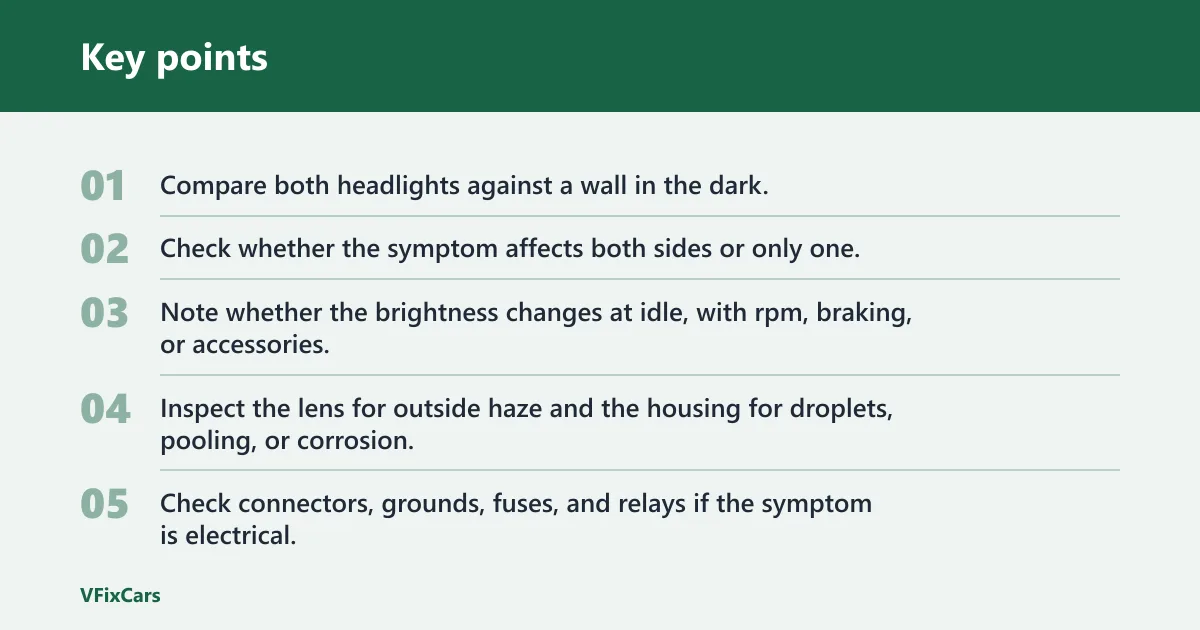
- Compare both headlights against a wall in the dark.
- Check whether the symptom affects both sides or only one.
- Note whether the brightness changes at idle, with rpm, braking, or accessories.
- Inspect the lens for outside haze and the housing for droplets, pooling, or corrosion.
- Check connectors, grounds, fuses, and relays if the symptom is electrical.
- Replace bulbs in pairs when age or output loss is the likely cause.
- Use professional diagnosis if the cause is still unclear or the symptom is intermittent.
A common first-timer mistake is replacing both bulbs before checking the charging system. That can hide a voltage problem for a while, but it does not fix the cause. A brighter bulb will not cure a bad ground or a failing alternator.
Frequently asked questions
Why are my headlights dim all of a sudden: sudden dimming usually points?
Sudden dimming usually points to a failed bulb, charging-system drop, moisture in the housing, or a bad connection. If both headlights changed together, check voltage and ground first. If only one side changed, inspect that lamp’s bulb, connector, aim, and housing first.
Why are my headlights dimming in and out: flickering or cycling brightness?
Flickering or cycling brightness is a strong clue for voltage drop, loose grounds, relay contact trouble, or an alternator that cannot hold output steady. A lamp that only looks dim because of haze or age normally stays consistently dim, not intermittent.
Why are my headlights dim on one side: one-side dimming usually comes?
One-side dimming usually comes from a weaker bulb, poor aim, connector resistance, or a ground fault on that circuit. Compare beam height on a wall before replacing parts. If the dim side also has fogging or corrosion, the housing may be part of the problem.
Why are my headlights dim while driving?
If the lights seem weak while driving but not parked, look at charging voltage, lens haze, and beam aim. A lamp aimed low or clouded by oxidation can seem worse at speed because road reflections change. If the brightness changes with engine speed, voltage checks come first.
Why are my headlights dimming when I brake?
Headlights that dip when braking usually point to a charging or grounding issue. The brake lamps add load, and that extra demand can expose weak alternator output or resistance in the feed path. Check battery voltage, ground straps, and relay contacts before replacing the headlamps.
Why are my lights dim and flickering?
Dim, flickering lights are most often an electrical problem rather than a lens problem. Loose grounds, corrosion, connector resistance, and worn relay contacts can all cause unstable voltage. If both sides flicker together, the shared power path deserves priority over the bulbs themselves.
Why are my headlights dimmer than normal?
Dimmer-than-normal headlights can come from bulb aging, cloudy lenses, moisture, or a charging issue that is still mild. A quick wall comparison helps separate output loss from aim. If the brightness also changes with rpm or accessories, the charging system is the stronger suspect.