Beam vs Conventional Wiper Blades: Which Should You Buy?
Beam blades are the better buy for most drivers with curved windshields, regular highway use, or winter weather; conventional wiper blades make sense when you want the lowest upfront cost and simple insert replacement. Pick the wrong type, and you can get chatter, streaks, ice buildup, or spend more than needed. This guide compares both types by climate, speed, windshield shape, and budget so you can pick the right blade.
This guide is part of our Windshield wipers: how to choose the right blades series.
Beam vs conventional at a glance
| Factor | Beam | conventional wiper blades | Winner |
|---|---|---|---|
| Windshield shape fit | Designed to match the curvature of modern-day windshields | Better suited to flatter glass | Beam |
| Highway stability | Reduced wind lift at higher speeds | More prone to wind lift | Beam |
| Upfront cost | Usually higher | Lower entry price | conventional wiper blades |
| Winter use | Often better in snow and ice | Can be fine in mild climates | Beam |
| Fitment simplicity | Can need the right adapter or connector match | Often simple on older arms and basic inserts | Tie |
What changes in design and pressure delivery
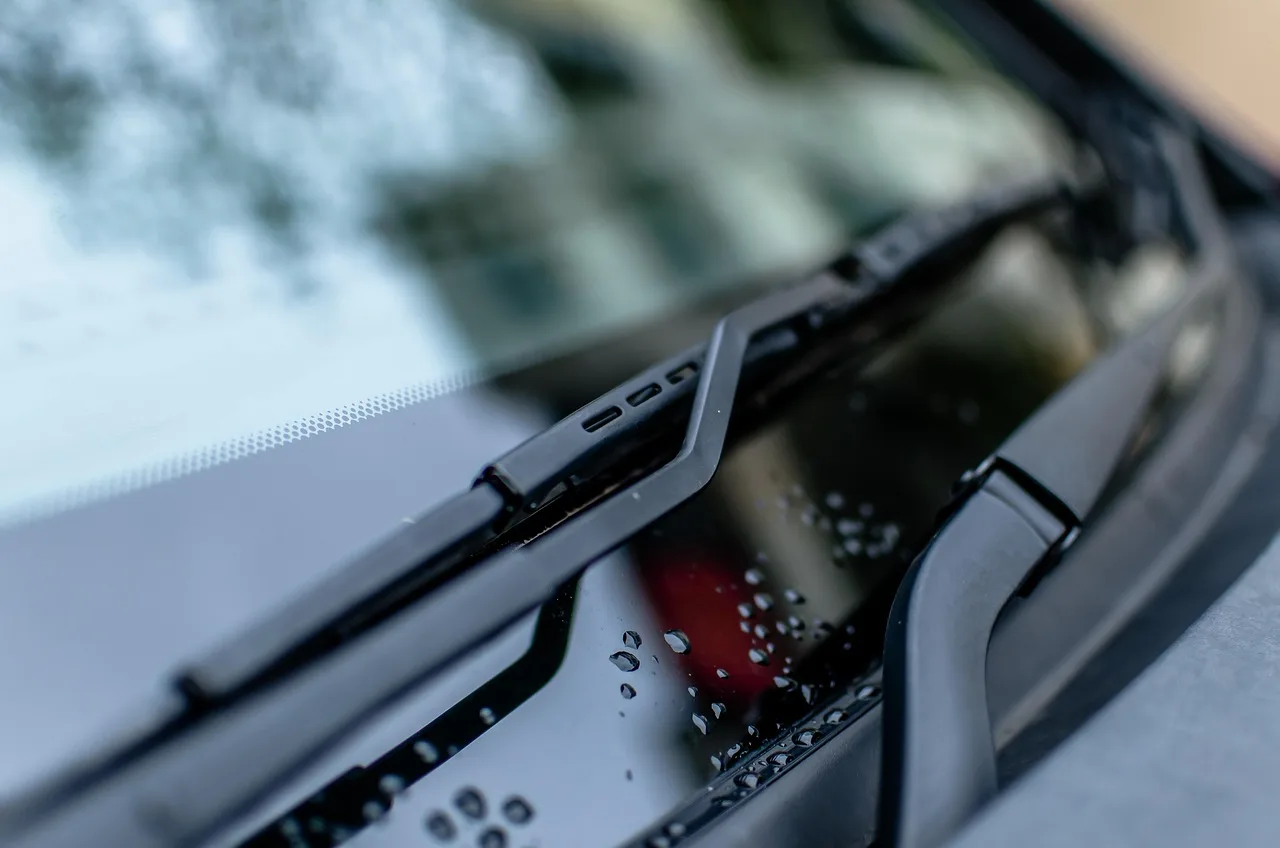
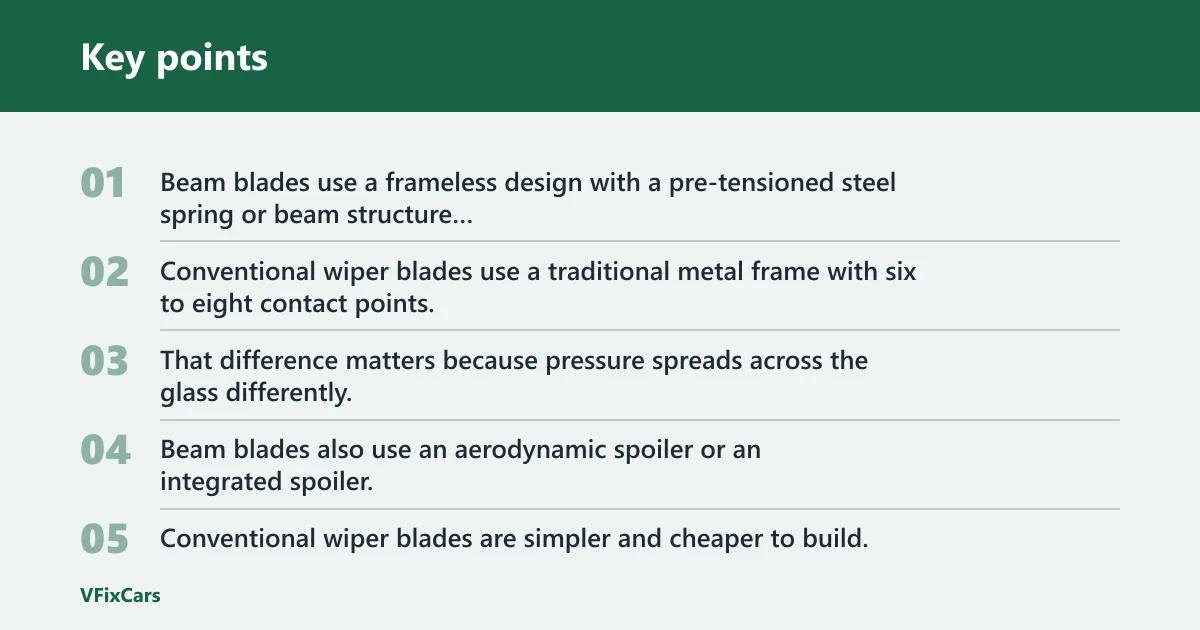
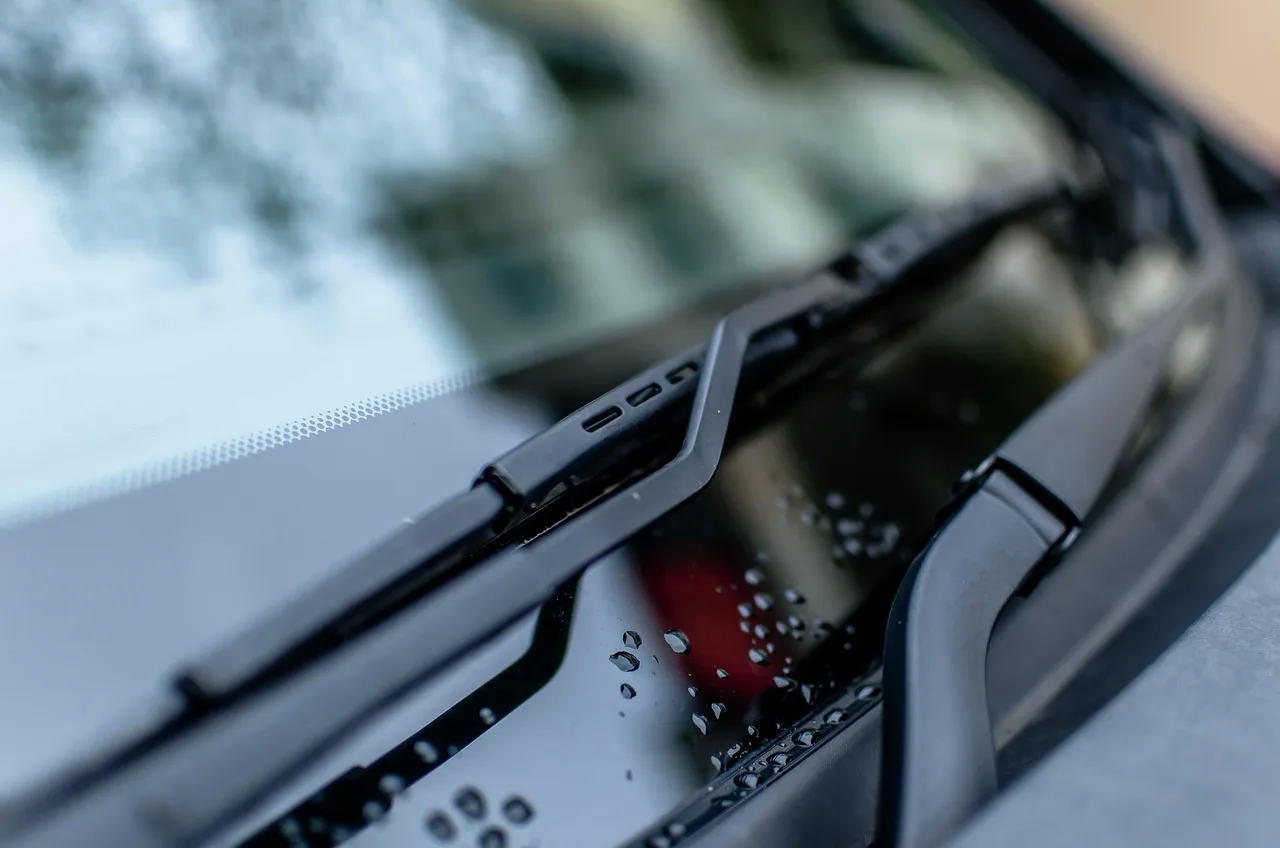
Beam blades use a frameless design with a pre-tensioned steel spring or beam structure and an infinite number of pressure points. Conventional wiper blades use a traditional metal frame with six to eight contact points. That difference matters because pressure spreads across the glass differently.
Beam blades also use an aerodynamic spoiler or an integrated spoiler, which helps keep the blade planted as speed rises. Conventional wiper blades are simpler and cheaper to build, but that frame can be a weaker match for curved glass and fast airflow.
How to read the trade-offs quickly
If your windshield is curved, your commute includes freeway speeds, or you see winter slush often, beam blades usually fit the job better. If you drive less, stay on city streets, and want the cheapest replacement that still works, conventional wiper blades remain a sensible buy.
Suppose your car is a daily commuter with a 26-inch driver blade and a 24-inch passenger blade. If you spend most of your time on surface streets in a warm climate, the extra cost of beam blades may buy little more than marketing language.
📊 A smaller wiper blade can cost under $10. Source: Best Wiper Blade Buying Guide.
Which blade type fits your driving?
Highway miles and wind lift
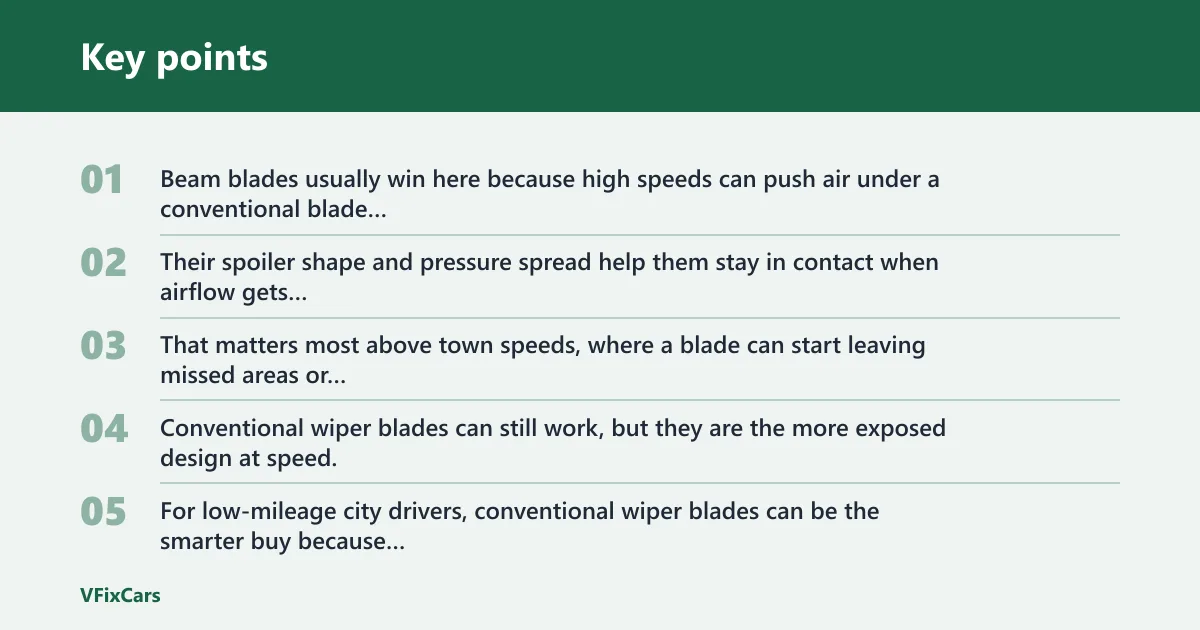
Beam blades usually win here because high speeds can push air under a conventional blade and lift it away from the windshield. Their spoiler shape and pressure spread help them stay in contact when airflow gets stronger.
That matters most above town speeds, where a blade can start leaving missed areas or thin smear lines near the outer edge of the sweep. Conventional wiper blades can still work, but they are the more exposed design at speed.
City driving and low mileage
For low-mileage city drivers, conventional wiper blades can be the smarter buy because the lower upfront cost is harder to beat when speed and weather are mild. If you rarely exceed neighborhood speeds and replace blades on schedule, you may not need the extra highway stability of beam blades.
A common first-timer mistake is buying the most advanced blade for a car that sits most of the week and only sees short trips. In that case, rubber condition and correct size matter more than premium blade architecture.
Curved glass and coverage needs
Beam blades are designed to follow curved glass more closely, so they are often the safer choice for modern vehicles with steep rake or pronounced windshield curves. Conventional wiper blades can leave partial contact on some shapes, which shows up as missed areas or uneven wipe pressure.
MotorTrend reported Bosch Icon reached 95.1 percent performance in testing, and listed it as the best overall blade. MotorTrend also measured the old control wipers at 53.1 percent windshield coverage, which shows how much coverage can depend on design and not only brand.
Do beam blades work better in snow and ice?
Beam blades are usually better in snow and ice because their frameless shape sheds buildup more easily and the blade has fewer exposed frame pockets to clog. TRICO says beam blades can be used in any season and any climate, but no blade escapes physics when packed ice or crusted snow builds up on the glass.
Snow clearing and ice buildup
Ice buildup can affect any blade type, but conventional wiper blades have more places for snow and slush to sit in the frame. When that happens, pressure drops unevenly and the blade may chatter, skip, or leave streaks. Beam blades reduce that risk, though they still need the windshield cleared first.
Spoiler shape and winter performance
The integrated spoiler on many beam blades helps keep pressure stable, which is useful when slush and wet snow add drag. That does not make them invincible. If the blade edge is frozen to the glass, even a good beam blade can smear or lift until the ice is removed.
Where conventional wiper blades can still be fine
In a warm climate with little frost, conventional wiper blades can be enough because winter-specific advantages matter less. If you park indoors, avoid freezing rain, and drive short routes at modest speed, the simpler frame may be the better value.
How do fitment and adapters affect the choice?
Fitment can matter as much as blade design. J-hook, top lock, pinch tab, slim top, and bayonet are commonly listed connector types, and fit can also depend on vehicle-specific sizing; a beam blade that does not match your arm type is not the right choice, even if the reviews are strong.
J-hook, top lock, pinch tab, slim top, and bayonet
Many beam blades include multiple adapters, but not every package covers every arm style. Conventional wiper blades often stay simpler on common hook arms, while some newer connectors need a more specific beam adapter or a vehicle-specific blade.
If your car uses a less common connector, the installation experience may favor the simpler design or the exact OE-style replacement. That is one reason fitment should come before brand loyalty.
Vehicle-specific sizes and connector changes
Wiper blade fitment is not only about length. The connector can change from one trim level or model year to another, so you should confirm both the size and the arm type before buying. A wrong adapter can turn a five-minute job into a return.
When a beam blade is harder to install
Beam blades can be slightly harder to install when the package includes several adapters and the arm style is unfamiliar. That does not make them impractical. It only means you should check the connector chart before you leave the parts counter or click buy.
Wiper blade decision matrix
| Buyer profile | Best blade type | Why it fits | Fitment risk | Likely tradeoffs |
|---|---|---|---|---|
| Budget commuter | conventional wiper blades | Lowest upfront cost, good enough for routine city use, easy to replace in pairs | Low on common J-hook arms; check size and connector | More wind lift at speed, less winter margin |
| Highway driver | Beam | Better at resisting wind lift, steadier on curved glass, cleaner at speed | Medium; confirm adapters and vehicle-specific sizes | Higher price and more package variation |
| Winter driver | Beam | Better snow and ice resistance, fewer frame pockets for buildup, strong all-season use | Medium; verify connector before winter starts | Still needs ice removed from the glass |
| Low-mileage city driver | conventional wiper blades | Price matters more than aerodynamic gains, and city speeds reduce wind lift concerns | Low to medium depending on arm style | Less margin if weather turns harsh |
Budget commuter
For a budget commuter, conventional wiper blades usually win because a smaller wiper blade can cost under $10, while a larger 24- or 26-inch blade can cost $25 or more. Across a full replacement cycle, the lower entry price is the main advantage if your driving is mostly local.
Highway driver
Beam blades are the better match when freeway miles are common because wind lift can separate a blade from the windshield and reduce wiping quality. If you drive at sustained speed, the added stability is worth paying for.
Winter driver
Beam blades fit winter duty better because the frameless design sheds packed slush more easily and the blade holds pressure more evenly. That said, ice buildup can still defeat any blade, so clearing the windshield first remains part of the job.
Low-mileage city driver
Conventional wiper blades are often the rational choice for a car that sees short trips and low speed more than weather extremes. If the old blades only see light use, spending more on aerodynamic benefits you will rarely notice does not make much sense.
Choose Beam if… / Choose conventional wiper blades if…
Choose Beam if…
- You drive regularly at highway speed and want less wind lift.
- Your windshield is curved and the old blades miss areas near the edges.
- You see snow, slush, or freezing rain often.
- You want a blade that is usually more capable across seasons.
Choose conventional wiper blades if…
- You want the lowest upfront cost.
- Your driving is mostly city, low-speed, and short distance.
- Your vehicle uses a common hook arm and simple insert-style replacement.
- You do not need winter-focused performance from the blade itself.
Say your sedan uses 26-inch and 16-inch blades, and you spend most winters on salted suburban roads. Beam blades are the safer pick because the extra pressure control helps when grime, slush, and speed all work against the wipe.
Suppose your hatchback lives in a warm climate and gets driven only a few thousand miles a year. Conventional wiper blades make more sense because the extra cost of beam blades may not return much in usable performance.
How long do they last, and what fails first?
Many blades need replacement about every six months, and Consumer Reports recommends replacing wipers in pairs. That advice matters because one old blade can streak while the new one looks fine, which makes the pair perform unevenly. (Consumerreports)
Replacement interval and pair replacement
Blade life depends on sun, heat, snow, and how often the windshield gets dirty, but six months is a practical planning point for many drivers. If one side wears out, the other side is often close behind, so replacing both keeps wiping behavior consistent.
Materials: rubber, silicone, and coatings
Blade type and blade material are not the same decision. Synthetic rubber, natural rubber, silicone, and blade coatings all affect lifespan, noise, and wipe quality. A well-made conventional blade with better rubber can outlast a cheap beam blade with poor material.
One TRICO beam blade claims to last three times longer than a conventional blade, but that is a product claim, not a universal rule for every blade on the shelf. Price, coating, and rubber quality still matter.
Streaking, smearing, chatter, and missed areas
Both blade types can fail in the same ways: streaking, smearing, missed areas, chatter, and noise. Beam blades usually lose points to ice buildup, poor fitment, or a weak adapter match. Conventional wiper blades more often lose ground to wind lift, uneven frame pressure, and worn contact points.
That is why the right choice is not “beam always.” It is the blade that matches the car, the climate, and the speed you actually drive.
Frequently asked questions
Are beam wiper blades better than conventional wiper blades?
Beam blades are better for many drivers, especially if you have a curved windshield, highway miles, or winter weather. Conventional wiper blades are still a sound choice when cost is the main concern and your driving is slower, shorter, and mostly in mild conditions.
Do beam wiper blades work better in snow and ice?
Yes, beam blades usually handle snow and ice better because the frameless design has fewer spots for buildup and keeps pressure more even. They are not immune to freezing, though, and ice on the glass can still cause skipping, smearing, or noise.
Are conventional wiper blades cheaper than beam blades?
Usually, yes. Conventional wiper blades are the lower entry price option, and that makes them attractive for budget replacements. A smaller wiper blade can cost under $10, while a larger 24- or 26-inch blade can cost $25 or more, depending on brand and style.
Which wiper blade type is quieter at highway speeds?
Beam blades are usually quieter at highway speeds because their aerodynamic shape helps reduce wind lift and flutter. Conventional wiper blades can chatter more when airflow gets under the frame, especially on exposed highways or in crosswinds.
Will beam wiper blades fit my car?
Maybe, but you need to check the connector and size first. J-hook, top lock, pinch tab, slim top, and bayonet arms all use different attachment styles, and some vehicles need specific lengths or vehicle-specific sizes. Fitment is the first buying check.
How long do beam wiper blades last compared with conventional blades?
Many blades need replacement about every six months, and that includes beam and conventional styles. Some beam blades are marketed as longer lasting, and one TRICO beam blade claims to last three times longer than a conventional blade, but material quality and climate still control real lifespan.
Should I buy beam, conventional, or hybrid wiper blades?
Buy Beam if you drive at speed, see snow, or want the better curved-glass fit. Buy conventional wiper blades if you want the lowest cost and simple replacement. A hybrid blade belongs in the middle when you want some aerodynamic benefit without fully moving to a frameless design.
Do I need special adapters for beam wiper blades?
Sometimes. Many beam blades include multiple adapters, but not every package covers every arm style. Check whether your car uses a J-hook, top lock, pinch tab, slim top, or bayonet connector before you buy, because a wrong adapter can stop the install cold.
Are expensive wiper blades actually better?
Not always. Higher price can buy better materials, better spoilers, or easier fitment, but it does not guarantee a better wipe. The right question is whether the blade type, rubber quality, and connector match your car and climate well enough to justify the cost.