Why Do Spark Plugs Go Bad?
Spark plugs usually fail from normal wear, fuel or oil fouling, or an ignition fault. If the same plug keeps failing, the plug is often the symptom, not the cause. Ignoring the cause can lead to rough running, misfires, poor fuel economy, and repeated part swaps. This guide shows how to tell wear from fuel, oil, and ignition problems, and what to check next when plug failure keeps coming back.
This guide is part of our Spark plugs: what they do and when to replace them series.
Common causes of failure and wear signs
Most plugs fail for one of four reasons: the electrodes wear down, deposits coat the firing tip, the plug runs at the wrong temperature, or something upstream keeps damaging the new plug. That is why a plug failure can point to a larger fault.
Normal wear versus repeat failure
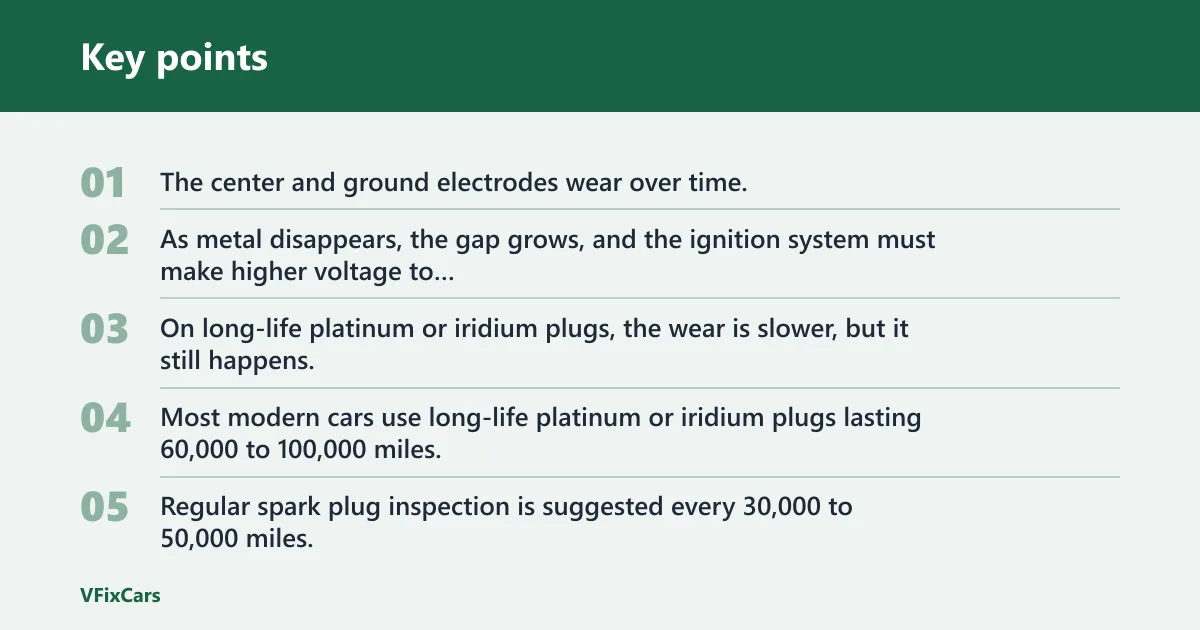
The center and ground electrodes wear over time. As metal disappears, the gap grows, and the ignition system must make higher voltage to jump that gap. On long-life platinum or iridium plugs, the wear is slower, but it still happens.
Most modern cars use long-life platinum or iridium plugs lasting 60,000 to 100,000 miles. Regular spark plug inspection is suggested every 30,000 to 50,000 miles, especially if the engine has a misfire history or short-trip use.
What a failed plug can reveal
A spark plug often fails because the engine, fuel system, or ignition system created the conditions for failure. A plug coated in soot points in a different direction from one with melted metal or one drenched in oil. That difference matters.
Why a wider gap needs more voltage
As the gap grows, the coil needs more voltage to fire the plug. If the gap gets too large, the spark can turn weak under load, especially during acceleration or high cylinder pressure. A gap that is too small can also cause problems by shortening the spark path.
Why do spark plugs foul?
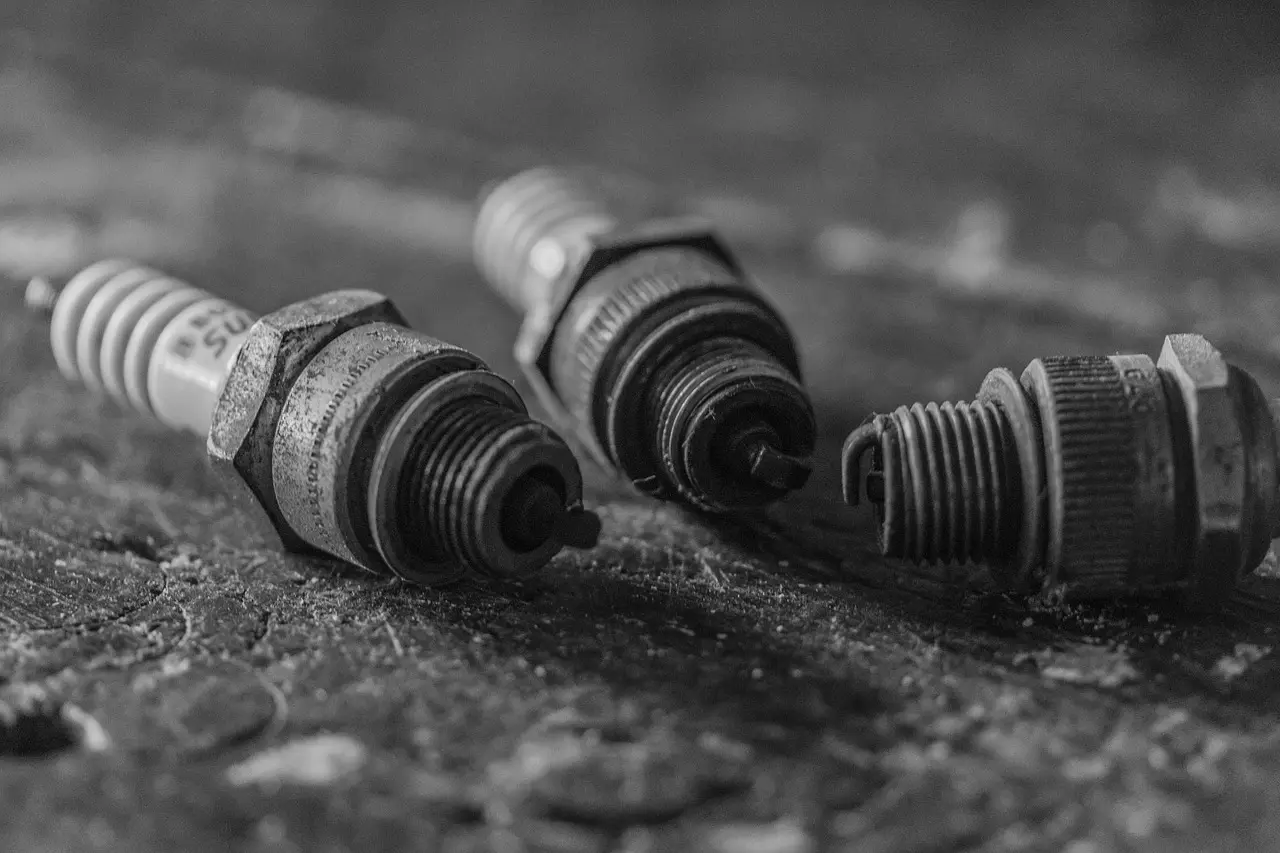
Fouling means the firing end has been coated or soaked with something that blocks a clean spark. The most common forms are carbon, oil, and fuel fouling. Each one points to a different system, so the plug’s appearance is a diagnostic clue.
Carbon fouling from rich running and short trips
Carbon fouling shows up as dry black powdery soot. It is linked to frequent short trips, rich running, incomplete combustion, and long idling, especially when the engine never reaches full operating temperature. Spark plugs can be affected by carbon buildup from short trips and rich running.
Short trips matter because the engine spends more time cold. Cold combustion leaves more unburnt fuel and soot on the plug. In winter, repeated cold starts can make this worse because the engine needs more time to warm up and clean the plug tip.
Oil fouling from internal engine leakage
Oil fouling usually appears as a wet or oily black coating. It often points to worn piston rings or valve seals, not a bad plug. Oil contamination can be caused by worn piston rings or valve guide seals, and oil fouling usually points to worn valve seals or piston rings.
If one cylinder’s plug is oily and the others look normal, that cylinder deserves more attention than the plug itself. A compression test or leak-down test is the next step when oil keeps returning to the same hole.
Fuel fouling after flooding or prolonged cranking
Fuel fouling happens when the plug is soaked in unburnt fuel. It can follow prolonged cranking, flooding, injector faults, or a mixture problem that leaves the plug unable to fire. A wet fuel-soaked plug often causes weak spark or no spark at all.
Suppose a car has been cranking for about 20 seconds after a no-start, and then all four plugs come out wet with fuel. That points less to plug wear and more to a mixture or injector issue that flooded the cylinders.
Why do new spark plugs fail?
Brand-new plugs can fail quickly when the real problem is elsewhere. Wrong heat range, incorrect gap, a weak coil, damaged wires, injector faults, or low compression can kill a fresh set fast. If new plugs keep failing, stop treating the plug as the only suspect.
Heat range that is too hot or too cold
A plug that is too hot can blister or melt the tip. A plug that is too cold can foul quickly because it does not shed enough heat to stay clean. The plug must match the manufacturer specification for that engine.
Wrong heat range is a common reason new plugs look bad after a short drive cycle. A plug that runs too cold in a car used for short errands may collect soot fast. A plug that runs too hot may show blistering, glazed deposits, or a damaged electrode.
Gap set wrong at installation
A plug gap that is too wide or too narrow can cause failure. Use a feeler gauge or gap gauge before installation, and compare the setting with the engine’s specification. Many vehicles use a 0.030-inch spark plug gap according to one competitor, but the correct value depends on the application.
Coil, wire, injector, or compression faults
Weak voltage delivery can mimic bad plugs. A failing ignition coil, damaged wire, poor coil boot contact, a leaky injector, or low compression can all make a new plug misfire or foul again. That is the misdiagnosis risk when plugs keep failing.
In older ignition systems, damaged plug wires can leak voltage before it reaches the plug. In coil-on-plug systems, a weak coil or cracked boot can do the same job. Either way, the plug gets blamed for an upstream fault.
Spark plug troubleshooting matrix
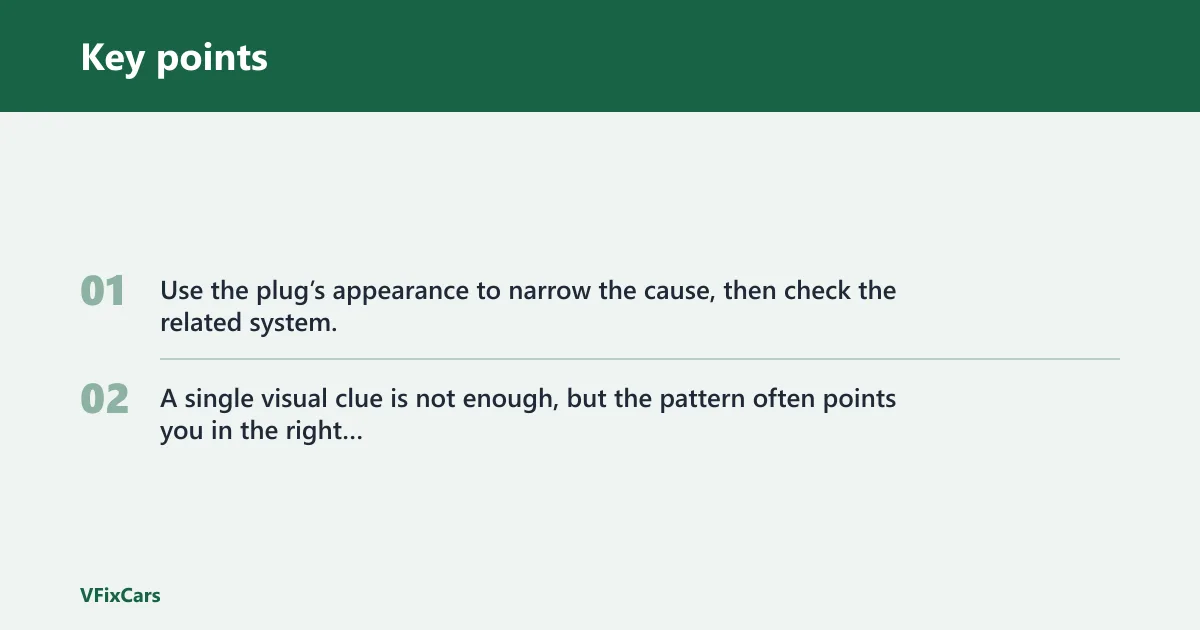
Use the plug’s appearance to narrow the cause, then check the related system. A single visual clue is not enough, but the pattern often points you in the right direction.
| Failure pattern | Plug appearance | Likely root cause | Most likely supporting symptom | Next diagnostic check |
|---|---|---|---|---|
| Electrode wear | Rounded center and ground electrodes, widened gap | Normal erosion over time | Gradual misfire, harder starts, rough idle | Measure gap against spec and inspect firing edges |
| Dry carbon fouling | Dry black powdery soot | Rich mixture, short trips, low operating temperature | Black exhaust haze, fuel smell, repeated short-drive misfire | Check fuel trims, thermostat operation, and trip pattern |
| Oil fouling | Wet or oily black coating | Worn piston rings or valve seals | Blue smoke, oil use, oily plug in one cylinder | Perform compression or leak-down testing |
| Fuel fouling | Wet plug with raw fuel smell | Flooding, prolonged cranking, injector fault | No-start after cranking, rough restart, strong fuel odor | Check injector pulse, fuel pressure, and flooding causes |
| Heat damage | Blistered, white, or melted tip | Plug too hot, lean condition, overheating | Pinging, high operating temperature, unstable idle | Verify heat range and inspect cooling and mixture control |
| Cold plug fouling | Dark deposits that return quickly | Plug too cold for duty cycle | Frequent short trips, long idling, winter use | Confirm manufacturer heat range and drive pattern |
| Gap-related misfire | Visible gap that is too large or too tight | Incorrect setting or worn electrodes | Misfire under load, weak acceleration | Set gap with a feeler gauge or gap gauge |
| Installation damage | Cracked porcelain insulator, chipped electrode | Improper installation or handling | Immediate misfire after service | Inspect threads, torque, and coil boot contact |
Do spark plugs go bad from age or storage?
Spark plugs can fail from age, mileage, sitting, or storage conditions. Age alone does not explain every failure, but corrosion, moisture, and repeated cold starts can damage a plug or foul it before the mileage limit is reached. Short trips make that more likely.
Sitting unused and moisture contamination
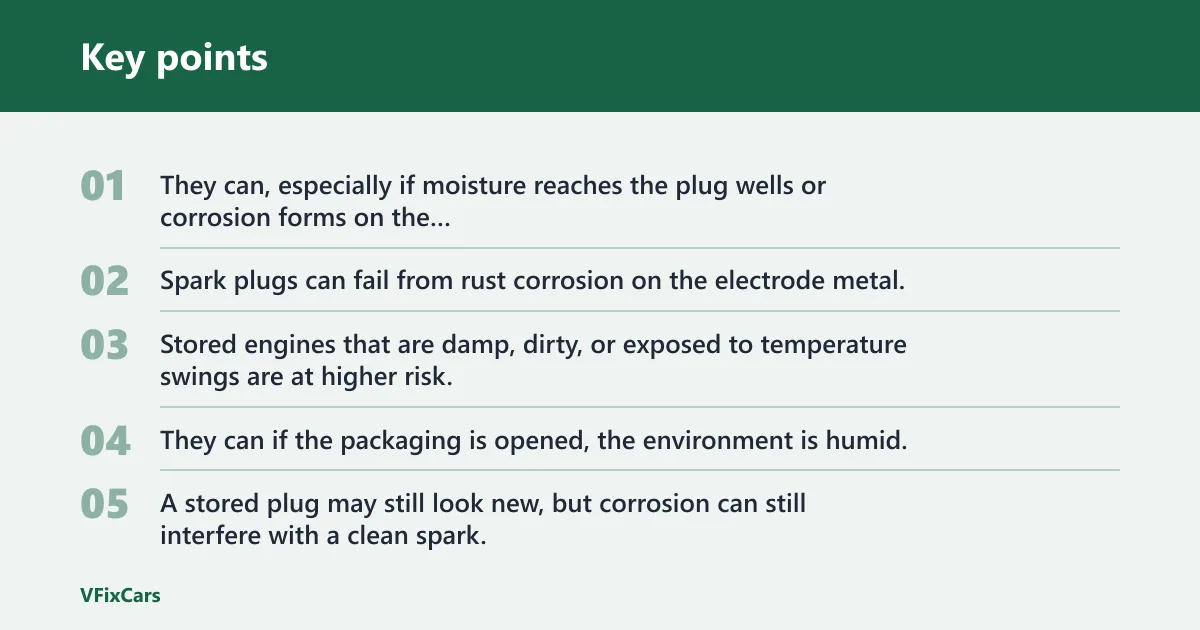
Do spark plugs go bad from sitting? They can, especially if moisture reaches the plug wells or corrosion forms on the electrode metal. Spark plugs can fail from rust corrosion on the electrode metal. Stored engines that are damp, dirty, or exposed to temperature swings are at higher risk.
Do spark plugs go bad in storage? They can if the packaging is opened, the environment is humid, or the plug sits where moisture gets into the metal surfaces. A stored plug may still look new, but corrosion can still interfere with a clean spark.
Winter use, cold starts, and short-trip driving
Do spark plugs go bad in winter? They can foul faster because cold starts and short drives keep the engine below clean-burning temperature longer. That promotes carbon buildup and leaves more moisture in the combustion chamber and plug wells.
Picture a car used only for 4-mile errands in January. If the plugs start fouling after a few weeks, the issue may be duty cycle, not defective parts. The fix is usually to correct the mixture or heat range, not to keep replacing plugs.
How to diagnose repeat spark plug failure
Start with the plug’s appearance, then work outward to the systems that could have caused it. If one plug failed once, inspect that cylinder. If several plugs failed the same way, suspect mixture, ignition, or operating-temperature issues before buying another set.
- Remove the plug and note the deposit type: dry soot, oily film, wet fuel, blistering, or physical damage.
- Compare the gap with the service specification and look for electrode erosion.
- Check whether the plug matches the correct heat range for the engine.
- Inspect ignition coils and wires for cracked boots, corrosion, or weak output.
- Look for fuel-system causes such as injector leakage, rich running, or flooding.
- If oil is present, test for worn rings or valve seals with compression or leak-down checks.
- Review driving pattern: repeated short trips, long idling, and cold starts can foul plugs early.
Frequently asked questions
Why do spark plugs go bad fast?
They go bad fast when the engine is fouling them, overheating them, or firing them with the wrong gap or heat range. Short trips, rich running, weak coils, and oil contamination can make a new plug fail much sooner than expected. The plug is usually reporting a larger problem.
Why do spark plugs keep going bad?
If plugs keep failing, stop focusing only on the part number. Repeated failure usually points to a persistent fault such as a leaking injector, a weak ignition coil, oil entry into the cylinder, or a plug that does not match the engine’s heat range.
What mileage do spark plugs go bad?
Many modern platinum or iridium plugs last 60,000 to 100,000 miles, but that is not a guarantee. Inspection every 30,000 to 50,000 miles is a safer habit when the engine has misfire symptoms, short-trip use, or any history of fouling.
Why would new spark plugs go bad?
New plugs usually do not wear out immediately. They fail because the engine is too rich, too lean, flooding, running the wrong heat range, or delivering weak spark through a coil or wire problem. Incorrect installation can also crack the porcelain insulator.
Do spark plugs go bad with age or mileage?
Yes. Electrode erosion makes the spark gap grow over time, so age and mileage matter. But repeat failures should not be blamed on age alone. If the plug pattern points to oil, fuel, or ignition trouble, that issue needs to be fixed first.
Why did my spark plugs go bad?
The fastest answer comes from the plug’s condition. Dry soot suggests rich running or short trips, oily coating suggests internal engine wear, fuel wetness suggests flooding or injector trouble, and melting points to heat range or combustion problems. Each appearance points to a different next check.