What to Do When Your Car Is Overheating
If your car starts overheating, switch off the A/C, turn the heater to full hot, pull over within about a minute if the gauge keeps climbing or you see steam, then shut the engine off and let it cool before opening the hood. Running hot can warp the cylinder head, blow the gasket, and turn a small coolant leak into a tow bill. This guide tells you what to do in the first 60 seconds, the next 30 minutes, and after the engine cools.
How to tell it’s overheating
Watch the temperature gauge first. If the needle reaches H or moves into the red zone, treat that as a warning, especially if the temperature light or check engine light comes on. Steam from under the hood, a sweet coolant smell, loss of power, or rough running all mean you should act now.
Engine temperature gauge signs
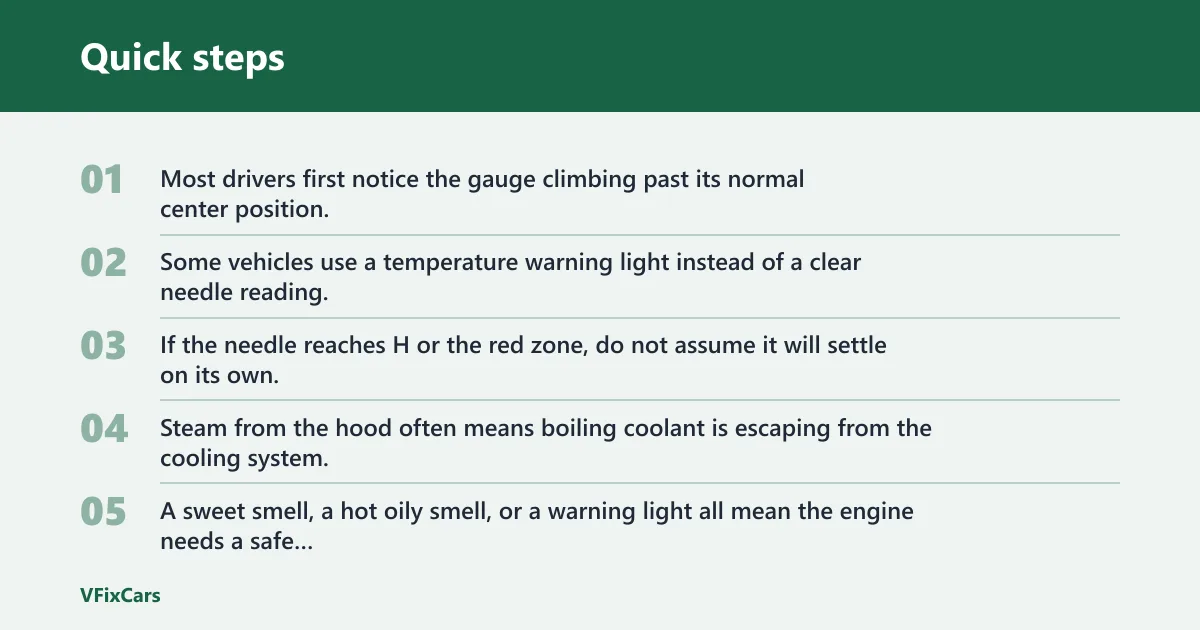
Most drivers first notice the gauge climbing past its normal center position. Some vehicles use a temperature warning light instead of a clear needle reading, and the owner’s manual explains the symbol. If the needle reaches H or the red zone, do not assume it will settle on its own.
Steam, smell, and warning lights
Steam from the hood often means boiling coolant is escaping from the cooling system. It can look like smoke from a distance. A sweet smell, a hot oily smell, or a warning light all mean the engine needs a safe pull-over, not more time on the road.
Loss of power and rough running
Firestone lists loss of engine power as a possible overheating symptom. If the car feels sluggish, hesitates on hills, or the engine starts to run rough, the cooling system may already be struggling. That is a sign to reduce load and get off the road.
What to do in the first 60 seconds
Take load off the engine right away. Turn off the air conditioning, turn the cabin heater to maximum heat, ease off the accelerator, and look for a safe place to pull over. If the gauge keeps climbing, you see steam, or the car starts losing power, stop driving and shut the engine off.
Turn off the air conditioning
Turn off the A/C immediately when the engine overheats. The compressor adds load to the engine, and removing that load may slow the temperature rise while you move toward the shoulder or a parking lot.
Turn the heater to maximum heat
Set the cabin heater to full hot and the fan high. That pulls heat away from the engine through the heater core. It can make the cabin uncomfortable, but it is one of the few roadside steps that may buy you a little time.
Pull over safely and shut the engine off
Use the shortest safe route off the road. Do not aim for a perfect parking spot if the gauge is still climbing. Once stopped, shift to park, set the brake, and shut the engine off.
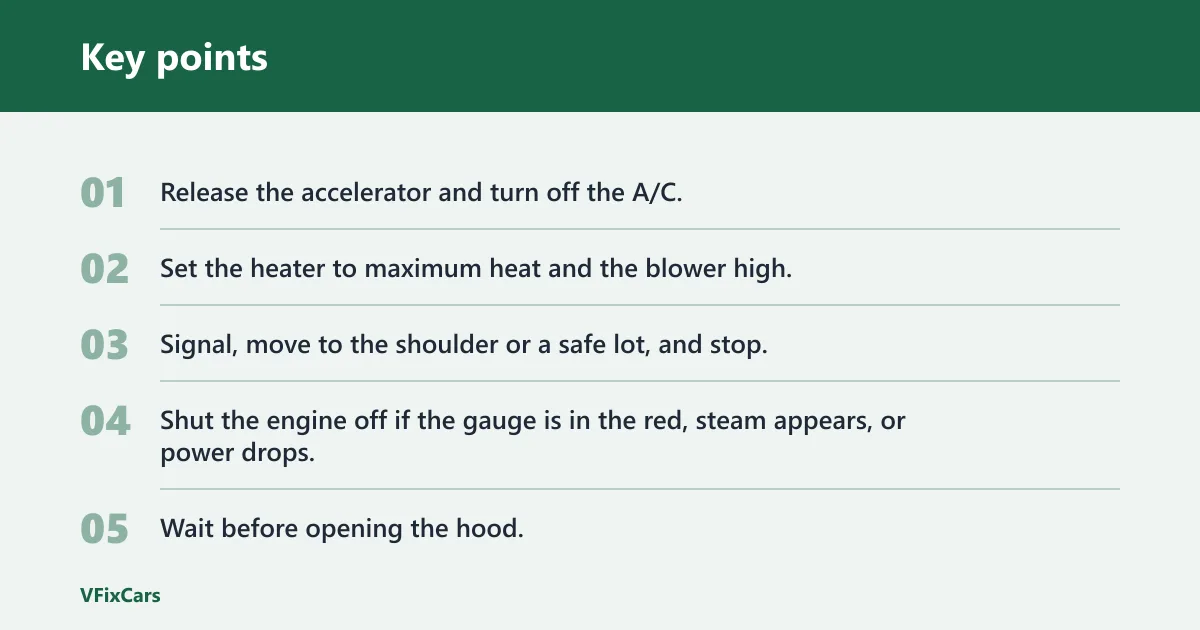
- Release the accelerator and turn off the A/C.
- Set the heater to maximum heat and the blower high.
- Signal, move to the shoulder or a safe lot, and stop.
- Shut the engine off if the gauge is in the red, steam appears, or power drops.
- Wait before opening the hood.
Can you keep driving for a short distance?
Sometimes a short move is reasonable, but only if the car is not in the red, there is no steam, and power is still normal. If the gauge spikes again, the light comes on, or the car loses power, stop immediately. Each spike raises the risk of warped cylinder heads and other internal damage.
When a short move is reasonable
A short move may be enough to reach the shoulder, a rest area, or a nearby parking lot. Keep the A/C off, heater on full hot, and speed low. The goal is to cut engine load, not to keep going on the same route.
When you must stop immediately
Stop immediately if you see steam, the gauge is in the red, the warning light stays on, or the car starts losing power. Do not keep driving just because the engine still runs. An overheating engine can move from warning to failure very fast.
Why repeated spikes matter
Even if the gauge drops after you pull over, the problem is not solved. A cooling system that overheats once can overheat again under the next load, and each repeat event increases the chance of major damage. If the temperature rises again after restart, call roadside assistance or a tow truck.
Roadside overheating decision checklist
Use this checklist when the temperature climbs or the car begins to act differently. The immediate action depends on the symptom, and the wrong move is usually to keep driving or to open hot cooling-system parts too soon.
| Symptom | Immediate action | Do not do |
|---|---|---|
| Red temperature gauge or gauge at H | Turn off the A/C, turn the heater to maximum heat, and pull over at once. | Do not keep driving to “see if it settles.” |
| Steam from under the hood | Move to a safe stop and shut the engine off. | Do not open the hood right away or spray cold water on the engine. |
| Loss of power | Reduce throttle, get to the shoulder, and stop before the engine gets worse. | Do not climb hills or keep accelerating. |
| Overheating with A/C on | Switch off the A/C immediately and use heater full hot while pulling over. | Do not leave the A/C running while the gauge rises. |
| Engine shuts off | Coast to a safe stop if possible, then wait before any restart attempt. | Do not restart a still-hot engine if the temperature climbed again. |
How long to wait before checking anything
Firestone recommends allowing the engine to cool for at least 15–30 minutes before opening the hood. That is a minimum cooling window, not a promise that every part is safe to touch. Wait until the engine is cool enough to handle before checking coolant components, and longer if the hood area still feels hot. (Firestonecompleteautocare)
What 15 to 30 minutes really means
Fifteen to 30 minutes is a roadside waiting period, not a repair check. The engine may still be hot enough to burn you even if the gauge drops. If steam is still visible or the hood area radiates heat, wait longer.
When the engine is cool enough to touch
Touch the hood cautiously. If it is still very hot, keep waiting. Do not rush to the radiator cap or overflow tank just because the needle has moved back down.
Parts to leave alone until fully cool
Do not open the radiator cap while hot. Do not loosen hoses or fittings. Do not pour cold water on a hot engine. Sudden cooling can damage parts, and the pressure release from the cap can cause burns.
What to check after the engine cools
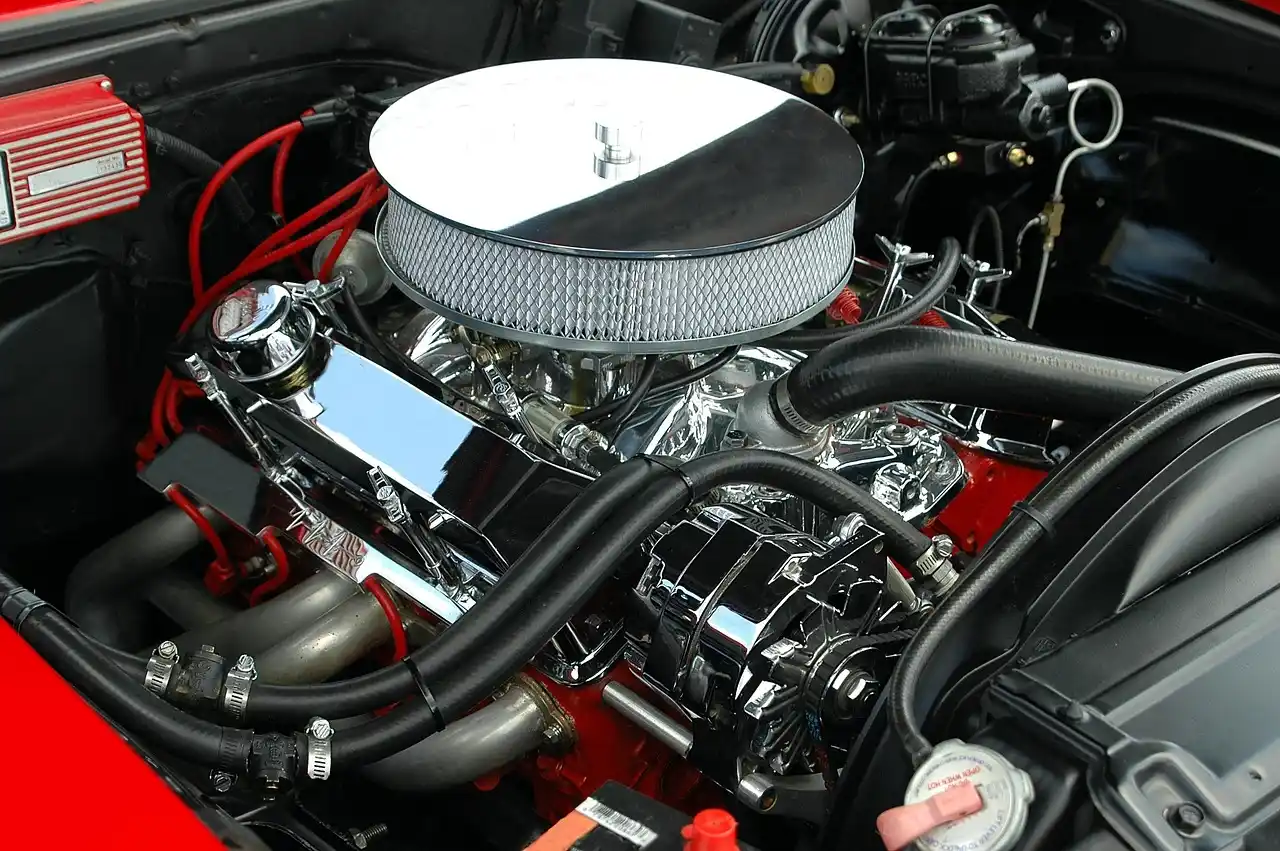
Once the engine is cool, check the coolant reservoir level and inspect for obvious leaks, loose hoses, and damaged belts. Use only the correct coolant type if you top off, and do that only when it is safe to do so. A full overflow tank does not prove the system is fine if the car still overheated.
Coolant reservoir level and type
Check the coolant reservoir after cooling, not while the engine is hot. If the level is low, top it off only with the correct coolant type for your vehicle. If you are unsure, leave it alone and get help rather than mixing the wrong fluid.
Hoses, belts, and visible leaks
Look for wet spots under the vehicle, crusty residue around hose joints, split hoses, and worn belts. A visible leak may explain why the coolant level fell. If a belt is damaged or missing, the cooling system may not circulate properly.
Why a full reservoir may not solve it
A reservoir can look full while the engine still overheats. That can happen if coolant is trapped, the system is not circulating, or another fault is keeping heat from leaving the engine. A normal-looking overflow tank does not rule out the need for inspection.
Say your sedan idles at a traffic light and the gauge climbs into the red just as a steam plume appears from the hood. The right move is to shut off the A/C, turn the heat to maximum, pull into the nearest safe lot, and stop. Do not circle the block for a better parking space.
A common first-timer mistake is to see the gauge drop after five minutes and assume the car is fine. If the same car overheats again after restart, the problem is still active. At that point, stop testing it and arrange help.
When should you call a tow truck?
Call roadside assistance or a tow truck if the temperature rises again after restart, if the engine will not stay normal, or if you have steam, loss of power, or shutdown in traffic. A tow is safer than guessing, especially when the engine is already showing signs of internal heat damage.
Temperature rises again after restart
If the gauge climbs again soon after restart, do not keep trying to nurse the car along. Firestone warns that restarting a still-hot engine can cause further overheating or damage. That is a clear tow situation.
Engine is still hot and will not stay normal
If the car cools a little, starts, and then heats back up within minutes, the fault is still active. Continuing to drive risks more damage and may strand you again in traffic or on a shoulder.
Why roadside help is safer than guessing
An overheating engine can warp cylinder heads, crack the engine block, and lead to irreparable damage. If the car overheats again after a short test restart, roadside help is the safer choice. A tow is cheaper than a complete engine failure.
Frequently asked questions
What to do when your car is overheating while driving
Turn off the A/C, turn the heater to maximum heat, and get off the road safely as soon as you can. If the gauge is in the red, steam appears, or the car loses power, stop immediately and shut it off. Do not keep driving to “make it home.”
What to do when your car starts overheating
Easing off the accelerator reduces engine load right away. Then switch off the air conditioning, set the heater to full hot, and pull over within a minute if the temperature keeps rising. Once stopped, shut the engine off and wait before opening the hood.
What to do when my car engine is overheating
Treat it as a roadside problem, not a dashboard annoyance. Use the heater, kill the A/C, and stop driving if the gauge hits H or the red zone, or if you see steam. After cooling, inspect coolant level and visible leaks before restarting.
What to do when your car overheats and shuts off
Coast to a safe stop if possible, then leave the engine off. Do not try repeated restarts while it is still hot. Wait at least 15–30 minutes before opening the hood, and call a tow truck if the temperature climbed again or the car will not stay normal.
How long does it take for a car to cool down after overheating?
Firestone advises waiting at least 15–30 minutes before opening the hood. That is the minimum cooling window, not a guarantee that every component is safe. If the hood is still very hot or steam is present, keep waiting before touching coolant parts.
Do you turn your heater on when your car is overheating?
Yes. Turn the cabin heater to maximum heat while you are pulling over, because it helps pull heat away from the engine. It is a temporary roadside step, not a fix. If the gauge stays high or the car loses power, stop and shut it off.