Silicone vs Rubber Wiper Blades: Which Lasts Longer?
Silicone wiper blades are often reported to last longer than rubber, commonly about 18 to 24 months versus about 6 to 12 months, especially in hot sun and heavy UV. Pick the wrong material, and you buy twice, because streaks, chatter, poor night visibility, and early replacement follow. This guide compares climate, cost, and 24-month ownership so you can choose the blade material that fits your driving conditions.
Key factors to compare silicone and rubber wiper blades
| Decision factor | Silicone | rubber wiper blades | Winner |
|---|---|---|---|
| Upfront cost | Higher; often 2-3x more at purchase | Lower; common budget choice | rubber wiper blades |
| Typical lifespan | Often 18-24 months; one source lists 2-3 years | Often 6-12 months | Silicone |
| Sun, heat, and ozone resistance | More resistant to UV and ozone attack | Can harden, crack, and streak sooner | Silicone |
| Cold-weather flexibility | Stays flexible across wider temperature ranges | More likely to stiffen and chatter in cold | Silicone |
| 24-month ownership cost | Often lower if it avoids one or two replacements | Often higher because you replace them more often | Silicone |
Upfront cost
rubber wiper blades win on initial price. A comparison page lists rubber at $10-$20 per blade and silicone at $20-$40 per blade, so silicone often costs about 2-3 times more at checkout.
That extra spend only makes sense if the blade lasts long enough to offset the replacement cycle. If you change cars often or replace blades before they age out, the lower buy-in of rubber can be enough.
Typical lifespan
Silicone wins on lifespan. The sourced figures place rubber at 6-12 months and silicone at 2-3 years in one comparison, while another source gives silicone 3-5 years and EPDM 1-2 years.
Those ranges are not a promise. They are a planning guide, not a guarantee that every driver will get the upper end.
Weather resistance
Silicone wins in strong sun, repeated heat cycling, and winter cold. UV exposure speeds rubber degradation, and ozone attack is a common reason natural rubber shows visible surface cracks and loses a clean wiping edge.
EPDM sits between the two. One source lists it as the current OEM standard, and it resists ozone better than natural rubber, which is why many factory-fit blades last longer than cheap replacement rubber.
24-month ownership cost
Silicone often wins over 24 months because replacement frequency matters more than sticker price. A blade that lasts twice as long can cost less overall, even if it starts higher.
Budget rubber can still be the cheaper choice if your climate is mild and you plan to replace blades on schedule anyway. But once summer heat, strong sun, or winter ice starts beating on the edge, the cheaper set can become the more expensive habit.
Wiper blade lifespan table
Here is a simple 24-month ownership comparison using the sourced price and lifespan ranges. The table uses a single blade for pricing, because the supplied figures are listed per blade.
| Scenario | Purchase price per blade | Replacement interval | Sets needed over 24 months | Estimated total spend over 24 months | Climate fit |
|---|---|---|---|---|---|
| Budget rubber | $10-$20 | 6-12 months | 2-4 sets | $20-$80 | Best for mild, low-UV, low-ice use |
| Premium EPDM rubber | $20-$40 | 1-2 years | 1-2 sets | $20-$80 | Best for mixed climates and OEM-style fit |
| True silicone | $20-$40 | 18-24 months | 1-2 sets | $20-$80 | Best for hot, sunny, or harsh-weather use |
Budget rubber
Budget rubber looks cheap because the entry price is low. Over two years, though, frequent replacement can erase that advantage. If the blades live in strong sun or face repeated freeze-thaw cycles, the cost gap often narrows fast.
Premium EPDM rubber
EPDM is the middle path. One source lists it as the OEM standard, and its lifespan is given as 1-2 years, which makes it a practical choice for drivers who want better ozone resistance without paying for true silicone.
For many daily drivers, EPDM is the cleanest value pick when climate stress is moderate rather than severe.
True silicone
True silicone is the longest-life option on the page. It also has a built-in weather advantage, with better UV resistance, better ozone resistance, and wider flexibility across heat and cold.
One detail matters here. Some products sold as silicone are silicone-coated, not full silicone edge construction. A coated blade may help, but it is not the same as a full silicone blade when you are paying for longer life.
Why rubber wears out faster
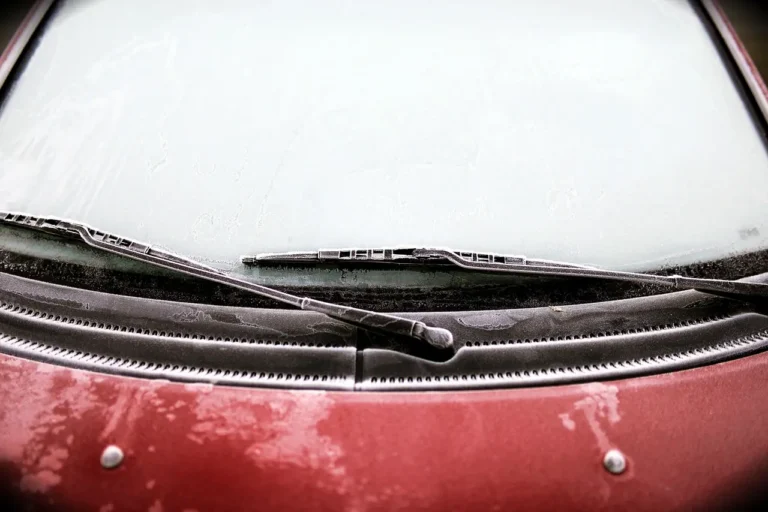
Rubber blades wear out faster because the wiping edge changes shape under weather stress. UV exposure shortens lifespan in sunny climates, ozone attack causes cracking in natural rubber, heat softens the edge, and cold makes it brittle.
Once that edge hardens or cracks, the blade can start streaking or chattering instead of clearing water cleanly. That is why a blade can look fine at first glance and still fail at night in light rain.
UV exposure and ozone attack
Sunlight and ozone work together against rubber. UV dries and ages the compound, while ozone attack shows up as surface cracks that spread along the wiping edge.
That failure mode matters most in parked-outdoor vehicles, especially in Sun Belt use cases where the car sits in strong light day after day.
Heat, cold, and edge hardening
Heat can soften rubber enough that the edge loses its sharp wipe, then set it up for faster aging. Cold does the opposite and makes the same edge stiff and brittle.
That is why a blade can behave well in spring and then start skipping or leaving lines once temperatures swing hard.
What silicone changes
Silicone changes the equation by resisting weather damage better than rubber. It stays flexible across wider temperature ranges, which helps in hot afternoons, frozen mornings, and long exposure to sunlight.
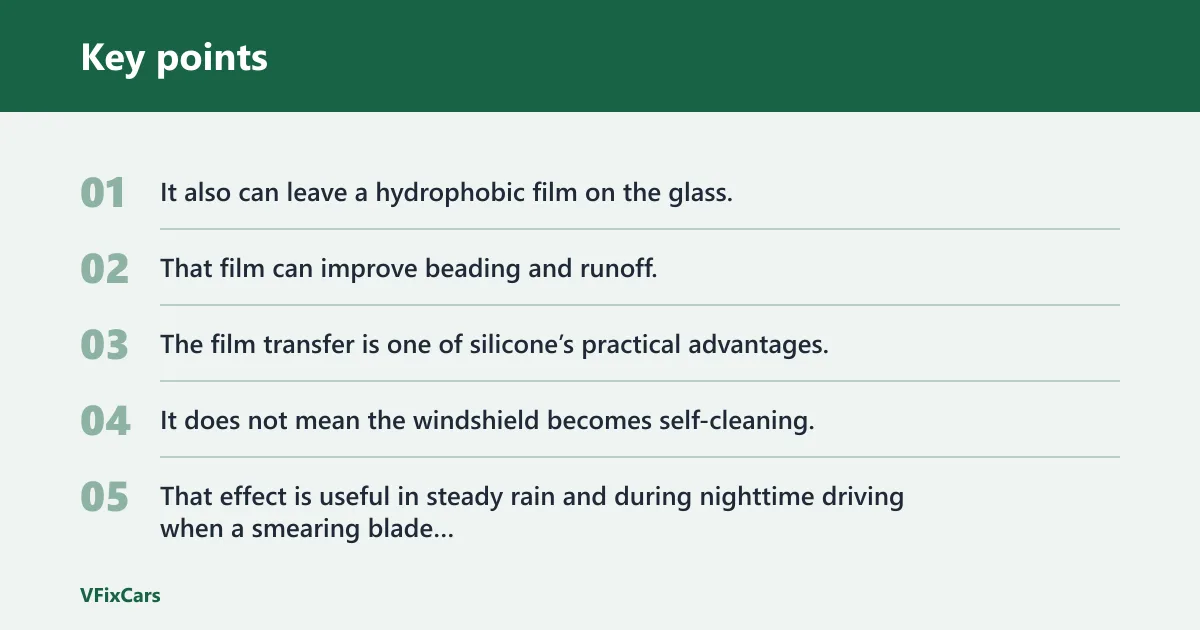
It also can leave a hydrophobic film on the glass. That film can improve beading and runoff, which may reduce streaking and help water clear more quickly at speed.
Hydrophobic film transfer on glass
The film transfer is one of silicone’s practical advantages. It does not mean the windshield becomes self-cleaning, but it can help water bead and run off faster after repeated passes.
That effect is useful in steady rain and during nighttime driving when a smearing blade makes glare worse.
Noise and chatter
Silicone is not automatically quieter, but it can chatter less when the edge keeps its flexibility. Rubber is more likely to chatter once it hardens or picks up surface damage from heat, UV, or cold.
Noise should not be judged from the material label alone. Fit, arm pressure, and windshield condition also matter.
Say your car sits outside in Phoenix all summer, and the old blades start leaving two thin arcs across the driver’s side after six months. That is climate stress, not a coincidence. In that case, a true silicone blade is the better bet because the heat and UV are doing the damage.
Suppose your car is parked in a garage most nights in Minneapolis, and you mainly drive a short commute with winter slush but limited full-sun exposure. In that case, EPDM rubber can be enough, because the blade sees less UV damage and the OEM-style material gives decent service without paying for the top-end silicone option.
Which lasts longer in your climate?
Silicone lasts longer in hot, sunny climates and in places where UV exposure is constant. It also holds up well when temperatures swing hard, because it stays flexible across a wider range than standard rubber. In mild climates, though, EPDM rubber can last long enough that the extra cost of silicone is harder to justify.
Hot, sunny climates
Silicone is the stronger pick here. UV exposure accelerates rubber degradation, and ozone attack plus heat cycling can make cheap rubber crack, streak, or chatter long before the second year ends.
If the vehicle lives outdoors, silicone’s longer service life is easier to realize than it is in a shaded or garaged car.
Cold, icy climates
Silicone also has an edge in cold weather because it stays flexible when rubber stiffens. That helps when the blade has to work through frozen slush, windshield washer fluid residue, and repeated defrost cycles.
Still, winter salt and ice can be hard on any blade. If the car sees heavy scraping and ice buildup, even silicone will not last forever.
Mixed-weather driving
Mixed climates are where EPDM often makes the most sense. One source lists it as the OEM standard, and its 1-2 year lifespan is enough for drivers who see both heat and cold without constant extreme exposure.
A common first-timer mistake is buying true silicone for a mostly garaged car that only sees a few harsh weeks each year. In that case, the extra cost may buy more life than you actually need.
Are silicone wiper blades worth it?
Silicone is worth the extra cost when replacement frequency matters more than purchase price. If you live with strong sun, repeated heat, or a harsh winter, the higher upfront cost can be offset by fewer replacements over 24 months. If your climate is mild, EPDM often gives enough durability for less money.
Upfront cost versus replacement frequency
The price gap is real: the supplied figures put rubber at $10-$20 per blade and silicone at $20-$40 per blade. That makes silicone a larger initial purchase, but the longer replacement interval can shrink the total spend over time.
The right comparison is not checkout price alone. It is how often you will need to buy and install another set.
When EPDM rubber is enough
EPDM is enough when the car is not exposed to severe UV, long outdoor parking, or strong winter abuse. Because it is an OEM-standard material in one source and has a 1-2 year lifespan in that source, it can be the best balance of cost and durability for many drivers.
If your current blades already last close to a year without streaking, EPDM is usually the cleaner upgrade than jumping straight to full silicone.
Choose Silicone if… / Choose rubber wiper blades if…
Choose Silicone if you want the longest service life, park outside in strong sun, deal with hot and cold swings, or want fewer replacements over 24 months. Choose rubber wiper blades if you want the lowest upfront cost, drive in a milder climate, or replace blades often enough that long-life material is not paying for itself.
- Choose Silicone if your car lives in hot sun or high UV.
- Choose Silicone if winter cold makes your current blades chatter or streak.
- Choose Silicone if you want a longer replacement interval and lower ownership cost over time.
- Choose rubber wiper blades if you want the cheapest first purchase.
- Choose rubber wiper blades if you run EPDM and the car sees mixed but not severe weather.
- Choose rubber wiper blades if you expect to replace blades on a shorter schedule anyway.
Frequently asked questions
Do silicone wiper blades last longer than rubber blades?
Yes. The sourced comparisons put rubber at 6-12 months and silicone at 18-24 months, with one source listing silicone at 2-3 years. The gap is widest in sun, heat, and ozone exposure, where rubber ages faster and silicone keeps its flexibility longer.
How much longer do silicone wiper blades last than rubber?
As a practical planning range, silicone can last about 6 to 18 months longer than standard rubber, depending on climate and use. That comes from the supplied figures of about 6-12 months for rubber and about 18-24 months, with one comparison listing about 2-3 years for silicone.
Are silicone wiper blades worth the extra cost?
They are worth it when weather stress is high enough to force frequent rubber replacement. The higher purchase price can pay off if you avoid buying another set within the same 24-month window. In a mild climate, EPDM often gives better value.
Do silicone wiper blades work better in hot weather?
Yes, usually. Silicone resists UV exposure better than rubber, and heat is one of the main reasons rubber hardens, cracks, and streaks early. If the car lives in a hot, sunny area, silicone is the safer material choice.
Do silicone wiper blades work better in cold weather?
Often yes. Silicone stays flexible across wider temperature ranges, so it handles cold better than rubber, which can become brittle. That does not make it immune to ice buildup, but it does improve the odds of a cleaner wipe in winter conditions.
Why do rubber wiper blades crack or streak sooner?
Rubber ages under UV exposure, ozone attack, heat, and cold. Those stresses dry the edge, create visible surface cracks, and change how the blade meets the glass. Once the edge hardens or deforms, streaking and chatter become much more common.
Do silicone wiper blades make less noise than rubber?
They can, but not always. A flexible silicone edge may chatter less as it ages, yet noise also depends on blade fit, arm pressure, windshield condition, and washer fluid. Material alone does not guarantee a quiet wipe.