Multimeter vs Battery Tester: Which Do You Need First?
Buy a battery tester first if you only need a fast battery-health check. Buy a multimeter first if you also need charging-system and circuit diagnosis. Picking the wrong tool can waste money and leave a weak battery, bad alternator, or parasitic drain unexplained. This guide maps each tool to the jobs it handles, with clear examples for car-battery and charging-system checks.
| Decision factor | Multimeter | Battery tester | Winner |
|---|---|---|---|
| Battery-health screening | Reads DC voltage, which helps estimate charge | Often gives pass/weak/dead or load-test results | Battery tester |
| Charging-system diagnosis | Checks alternator output and voltage drop | Many models do not diagnose charging faults | Multimeter |
| Parasitic draw testing | Measures current in series | Usually not built for current draw diagnosis | Multimeter |
| Ease of use | More settings and probe-port choices | Usually simpler for a quick yes/no result | Battery tester |
| Overall versatility | Measures voltage, current, and resistance | Focused on battery condition only | Multimeter |
Multimeter vs battery tester: the short answer
A battery tester is the faster choice for a quick battery-health screen, especially if you want a simple good/weak/dead result. A multimeter is the better first buy if you also need to check charging voltage, fuses, grounds, or parasitic draw. One tool works on fewer jobs and moves faster; the other handles far more car tasks.
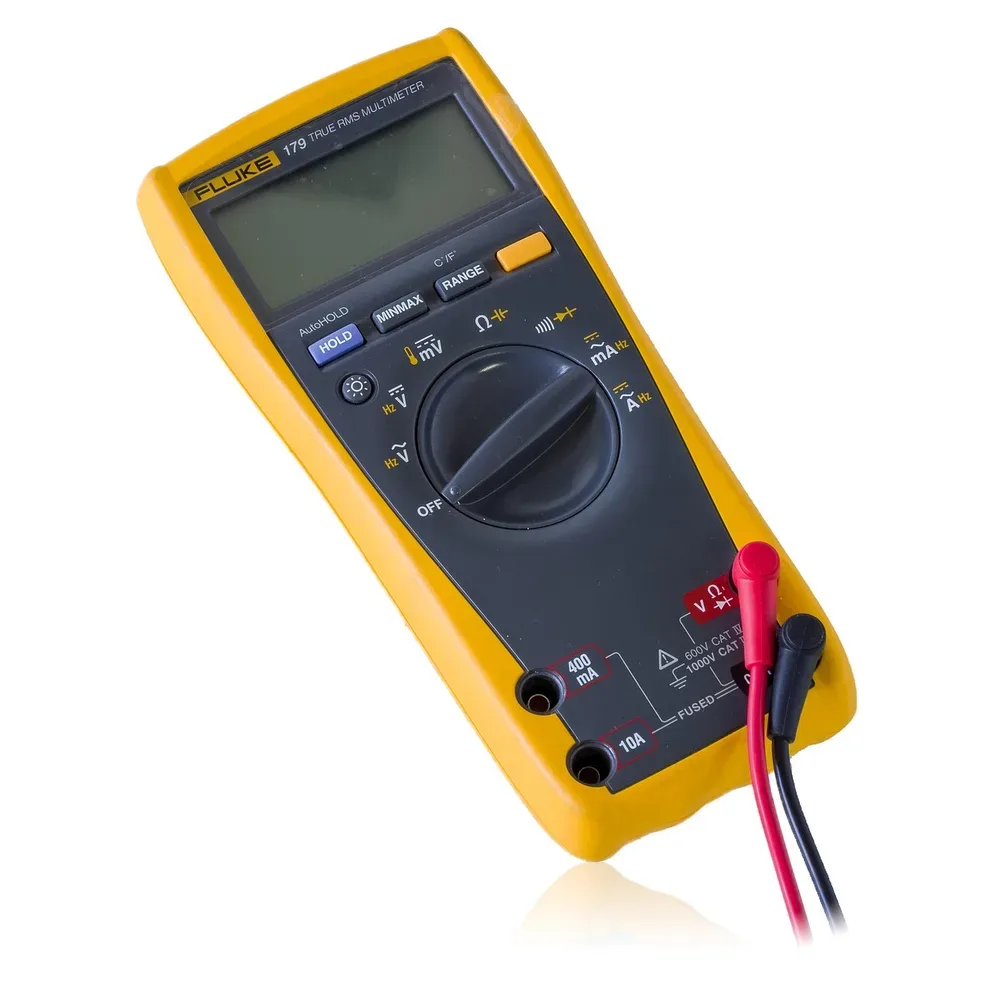
A digital multimeter is an electronic measuring instrument that can measure voltage, current, and resistance. Digital multimeters have numeric displays, and many models are auto-ranging. A battery tester may check only voltage, or it may test capacity and load, which makes it better for fast screening of a 12V car battery. (en.wikipedia.org)
Fast battery screening vs broader diagnostics
Choose speed if your only question is whether the battery can start the car. Choose breadth if you need to sort out a weak battery, a charging fault, a bad ground, or a drain that kills the battery overnight. That is where the multimeter pulls ahead.
How to decide in one minute
If you plan to test only the battery, buy the dedicated tester. If you expect to inspect the battery, alternator, fuses, grounds, and current draw over time, buy the multimeter first. A basic digital multimeter is often enough for casual users, while more advanced meters may add features like continuity or capacitance.
📊 Multimeters need the correct ports: COM, VΩmA, and sometimes 10A or 300mA. Source: What Is a Multimeter? A Complete Guide for Beginners.
Multimeter vs battery tester: side-by-side comparison

The core trade-off is direct: a battery tester gives faster battery-health screening, while a multimeter is the more versatile tool for car electrical diagnosis. For a DIY car owner, the best first purchase depends on whether the job stops at the battery posts or continues into the charging system and wiring.
| Factor | Multimeter | Battery tester | Winner |
|---|---|---|---|
| Primary job | General electrical diagnostics | Battery health screening | Tie |
| Speed | Slower because setup matters | Faster for a battery-only check | Battery tester |
| Vehicle coverage | Battery, charging, fuses, grounds, draw | Mainly battery condition | Multimeter |
| Result style | Numeric reading | Often good/weak/dead or pass/fail | Battery tester |
| Setup risk | Wrong jack or mode can cause trouble | Fewer settings to manage | Battery tester |
Primary job
A multimeter is broader because it tests circuits, not only batteries. A battery tester is specialized, which helps when the only question is battery condition. If you want one tool that can grow with your repair needs, the multimeter wins this row.
Speed
Battery testers are faster because they are built for one narrow task. Many produce an immediate result after connection, often with a load test. That speed matters when you only want a quick answer before replacing a battery.
Vehicle coverage
For car work, the multimeter covers more ground. It can check charging voltage, continuity through fuses, resistance in grounds, and current draw with the right setup. A battery tester usually stops at the battery itself.
Result style
Battery testers often translate the battery’s condition into a simple decision. That is easy for beginners to read. A multimeter gives numbers, which are more flexible but require you to know what the reading means.
Setup risk
A multimeter asks for the right port, the right function, and the right probe placement. The common jacks are COM, VΩmA, and sometimes 10A or 300mA for higher current. Wrong-port use can blow an internal fuse or damage the meter.
What can a multimeter do that a battery tester cannot?
A multimeter can measure battery voltage, charging voltage, continuity, resistance, and current, so it handles far more than battery screening. It is the better tool for alternator checks, fuse checks, ground checks, and parasitic draw. A battery tester usually cannot cover that full diagnostic range.
DC voltage for battery and charging checks
Use DC voltage for a car battery and the charging system. With the probes on the battery posts, voltage helps estimate state of charge, while the engine-running reading helps confirm alternator output. Probe polarity matters, and poor terminal contact can skew the reading.
Resistance and continuity for fuses and grounds
The continuity function is useful for fuses, grounds, and open circuits. That is not a battery-health test, but it is one reason a multimeter is the better first buy. A battery tester does not replace this kind of wiring diagnosis.
Current measurement for parasitic draw
Parasitic draw testing requires current measurement in series with the circuit, not across the battery like a voltage check. That is where the multimeter earns its keep. Use the correct current jack, often 10A or 300mA, and never try to measure current across the battery terminals.
Probe ports and settings you must use
The black lead typically belongs in COM. The red lead usually goes in VΩmA for voltage, resistance, and low-current checks, and may move to a higher-current jack for larger current measurements. Using the wrong port can blow the meter’s fuse, and using current mode the wrong way can short the circuit.
What can a battery tester do that a multimeter cannot?
A battery tester can perform a load test or a battery-health screen that goes beyond a no-load voltage reading. That matters because a good battery may show a steady, high reading at rest, while a bad battery may look low or unstable under load. A multimeter alone cannot fully replicate that test.
Load testing and battery health screening
Load testing is better than open-circuit voltage alone when you need to judge weak-battery behavior. State of charge and state of health are not the same. A battery can be charged and still fail under load because its internal condition is poor.
Pass/fail style results for weak batteries
Battery testers often return plain-language results such as good, weak, or dead. That can be ideal for a beginner who wants a quick answer before ordering a replacement. It is also useful when you need a fast screening tool, not a full diagnostic workflow.
When a simple voltage reading is not enough
A steady 12V reading does not prove the battery is healthy. It only suggests the battery may be charged. If the battery sags badly during a load test, the issue is more likely battery health than surface charge.
Limits on charging-system diagnosis
Many battery testers do not tell you whether the alternator is charging correctly. They may report on battery condition only, which is helpful but limited. If the dashboard light is on or the battery keeps going flat, a multimeter is still needed for the charging system.
How do you test a car battery correctly?
Test a car battery by separating state of charge from state of health. First check open-circuit voltage at the battery posts, then confirm the terminals are clean and tight, and finally use a load test if the voltage reading does not fully explain the symptom. That sequence avoids false confidence.
Open-circuit voltage and state of charge
Open-circuit voltage is the no-load reading taken with the car off. It helps estimate state of charge on a 12V lead-acid battery, but it does not prove the battery can deliver enough current. The number is useful, just incomplete.
Why terminal contact quality matters
Corroded or loose terminals can make a healthy battery look weak. Poor probe contact can skew readings too. Clean metal-to-metal contact matters because the meter can only report what reaches the probes, not what you hoped the battery was doing underneath corrosion.
Why load testing better separates weak batteries from discharged ones
A discharged battery and a weak battery are not the same problem. A battery tester’s load function helps separate them by observing behavior under strain. That is why a dedicated tester can beat a multimeter for fast battery-health screening.
What a basic battery tester reads
Battery testers may check only voltage or battery capacity and load. Some give pass/fail style results. That is enough for a quick decision on replacement, but it does not replace circuit diagnosis when the fault may sit elsewhere in the car.
8 common car jobs and the best tool
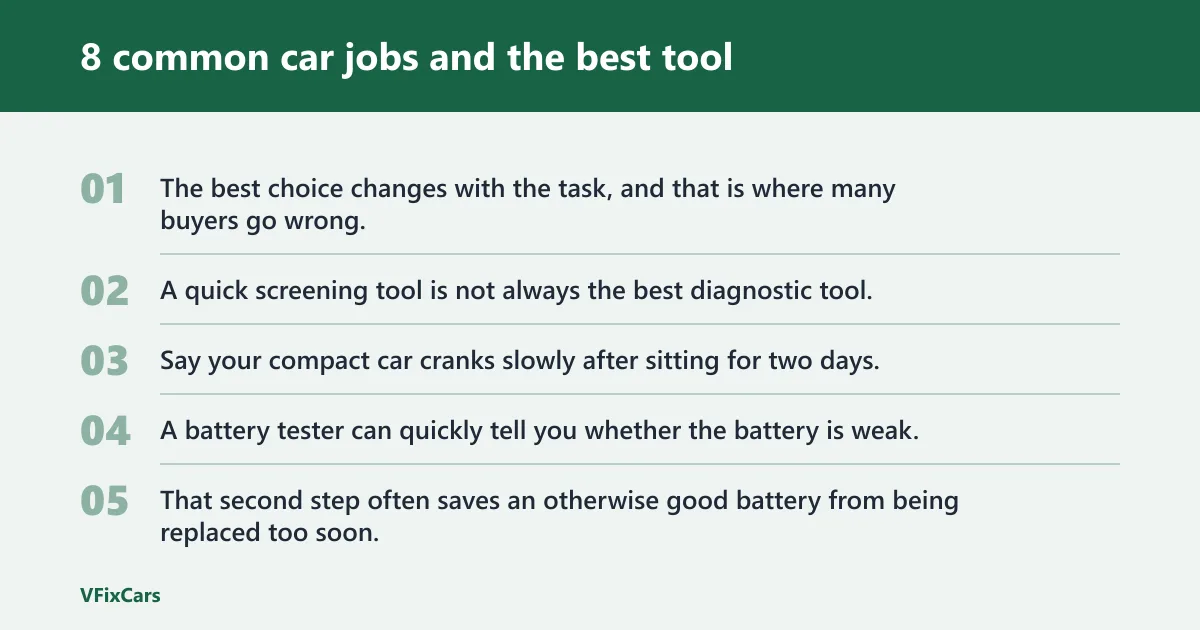
Use the job, not the tool label, to decide. The best choice changes with the task, and that is where many buyers go wrong. A quick screening tool is not always the best diagnostic tool, especially when the symptom might come from the alternator or a hidden drain.
| Job | Best tool | Required meter setting | Common mistake to avoid |
|---|---|---|---|
| Battery health | Battery tester | Battery load or test mode | Confusing charge level with battery health |
| Charging system | Multimeter | DC voltage | Checking only with the engine off |
| Parasitic draw | Multimeter | Current mode, in series | Measuring current across the battery |
| Fuse check | Multimeter | Continuity or resistance | Assuming a fuse is good by sight alone |
| Ground check | Multimeter | Continuity or resistance | Testing on painted metal |
| Battery replacement | Battery tester | Battery test or load mode | Replacing a battery before checking the charging system |
| Jump-start triage | Multimeter | DC voltage | Skipping the resting-voltage check after the jump |
| Storage drain | Multimeter | Current mode, in series | Leaving the meter in the wrong jack |
Say your compact car cranks slowly after sitting for two days. A battery tester can quickly tell you whether the battery is weak, but a multimeter can also show whether a parasitic draw is draining it after shutdown. That second step often saves an otherwise good battery from being replaced too soon.
Suppose the alternator light comes on after a rainstorm and the battery goes flat again the next morning. A battery tester may still say the battery is weak, but only a multimeter can check charging voltage and help point to a bad alternator, bad ground, or corroded connection.
Choose multimeter if… / choose Battery tester if…
Choose a multimeter if you want one tool for battery voltage, alternator output, fuses, grounds, and parasitic draw. Choose a battery tester if you only want quick battery-health screening and a simple pass/fail answer. If you are a beginner on a budget but expect broader diagnostics later, the multimeter is the better first buy.
Choose a multimeter if…
- You want to test charging voltage and the battery with one tool.
- You need to diagnose parasitic draw, fuses, or grounds.
- You prefer one versatile tool over a narrower battery checker.
- You are comfortable learning a few meter settings and jack locations.
Choose Battery tester if…
- You only want fast battery-health screening.
- You want a simple good/weak/dead result.
- You do not plan to diagnose alternators, current draw, or wiring faults.
- You want the least setup time for a dead or weak battery.
When buying both makes sense
Buying both makes sense if you service multiple vehicles or you want the quickest battery screening plus full electrical diagnosis. A battery tester handles the first question fast. The multimeter handles everything that comes after that answer.
Do I need a multimeter or a battery tester for my car battery?
If you only want to know whether the battery is healthy, a battery tester is the faster tool. If you also need to check the alternator, fuses, grounds, or a parasitic drain, start with a multimeter. The right choice follows the job, not the label.
Can a multimeter test a car battery under load?
A multimeter can show battery voltage before and during a load if you have an external load method, but it does not create a true battery load test by itself. A dedicated battery tester is the better tool for that specific job because it is designed to stress the battery and report the result directly.
Is a multimeter better for parasitic draw testing than a battery tester?
Yes. Parasitic draw requires current measurement in series with the circuit, and that is a multimeter job. Use the correct current jack, usually 10A or 300mA, and the meter must be inserted in line with the circuit. A battery tester usually does not handle this task.
Do I need an auto-ranging multimeter for car work?
Auto-ranging is helpful because it reduces guesswork and makes a basic meter easier to use. A manual-ranging meter can still work if you know the range to select. For most DIY car work, auto-ranging is convenient, but it is not mandatory.
Can I use a multimeter to check battery health?
Yes, but only partially. A multimeter can read open-circuit voltage and help estimate state of charge, which is useful. It cannot, by itself, fully replace a load test for state of health, so a weak battery may still need a dedicated battery tester for a clearer answer.
Will a battery tester tell me if my alternator is charging correctly?
Not always. Many battery testers focus on the battery itself and do not diagnose the charging system. A multimeter is the better tool for alternator output because you can read DC voltage with the engine running and compare the result to the expected charging range used by that vehicle.
What is the easiest tool for testing a dead car battery?
The easiest tool for a dead battery is usually a battery tester, because it gives a quick result with little setup. If the real problem may be a bad alternator, corroded ground, or hidden draw, the multimeter is the smarter first buy because it can keep the diagnosis moving after the battery check.